Plated or coated with tin › Other
7212.10.94 — Hoop and strip, of a width not exceeding 400 mm
Dạng đai và dải(SEN), chiều rộng không quá 400 mm
Unit: kg (kg)
Hồ sơ mã HS — hscodevn.com/hs/72121094 · in ngày 15/9/2026 · chỉ mang tính tham khảo, đối chiếu văn bản pháp lý hiện hành
HS code 72121094 covers hoop and strip, of a width not exceeding 400 mm under heading 7212 (flat-rolled products of iron or non-alloy steel, of a width of less than 600 mm, clad, plated or coated), Chapter 72. The MFN import duty is 7%; the lowest FTA rate is 0% under ASEAN - China (ACFTA) (C/O form E required). VAT: 10/8%. Goods under this heading may fall within a trade remedy measure (Colour-coated steel sheet, Coated (galvanized/aluzinc) steel sheet). Unit of quantity: kg.
May fall under a trade remedy measure
- Anti-dumping on Colour-coated steel sheet originating from China, South Korea — Decision No. 3198/QD-BCT; extended by Decision No. 2822/QD-BCTExtended 5 years until 23 Oct 2029Duty rate: 0%–34.27% depending on the company
Show all 24 company rates
Origin Producer / exporter Rate Shandong Province Boxing County Juxinyuan Precision Sheet Co., Ltd.via Shandong Julong Steel Plate Co., Ltd. 17,43% Yieh Phui (China) Technomaterial Co., Ltd.via Chin Fong Metal Pte Ltd 2,56% Shandong Zhongtai Steel., Ltd.via Qingdao Shengheng Weiye International Trading Co., Ltd. 16,58% Shandong Sanyi Industry Co., Ltd.via Shandong Hiking International Commerce Group Co., Ltd. 18,22% Zibo Xincheng Materials Co., Ltd.via Shandong Hiking International Commerce Group Co., Ltd. 18,36% Shandong Rio Tinto New Material Co., Ltd.via Shandong Hiking International Commerce Group Co., Ltd. 30,61% Shangdong Boxing County Fada Material Co., Ltd.via 1. AHCOF International Development Co., Ltd. 2. Wuhan Baolixin Trading Company Limited 3. Qingdao Fortune Land International Trade Co., Ltd. 34,27% Wuhan Hanke Color Metal Sheet Co., Ltd.via Wuhan Baolixin Trading Company Limited 34,27% Shandong Longfa Steel Plate Co., Ltd.via Shandong Longcheng Exporting Co., Ltd. 21,03% Shandong Ye Hui Coated Steel Co., Ltd.via Shandong Boxing Ying Xiang International Trade Co., Ltd. 7,58% Shandong Boxing Huaye Industry & Trade Co., Ltd.via 1. Shandong Gengxiang Import and Export Trade Co., Ltd. 2. Gansu Nuokeda Trading Co., Ltd. 3. Suzhou Yogiant Trading Co., Ltd 4. Qingdao Fortune Land International Trade Co., Ltd 34,27% Hangzhou Fuyuanhua Colour Steel Co., Ltd.via Hefei Hexing Coated Steel Co., Ltd. 24,24% Jiangsu East Steel Co., Ltd. 13,26% Shandong Huijin Color Steel Co., Ltd.via LS (Shanghai) International Trading Co., Ltd. 22,77% Shandong Boxing Fyada New Materials Co., Ltd.via Shandong Glory Import & Export Co., Ltd. 10,17% Shandong Lantian Steel Structure Project Co., Ltd.via Shandong Ruichen Industry and Trade Co., Ltd. 21,71% Zhejiang Huada New Materials Co., Ltd.via Hefei Hexing Coated Steel Co., Ltd. 34,27% Zhejiang Yintu New Buildings Materials Co., Ltd.via AHCOF International Development Co., Ltd. 19,93% Bazhou Shengfang Zhixing Pipe Making Co., Ltd.via Qingdao Fortune Land International Trade Co., Ltd. 34,27% Boxing Hengrui New Material Co., Ltdvia 1. Zhejiang Junjing Zhiye International Trade Co., Ltd 2. Zhejiang Wanxihongyue International Trading Company 0% Các công ty khác xuất khẩu hàng hóa có xuất xứ Trung Quốc 34,27% Dongkuk Steel Mill. Co., Ltd.via SK Networks. Co., Ltd. 10,48% KG Dongbu Steel Co., Ltdvia ST. International 4,95% Các công ty khác xuất khẩu hàng hóa có xuất xứ Hàn Quốc 19,25% Per the Notice attached to Decision 2822/QĐ-BCT — companies not listed are subject to the "all others" rate.
- Anti-dumping on Coated (galvanized/aluzinc) steel sheet originating from China, South Korea — Decision No. 2310/QD-BCTDefinitive since Aug 2025 (China up to 37.13%; Korea up to 15.67%)Duty rate: 12%–37.13% depending on the company
Show all 7 company rates
Origin Producer / exporter Rate Trung Quốc Baoshan Iron & Steel Co., Ltd.via - Shanghai Baosteel International Economic & Trading Co., Ltd. - Shanghai Baosteel Steel Trading Co., Ltd - Shanghai Ouyeel Supply Chain Management Co., Ltd - Guangzhou Baosteel Southern Trading Co., Ltd. - Baosteel Singapore Pte Ltd - Wuhan Baosteel Huazhong Trading Co., Ltd 37,13% Trung Quốc Shanghai Meishan Iron. & Steel Co., Ltd.via - Shanghai Baosteel International Economic & Trading Co., Ltd. - Shanghai Baosteel Steel Trading Co., Ltd - Shanghai Ouyeel Supply Chain Management Co., Ltd - Guangzhou Baosteel Southern Trading Co., Ltd. - Baosteel Singapore Pte Ltd - Wuhan Baosteel Huazhong Trading Co., Ltd 37,13% Trung Quốc Baosteel Zhanjiang Iron & Steel Co., Ltd.via - Shanghai Baosteel International Economic & Trading Co., Ltd. - Shanghai Baosteel Steel Trading Co., Ltd - Shanghai Ouyeel Supply Chain Management Co., Ltd - Guangzhou Baosteel Southern Trading Co., Ltd. - Baosteel Singapore Pte Ltd - Wuhan Baosteel Huazhong Trading Co., Ltd 37,13% Trung Quốc Wuhan Iron & Steel Co., Ltd.via - Shanghai Baosteel International Economic & Trading Co., Ltd. - Shanghai Baosteel Steel Trading Co., Ltd - Shanghai Ouyeel Supply Chain Management Co., Ltd - Guangzhou Baosteel Southern Trading Co., Ltd. - Baosteel Singapore Pte Ltd - Wuhan Baosteel Huazhong Trading Co., Ltd 37,13% Trung Quốc Tổ chức, cá nhân sản xuất, xuất khẩu hàng hóa có xuất xứ từ Trung Quốc 37,13% Hàn Quốc Hyundai Steel Companyvia - LX International Corp. 12,00% Hàn Quốc Tổ chức, cá nhân sản xuất, xuất khẩu hàng hóa có xuất xứ từ Hàn Quốc 15,67% Per the Notice attached to Decision 2310/QĐ-BCT — companies not listed are subject to the "all others" rate.
Look up per-company rates on the trade-remedy page →
Reference list (updated 08/2026); scope shown at heading level — exact rates, scope and duration per the original decisions. Verify at Trade Remedies Authority of Vietnam.
MFN import duty
7%
Lowest FTA
0%
excl. ID, MY, PH
ASEAN - China (ACFTA)
VAT
10/8%
8% under the current reduction · 10% standard
Excise / Env. tax
—
Not subject
Distinguish from heading:8544Insulated (including enamelled…7210Flat-rolled products of iron or…
Import duty comparison across FTA schedules
Full table with legal documents & effective dates
| Tax / Schedule | Rate | Document | Effective |
|---|---|---|---|
| Preferential import duty (MFN) | 7% | 26/2023/NĐ-CP | 15/07/2023 |
| Ordinary import duty | 10.5% | 15/2023/QĐ-TTg | 15/07/2023 |
| ASEAN (ATIGA)(2026) | 0% | 126/2022/NĐ-CP | 30/12/2022 |
| ASEAN - China (ACFTA) | 0%excl. ID, MY, PH | 118/2022/NĐ-CP | 30/12/2022 |
| ASEAN - Japan (AJCEP)(01/04/2026 - 31/3/2027) | 0% | 120/2022/NĐ-CP | 30/12/2022 |
| Vietnam - Japan (VJEPA)(1/4/2026 - 31/3/2027) | 0% | 124/2022/NĐ-CP | 30/12/2022 |
| ASEAN - Korea (AKFTA) | 0%excl. ID, MM | 119/2022/NĐ-CP | 30/12/2022 |
| ASEAN - Australia/New Zealand (AANZFTA) | 3% | 121/2022/NĐ-CP | 30/12/2022 |
| ASEAN - India (AIFTA)(01/01/2026 - 31/12/2026) | * | 122/2022/NĐ-CP | 30/12/2022 |
| Vietnam - Korea (VKFTA)(2026) | 0% | 125/2022/NĐ-CP | 30/12/2022 |
| Vietnam - Chile (VCFTA)(2026) | 2% | 112/2022/NĐ-CP | 30/12/2022 |
| Vietnam - Eurasian Economic Union (VN-EAEU)(2026) | * | 113/2022/NĐ-CP | 30/12/2022 |
| CPTPP Agreement(2026) | 0% | 115/2022/NĐ-CP | 30/12/2022 |
| ASEAN - Hong Kong (AHKFTA)(2026) | 1% | 123/2022/NĐ-CP | 30/12/2022 |
| Vietnam - EU (EVFTA)(2026) | 0% | 116/2022/NĐ-CP | 30/12/2022 |
| Vietnam - UK (UKVFTA)(2026) | 0% | 117/2022/NĐ-CP | 30/12/2022 |
| Vietnam - Laos | 0% | 206/2025/NĐ-CP | 15/07/2025 |
| Vietnam - Israel (VIFTA)(2026) | * | 131/2024/NĐ-CP | 15/10/2024 |
| RCEP - Group A (ASEAN)(2026) | 3,3% | 129/2022/NĐ-CP | 30/12/2022 |
| RCEP - Group B (China)(2026) | 3,3% | 129/2022/NĐ-CP | 30/12/2022 |
| RCEP - Group C (Korea)(2026) | 3,8% | 129/2022/NĐ-CP | 30/12/2022 |
| RCEP - Group D (Japan)(2026) | 5% | 129/2022/NĐ-CP | 30/12/2022 |
| RCEP - Group E (Australia)(2026) | 5% | 129/2022/NĐ-CP | 30/12/2022 |
| RCEP - Group F (New Zealand)(2026) | 3,3% | 129/2022/NĐ-CP | 30/12/2022 |
FTA schedules are cut annually: the rate shown applies to the period in brackets, per the decree's appendix.
FTA duty phase-down
Upcoming reductions for this code — the new rate takes effect on this site automatically on the effective date.
- ASEAN - Hong Kong (AHKFTA)1% (2026)0%from 01/01/2027
- RCEP - Group A (ASEAN)3,3% (2026)3%from 01/01/2027…continues per the schedule — see the decree annex
- RCEP - Group B (China)3,3% (2026)3%from 01/01/2027…continues per the schedule — see the decree annex
- RCEP - Group C (Korea)3,8% (2026)3,5%from 01/01/2027…continues per the schedule — see the decree annex
- RCEP - Group F (New Zealand)3,3% (2026)3%from 01/01/2027…continues per the schedule — see the decree annex
Only the steps present in the data (each schedule's next period) are shown. A schedule not reaching 0% here does not mean it stops — the full schedule is in the decree annex.
VAT · Excise tax · Environmental protection tax
| Tax / Schedule | Rate | Document | Effective |
|---|---|---|---|
| Value added tax (VAT) | 10/8% | 174/2025/NĐ-CP - PL1 | 30/06/20025 |
VAT reduction: Not eligible for the VAT reduction under Decree 174/2025/NĐ-CP (Annex 1): Flat-rolled steel, clad, plated or coated; Not eligible for the VAT reduction (Decree 174/2025/NĐ-CP): Electrical steel and high-speed steel products > Flat-rolled non-alloy steel of a width < 600 mm, clad, plated or coated. comprising: Flat-rolled non-alloy steel of a width < 600 mm, plated or coated with tin; Not eligible for the VAT reduction (Decree 174/2025/NĐ-CP): Flat-rolled non-alloy steel of a width < 600 mm, electrolytically plated or coated with zinc; Not eligible for the VAT reduction (Decree 174/2025/NĐ-CP): Flat-rolled non-alloy steel of a width < 600 mm, otherwise plated or coated with zinc; Not eligible for the VAT reduction (Decree 174/2025/NĐ-CP): Flat-rolled non-alloy steel of a width < 600 mm, painted, varnished or coated with plastics; Not eligible for the VAT reduction (Decree 174/2025/NĐ-CP): Flat-rolled non-alloy steel of a width < 600 mm, clad; Not eligible for the VAT reduction (Decree 174/2025/NĐ-CP): Flat-rolled non-alloy steel of a width < 600 mm, otherwise plated or coated (referenced at 4-digit HS level)
Rules of origin by FTA
To claim an FTA rate the goods must meet the origin criterion below AND carry a valid C/O — the right HS code alone is not enough. Step-by-step self-check →
- Plated or coated with tin:
RVC(40) or CTH, except from 7208 to 7211
RVC(40) hoặc CTH, ngoại trừ từ 7208 đến 7211
CTHRVC40
Source: Circular No. 44/2025/TT-BCT · annex uses HS 2022 while this site uses AHTN 2022 — check headings that changed between versions
Flat-rolled products of iron or non-alloy steel, of a width of less than 600 mm, clad, plated or coated
RVC 40% or CC
RVC 40% hoặc CC
CCRVC40
Source: Circular No. 37/2022/TT-BCT · annex uses HS 2017 while this site uses AHTN 2022 — check headings that changed between versions
- Plated or coated with tin:
Đối với các sản phẩm thuộc nhóm 7208: RVC40; hoặc CTH ngoại trừ từ nhóm 7208, 7210 và 7211; Đối với các sản phẩm thuộc nhóm 7209: RVC40; hoặc CTH ngoại trừ từ nhóm 7209,7210 và 7211
CTHRVC40
Source: Circular No. 03/2023/TT-BCT · annex uses HS 2022 while this site uses AHTN 2022 — check headings that changed between versions
- Plated or coated with tin:
CTH, except from heading 72.08 to 72.11; or an RVC of not less than: a) 35% under the direct formula; or b) 45% under the indirect formula.
CTH, ngoại trừ từ nhóm 72.08 đến 72.11; hoặc RVC không thấp hơn: a) 35% theo công thức tính trực tiếp; hoặc b) 45% theo công thức tính gián tiếp.
CTH
Source: Circular No. 03/2019/TT-BCT · annex uses HS 2012 while this site uses AHTN 2022 — check headings that changed between versions
Flat-rolled products of iron or non-alloy steel, of a width of less than 600 mm, clad, plated or coated
Manufacture from ingots or other primary forms or semi-finished materials of heading 7206 or heading 7207.
Sản xuất từ nguyên liệu dạng thỏi đúc hoặc dạng thô khác hoặc bán thành phẩm thuộc Nhóm 7206 hoặc Nhóm 7207.
Source: Circular No. 14/2026/TT-BCT
Flat-rolled products of iron or non-alloy steel, of a width of less than 600 mm, clad, plated or coated
CTH except from heading 72.08 to 72.11, or RVC40
CTH ngoại trừ từ nhóm 72.08 đến 72.11, hoặc RVC40
CTHRVC40
Source: Circular No. 32/2022/TT-BCT · annex uses HS 2022 while this site uses AHTN 2022 — check headings that changed between versions
Flat-rolled products of iron or non-alloy steel, of a width of less than 600 mm, clad, plated or coated
Manufacture from ingots or other primary forms or semi-finished materials of heading 7206 or 7207.
Sản xuất từ nguyên liệu dạng thỏi đúc hoặc dạng thô khác hoặc bán thành phẩm thuộc Nhóm 7206 hoặc 7207.
Source: Circular No. 02/2021/TT-BCT
- Plated or coated with tin:
CTH or RVC(40)
CTH hoặc RVC(40)
CTHRVC40
Source: Circular No. 09/2022/TT-BCT · annex uses HS 2017 while this site uses AHTN 2022 — check headings that changed between versions
- Plated or coated with tin:
CTH, except from 72.07 to 72.11
CTH, ngoại trừ từ 72.07 đến 72.11
CTH
Source: Circular No. 01/2024/TT-BCT · annex uses HS 2022 while this site uses AHTN 2022 — check headings that changed between versions
Iron and steel
CTH
CTH
CTH
or
QVC 35%
QVC 35%
QVC35
Source: Circular No. 24/2026/TT-BCT · annex uses HS 2022 while this site uses AHTN 2022 — check headings that changed between versions
Agreements with no rule specific to this code
This code carries a preferential rate under the agreements below but has no line of its own in the product-specific rules annex. The goods must still meet an origin requirement.
The agreement sets a general rule for codes outside the annex:
1. The goods referred to in Clause 3, Article 5 of this Circular, other than the goods provided in Clause 2 of this Article, are considered originating if:
a) The goods have a regional value content (RVC) of not less than 40% of the FOB value calculated in accordance with Article 8 of this Circular and the last production process is carried out in a Member State; or
b) Goods of Chapters 25, 26, 28, 29, 31 and 39; Chapters 42 to 49; Chapters 57 to 59; Chapters 61, 62 and 64; Chapters 66 to 71; Chapters 73 to 83; Chapters 86 and 88; and Chapters 91 to 97 of the Harmonized Commodity Description and Coding System using non-originating materials undergo a change in tariff classification at the 4-digit level (CTH), except for headings 29.01, 29.02, 31.05, 39.01, 39.02, 39.03, 39.07 and 39.08, to which the RVC 40% origin criterion applies.
CTHRVC40
Source: Circular No. 12/2019/TT-BCT · Article 7(1)
The agreement sets a general rule for codes outside the annex:
1. The goods referred to in Clause 3, Article 5 of this Circular, other than the goods provided in Clause 2 of this Article, are considered originating if they have an RVC of not less than 40% calculated in accordance with Article 8 of this Circular.
Source: Circular No. 21/2019/TT-BCT · Article 7(1)
The agreement sets a general rule for codes outside the annex:
1. Products referred to in Clause 2, Article 2 are considered originating if:
a) The AIFTA content is not less than thirty-five per cent (35%) of the FOB value; and
b) The non-originating materials used in the production of that product have undergone a change in tariff classification at the six (6)-digit level (CTSH) of the Harmonized System.
provided that the last production process is carried out in the territory of the exporting Member State.
CTSH
Source: Circular No. 15/2010/TT-BCT · Article 4(1) of Appendix 1
The agreement sets a general rule for codes outside the annex:
1. For the purposes of point b clause 1 Article 5 of this Circular, goods not covered by Article 8 of this Circular shall be considered as originating if they have a regional value content (hereinafter referred to as RVC) of at least 40% of the FOB value, or if they have undergone a change in tariff classification at the 4-digit level (hereinafter referred to as CTH) of the Harmonized System.
CTH
Source: Circular No. 49/2025/TT-BCT · Article 7(1)
The agreement sets a general rule for codes outside the annex:
1. For the purposes of Clause 2, Article 2, goods are considered originating in a Member State if:
a) The goods have a local value content (hereinafter referred to as “LVC”), calculated in accordance with the formula provided in Article 5, of not less than forty (40) per cent, and the last production process for those goods is carried out in that Member State; or
b) All non-originating materials used in the production of the goods in that Member State have undergone a change in tariff classification (hereinafter referred to as CTC) at the 4-digit level (change of heading) under the Harmonized System.
CTCLVC
Source: Circular No. 10/2009/TT-BCT · Article 4(1) of Appendix 1
The agreement sets a general rule for codes outside the annex:
1. General origin criterion
a) Goods specified in Clause 2 of Article 2 shall be considered as originating in the Member State where the working or processing of those goods has taken place if:
- The goods have a regional value content (hereinafter referred to as the “Viet Nam - Laos value content” or the “regional value content (LVC)”) of not less than forty percent (40%), calculated in accordance with the formula provided in Article 5; or
- All non-originating materials used in the production of those goods have undergone a change in tariff classification (hereinafter referred to as “CTC”) at the four (4)-digit level (meaning a change of heading) of the Harmonized System.
b) Each Member State shall allow the exporter of the goods to decide to use either of the two criteria “LVC of not less than forty percent (40%)” or “change in tariff classification at the four (04)-digit level” referred to at point a of Clause 1 in order to determine the origin of the goods.
CTCLVC
Source: Circular No. 04/2010/TT-BCT · Article 4(1) of Appendix 1
Criteria are translated for reference; the Vietnamese wording quoted underneath is the binding text.
Commodity policy for this HS code
Unofficial English rendering of the Vietnamese source; the document numbers link to the full text.
Managing authority: Ministry of Industry and Trade · Ministry of Science and Technology
- List of items exempted from specialized inspection requirements (765/QĐ-BCT dated 29/03/2019)*Specialised inspection· Ministry of Industry and Trade
- Group 2 goods (2711/QĐ-BKHCN 2022)Specialised inspection· Ministry of Science and Technology
Related documents (full text)
Supplementary Explanatory Notes (SEN, ASEAN 2022)
Product description72.11 72.12 72.20 72.26HOOP AND STRIP
DẠNG ĐAI VÀ DẢI
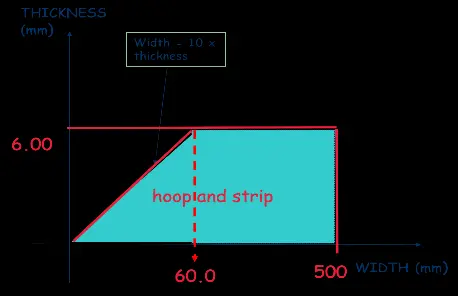
For the purposes of heading 72.11, 72.12, 72.20 and 72.26 hoop and strip are rolled products with sheared or unsheared edges, of a rectangular section of a thickness not exceeding 6 mm, of a width not exceeding 500 mm and of such dimensions that the thickness does not exceed one tenth of the width, in straight strips, coils or flattened coils.
Condition:
1.In coil or straight;
2.Rectangular section;
3.The thickness not exceeding 6mm;
4.The width not exceeding 500mm and
5.The thickness does not exceed one tenth of the width
Example:
1. 3mm T x 350 mmW in coil = hoop and strip
2. 3mm T x 25 mmW in coil = Not hoop and strip
3. 7mm T x 75mmW in coil =Not hoop and strip
4. 5mm T x 480mm in straight= Hoop and strip
Tiếng Việt
Theo mục đích của nhóm 72.11, 72.12, 72.20 và 72.26 dạng đai và dải là các sản phẩm dạng cuộn có mép bị cắt hoặc không bị cắt (bị vát hoặc không vát cạnh), mặt cắt ngang hình chữ nhật chiều dày không quá 6 mm, chiều rộng không quá 500 mm và chiều dày không quá 1/10 chiều rộng, ở dạng dải thẳng, cuộn hoặc cuộn phẳng.
Các điều kiện:
1.Dạng cuộn hoặc thẳng;
2. Mặt cắt ngang hình chữ nhật;
3.Chiều dày không quá 6 mm;
4.Chiều rộng không quá 500 mm và
5.Chiều dày không quá 1/10 chiều rộng
Ví dụ:
1.dày 3mm x rộng 350 mm dạng cuộn = đai và dải
2.dày 3mm x rộng 25 mm dạng cuộn = không phải dạng đai và dải
3.dày 7mm x rộng 75mm dạng cuộn = không phải dạng đai và dải
4.dày 5mm x rộng 480mm thẳng = Dạng đai và dải
Supplementary Explanatory Notes (SEN, ASEAN 2022)
Product description72.11 72.12UNIVERSAL PLATES
TẤM PHỔ DỤNG
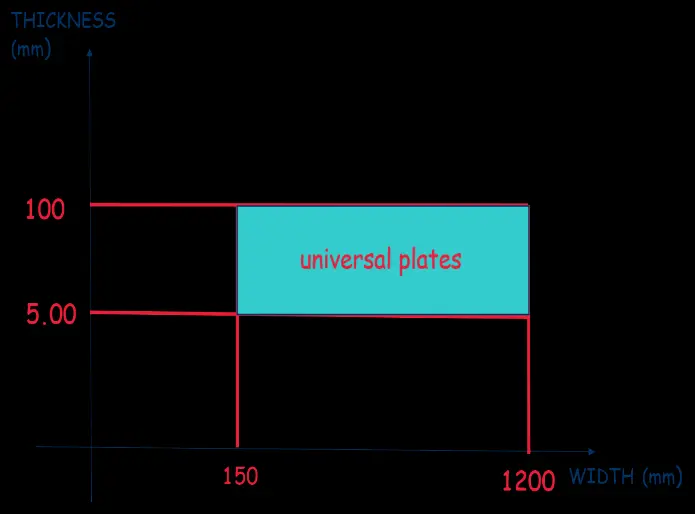
Universal plates are products of rectangular section, hot rolled lengthwise in a closed box or universal mill, of a thickness exceeding 5 mm but not exceeding 100 mm, and a width exceeding 150 mm but less than 600 mm.
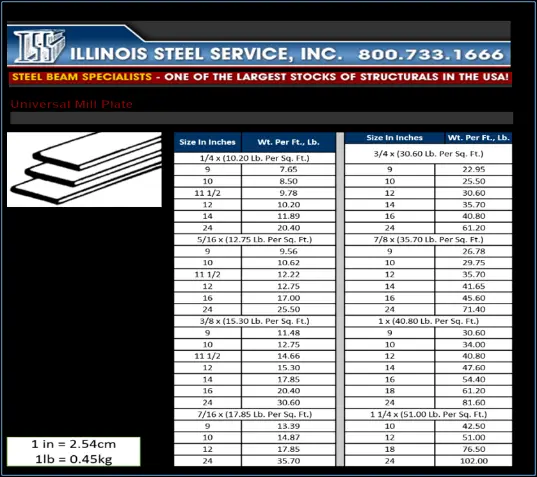
Reference: Universal Mill Steel Plates A.S.T.M. A-36
Conditions
1.In straight;
2.Hot rolled plate;
3.Rectangular section;
4.The thickness exceeding 5mm but not exceeding 100mm and;
5.The width exceeding 150 but not exceeding 1200 mm.
Example:
Tiếng Việt
Tấm phổ dụng là sản phẩm có mặt cắt ngang hình chữ nhật, cán nóng theo chiều dọc trong một khuôn kín hoặc máy cán phổ dụng, chiều dày trên 5 mm nhưng không quá 100 mm và chiều rộng trên 150 mm nhưng dưới 600 mm.
Tham khảo: Thép tấm cán phổ dụng tiêu chuẩn A.S.T.M. A-36
Các điều kiện
1.Thẳng;
2.Tấm cán nóng;
3.Mặt cắt ngang hình chữ nhật;
4.Chiều dày trên 5mm nhưng không quá 100 mm và;
5.Chiều rộng trên 150 nhưng không quá 1200 mm.
Ví dụ:
Notes for Section XV — BASE METALS AND ARTICLES OF BASE METAL
Notes
1. This Section does not cover:
(a) Prepared paints, inks or other products with a basis of metallic flakes or powder (headings 32.07 to 32.10, 32.12, 32.13 or 32.15);
(b) Ferro-cerium or other pyrophoric alloys (heading 36.06);
(c) Headgear or parts thereof of heading 65.06 or 65.07;
(d) Umbrella frames or other articles of heading 66.03;
(e) Goods of Chapter 71 (for example, precious metal alloys, base metal clad with precious metal, imitation jewellery);
(f) Articles of Section XVI (machinery, mechanical appliances and electrical goods);
(g) Assembled railway or tramway track (heading 86.08) or other articles of Section XVII (vehicles, ships and boats, aircraft);
(h) Instruments or apparatus of Section XVIII, including clock or watch springs;
(ij) Lead shot prepared for ammunition (heading 93.06) or other articles of Section XIX (arms and ammunition);
(k) Articles of Chapter 94 (for example, furniture, mattress supports, luminaires and lighting fittings, illuminated signs, prefabricated buildings);
(l) Articles of Chapter 95 (for example, toys, games, sports requisites);
(m) Hand sieves, buttons, pens, pencil-holders, pen nibs, monopods, bipods, tripods and similar articles or other articles of Chapter 96 (miscellaneous manufactured articles); or
(n) Articles of Chapter 97 (for example, works of art).
2. Throughout the Nomenclature, the expression “parts of general use” means:
(a) Articles of heading 73.07, 73.12, 73.15, 73.17 or 73.18 and similar articles of other base metal, other than articles specially designed for use exclusively in implants in medical, surgical, dental or veterinary sciences (heading 90.21);
(b) Springs and leaves for springs, of base metal, other than clock or watch springs (heading 91.14); and
(c) Articles of headings 83.01, 83.02, 83.08, 83.10 and frames and mirrors, of base metal, of heading 83.06.
In Chapters 73 to 76 and 78 to 82 (but not in heading 73.15) references to parts of goods do not include references to parts of general use as defined above.
Subject to the preceding paragraph and to Note 1 to Chapter 83, the articles of Chapter 82 or 83 are excluded from Chapters 72 to 76 and 78 to 81.
3. Throughout the Nomenclature, the expression “base metals” means: iron and steel, copper, nickel, aluminium, lead, zinc, tin, tungsten (wolfram), molybdenum, tantalum, magnesium, cobalt, bismuth, cadmium, titanium, zirconium, antimony, manganese, beryllium, chromium, germanium, vanadium, gallium, hafnium, indium, niobium (columbium), rhenium and thallium.
4. Throughout the Nomenclature, the term “cermets” means products containing a microscopic heterogeneous combination of a metallic component and a ceramic component. The term “cermets” includes sintered metal carbides (metalcarbides sintered with a metal).
5. Classification of alloys (other than ferro-alloys and master alloys as defined in Chapters 72 and 74):
(a) An alloy of base metals is to be classified as an alloy of the metal which predominates by weight over each of the other metals;
(b) An alloy composed of base metals of this Section and of elements not falling within this Section is to be treated as an alloy of base metals of this Section if the total weight of such metals equals or exceeds the total weight of the other elements present;
(c) In this Section the term “alloys” includes sintered mixtures of metal powders, heterogeneous intimate mixtures obtained by melting (other than cermets) and intermetallic compounds.
6. Unless the context otherwise requires, any reference in the Nomenclature to a base metal includes a reference to alloys which, by virtue of Note 5 above, are to be classified as alloys of that metal.
7. Classification of composite articles:
Except where the headings otherwise require, articles of base metal (including articles of mixed materials treated as articles of base metal under the General Interpretative Rules) containing two or more base metals are to be treated as articles of the base metal predominating by weight over each of the other metals.
For this purpose:
(a) Iron and steel, or different kinds of iron or steel, are regarded as one and the same metal;
(b) An alloy is regarded as being entirely composed of that metal as an alloy of which, by virtue of Note 5, it is classified; and
(c) A cermet of heading 81.13 is regarded as a single base metal.
8. In this Section, the following expressions have the meanings hereby assigned to them:
(a) Waste and scrap
(i) All metal waste and scrap;
(ii) Metal goods definitely not usable as such because of breakage, cutting-up, wear or other reasons.
(b) Powders
Products of which 90% or more by weight passes through a sieve having a mesh aperture of 1 mm.
9. For the purposes of Chapters 74 to 76 and 78 to 81, the following expressions have the meanings hereby assigned to them:
(a) Bars and rods
Rolled, extruded, drawn or forged products, not in coils, which have a uniform solid cross-section along their whole length in the shape of circles, ovals, rectangles (including squares), equilateral triangles or regular convex polygons (including “flattened circles” and “modified rectangles”, of which two opposite sides are convex arcs, the other two sides being straight, of equal length and parallel). Products with a rectangular (including square), triangular or polygonal cross-section may have corners rounded along their whole length. The thickness of such products which have a rectangular (including “modified rectangular”) cross-section exceeds one-tenth of the width. The expression also covers cast or sintered products, of the same forms and dimensions, which have been subsequently worked after production (otherwise than by simple trimming or de-scaling), provided that they have not thereby assumed the character of articles or products of other headings.
Wire-bars and billets of Chapter 74 with their ends tapered or otherwise worked simply to facilitate their entry into machines for converting them into, for example, drawing stock (wire-rod) or tubes, are however to be taken to be unwrought copper of heading 74.03. This provision applies mutatis mutandis to the products of Chapter 81.
(b) Profiles
Rolled, extruded, drawn, forged or formed products, coiled or not, of a uniform cross-section along their whole length, which do not conform to any of the definitions of bars, rods, wire, plates, sheets, strip, foil, tubes or pipes. The expression also covers cast or sintered products, of the same forms, which have been subsequently worked after production (otherwise than by simple trimming or de-scaling), provided that they have not thereby assumed the character of articles or products of other headings.
(c) Wire
Rolled, extruded or drawn products, in coils, which have a uniform solid cross-section along their whole length in the shape of circles, ovals, rectangles (including squares), equilateral triangles or regular convex polygons (including “flattened circles” and “modified rectangles”, of which two opposite sides are convex arcs, the other two sides being straight, of equal length and parallel). Products with a rectangular (including square), triangular or polygonal cross-section may have corners rounded along their whole length. The thickness of such products which have a rectangular (including “modified rectangular”) cross-section exceeds one-tenth of the width.
(d) Plates, sheets, strip and foil
Flat-surfaced products (other than the unwrought products), coiled or not, of solid rectangular (other than square) cross-section with or without rounded corners (including “modified rectangles” of which two opposite sides are convex arcs, the other two sides being straight, of equal length and parallel) of a uniform thickness, which are:
Headings for plates, sheets, strip, and foil apply, inter alia, to plates, sheets, strip, and foil with patterns (for example, grooves, ribs, chequers, tears, buttons, lozenges) and to such products which have been perforated, corrugated, polished or coated, provided that they do not thereby assume the character of articles or products of other headings.
(e) Tubes and pipes
Hollow products, coiled or not, which have a uniform cross-section with only one enclosed void along their whole length in the shape of circles, ovals, rectangles (including squares), equilateral triangles or regular convex polygons, and which have a uniform wall thickness. Products with a rectangular (including square), equilateral triangular or regular convex polygonal cross-section, which may have corners rounded along their whole length, are also to be considered as tubes and pipes provided the inner and outer cross-sections are concentric and have the same form and orientation. Tubes and pipes of the foregoing cross-sections may be polished, coated, bent, threaded, drilled, waisted, expanded, cone-shaped or fitted with flanges, collars or rings.
Notes for Chapter 72 — Iron and steel
Notes
1. In this Chapter and, in the case of Notes (d), (e) and (f) throughout the Nomenclature, the following expressions have the meanings hereby assigned to them:
(a) Pig iron
Iron-carbon alloys not usefully malleable, containing more than 2% by weight of carbon and which may contain by weight one or more other elements within the following limits:
(b) Spiegeleisen
Iron-carbon alloys containing by weight more than 6% but not more than 30% of manganese and otherwise conforming to the specification at (a) above.
(c) Ferro-alloys
Alloys in pigs, blocks, lumps or similar primary forms, in forms obtained by continuous casting and also in granular or powder forms, whether or not agglomerated, commonly used as an additive in the manufacture of other alloys or as de-oxidants, de-sulphurising agents or for similar uses in ferrous metallurgy and generally not usefully malleable, containing by weight 4% or more of the element iron and one or more of the following:
(d) Steel
Ferrous materials other than those of heading 72.03 which (with the exception of certain types produced in the form of castings) are usefully malleable and which contain by weight 2% or less of carbon. However, chromium steels may contain higher proportions of carbon.
(e) Stainless steel
Alloy steels containing, by weight, 1.2% or less of carbon and 10.5% or more of chromium, with or without other elements.
(f) Other alloy steel
Steels not complying with the definition of stainless steel and containing by weight one or more of the following elements in the proportion shown:
(g) Remelting scrap ingots of iron or steel
Products roughly cast in the form of ingots without feeder-heads or hot tops, or of pigs, having obvious surface faults and not complying with the chemical composition of pig iron, spiegeleisen or ferro-alloys.
(h) Granules
Products of which less than 90% by weight passes through a sieve with a mesh aperture of 1 mm and of which 90% or more by weight passes through a sieve with a mesh aperture of 5 mm.
(ij) Semi-finished products
Continuous cast products of solid section, whether or not subjected to primary hot-rolling; and
Other products of solid section, which have not been further worked than subjected to primary hot-rolling or roughly shaped by forging, including blanks for angles, shapes or sections.
These products are not presented in coils.
(k) Flat-rolled products
Rolled products of solid rectangular (other than square) cross-section, which do not conform to the definition at (ij) above in the form of:
Flat-rolled products include those with patterns in relief derived directly from rolling (for example, grooves, ribs, chequers, tears, buttons, lozenges) and those which have been perforated, corrugated or polished, provided that they do not thereby assume the character of articles or products of other headings.
Flat-rolled products of a shape other than rectangular or square, of any size, are to be classified as products of a width of 600 mm or more, provided that they do not assume the character of articles or products of other headings.
(l) Bars and rods, hot-rolled, in irregularly wound coils
Hot-rolled products in irregularly wound coils, which have a solid cross-section in the shape of circles, segments of circles, ovals, rectangles (including squares), triangles or other convex polygons (including “flattened circles” and “modified rectangles”, of which two opposite sides are convex arcs, the other two sides being straight, of equal length and parallel). These products may have indentations, ribs, grooves or other deformations produced during the rolling process (reinforcing bars and rods).
(m) Other bars and rods
Products which do not conform to any of the definitions at (ij), (k) or (l) above or to the definition of wire, which have a uniform solid cross-section along their whole length in the shape of circles, segments of circles, ovals, rectangles (including squares), triangles or other convex polygons (including “flattened circles” and “modified rectangles”, of which two opposite sides are convex arcs, the other two sides being straight, of equal length and parallel). These products may:
(n) Angles, shapes and sections
Products having a uniform solid cross-section along their whole length which do not conform to any of the definitions at (ij), (k), (l) or (m) above or to the definition of wire.
Chapter 72 does not include products of heading 73.01 or 73.02.
(o) Wire
Cold-formed products in coils, of any uniform solid cross-section along their whole length, which do not conform to the definition of flat-rolled products.
(p) Hollow drill bars and rods
Hollow bars and rods of any cross-section, suitable for drills, of which the greatest external dimension of the cross-section exceeds 15 mm but does not exceed 52 mm, and of which the greatest internal dimension does not exceed one half of the greatest external dimension. Hollow bars and rods of iron or steel not conforming to this definition are to be classified in heading 73.04.
2. Ferrous metals clad with another ferrous metal are to be classified as products of the ferrous metal predominating by weight.
3. Iron or steel products obtained by electrolytic deposition, by pressure casting or by sintering are to be classified, according to their form, their composition and their appearance, in the headings of this Chapter appropriate to similar hot-rolled products.
Subheading Notes.
1. In this Chapter the following expressions have the meanings hereby assigned to them:
(a) Alloy pig iron
Pig iron containing, by weight, one or more of the following elements in the specified proportions:
(b) Non-alloy free-cutting steel
Non-alloy steel containing, by weight, one or more of the following elements in the specified proportions:
(c) Silicon-electrical steel
Alloy steels containing by weight at least 0.6% but not more than 6% of silicon and not more than 0.08% of carbon. They may also contain by weight not more than 1% of aluminium but no other element in a proportion that would give the steel the characteristics of another alloy steel.
(d) High speed steel
Alloy steels containing, with or without other elements, at least two of the three elements molybdenum, tungsten and vanadium with a combined content by weight of 7% or more, 0.6% or more of carbon and 3 to 6% of chromium.
(e) Silico-manganese steel
Alloy steels containing by weight:
2. For the classification of ferro-alloys in the subheadings of heading 72.02 the following rule should be observed:
A ferro-alloy is considered as binary and classified under the relevant subheading (if it exists) if only one of the alloy elements exceeds the minimum percentage laid down in Chapter Note 1 (c); by analogy, it is considered respectively as ternary or quaternary if two or three alloy elements exceed the minimum percentage.
For the application of this rule the unspecified “other elements” referred to in Chapter Note 1 (c) must each exceed 10% by weight.
Vietnam trade in subheading 7212.10
Figures cover the whole 6-digit subheading 7212.10, not code 72121094 alone — UN Comtrade only publishes to 6 digits. Latest year available for Vietnam is 2023.
Imports
- 20214 mn USD
- 20226 mn USD
- 20236 mn USD
Top partners 2023
- Other Asia, nes3 mn USD
- China2 mn USD
- Rep. of Korea1 mn USD
- Japan57,469 USD
Exports
- 2021158,888 USD
- 2022215,820 USD
- 2023121,763 USD
Top partners 2023
- Cambodia119,741 USD
- Myanmar1,383 USD
- Lao People's Dem. Rep.639 USD
2025: as reported by partner countries
Vietnam has not filed 2025 yet, so this is rebuilt from what its 16 largest trading partners reported about trade with Vietnam (85% of Vietnam's trade). Not the same measure as the figures above — compare it only with the 2023 row beside it.
| Flow | 2023 | 2025 | Change |
|---|---|---|---|
| Exports | 45,772 USD | 5,014 USD | -89% |
| Imports | 1 mn USD | 192,665 USD | -82% |
- Exports 2023: partners reported 45,772 USD where Vietnam reported 121,763 USD — 0.38× on this measure.
- Imports 2023: partners reported 1 mn USD where Vietnam reported 6 mn USD — 0.17× on this measure.
The gap is not a rounding difference: goods re-exported through Hong Kong or Singapore, a different heading chosen by the importing customs, and origin-based versus destination-based attribution all pull the two measures apart. Use the year-on-year change, not the level.
Source: UN Comtrade (preview API) — reported by Vietnam. Partner totals are as reported and may differ from partner-country statistics.
Corresponding US tariff lines
Six digits are identical worldwide under the HS Convention, so 7212.10 is the same subheading in both schedules. What differs is how each country splits it: below are the 1 US line under 7212.10.
| US HTS code | Description | General duty |
|---|---|---|
| 7212.10.00.00 | Plated or coated with tin(kg) | Free |
Additional Chapter 99 duties apply to goods of Vietnam
- 9903.02.69 +20% — The duty provided in the applicable subheading + 20%
- 9903.05.84 +12.5% — The duty provided in the applicable subheading + 12.5%
These are added to the General duty above, not in place of it. Whether a given article falls inside their scope — and the exclusion lists — is set out in the U.S. notes to Chapter 99, which are prose and not machine-readable, so this site does not assign them per code. Check the official schedule before quoting a landed cost.
Already terminated: 9903.01.72 +46%
Selling to a US buyer? Screen the parties first — buyer, L/C bank and forwarder against the US restricted lists; a listed party can get the shipment held.
The General column is the rate for Vietnam: the Special column lists US preference programmes (GSP, USMCA, KORUS…) and Vietnam is in none of them. Source: USITC Harmonized Tariff Schedule of the United States — 2026 HTS Revision 18. For reference only — classification on import is decided by US Customs, and anti-dumping, countervailing and Section 232/301 measures are not covered here.
Corresponding Japanese tariff lines
7212.10 is the same subheading in both schedules (six digits are identical worldwide under the HS Convention). Vietnamese goods can enter Japan under four parallel preference routes — the columns below — and the exporter picks whichever C/O gives the better rate.
| Line | Description | MFN | VJEPA | AJCEP | CPTPP | RCEP |
|---|---|---|---|---|---|---|
| 7212.10-000 | Plated or coated with tin(KG) | Free | Free | Free | Free | Free |
MFN is the lowest of the schedule's General/Temporary/WTO columns (hover to see all three). The preference columns require the matching certificate of origin; an em dash means that agreement gives no preference for the line. Source: Japan's Tariff Schedule, Japan Customs (as of August 8, 2026). For reference only — classification on import is decided by Japan Customs.
Codes at the same level under “Other:”
Check neighbouring codes to make sure the classification fits best.
Data updated: 11/08/2026 · Found wrong or missing data? Report a data error