Petroleum oils and oils obtained from bituminous minerals (other than crude) and preparations not elsewhere specified or included, containing by weight 70% or more of petroleum oils or of oils obtained from bituminous minerals, these oils being the basic constituents of the preparations, other than those containing biodiesel and other than waste oils › Light oils and preparations
2710.12.60 — Low aromatic solvents containing by weight less than 1% aromatic content
Dung môi có hàm lượng cấu tử thơm thấp dưới 1% tính theo trọng lượng
Unit: kg/liter (kg/lít)
Hồ sơ mã HS — hscodevn.com/hs/27101260 · in ngày 15/9/2026 · chỉ mang tính tham khảo, đối chiếu văn bản pháp lý hiện hành
HS code 27101260 covers low aromatic solvents containing by weight less than 1% aromatic content under heading 2710 (petroleum oils and oils obtained from bituminous minerals, other than crude; preparations not elsewhere specified or included, containing by weight 70% or more of petroleum oils or of oils obtained from bituminous minerals, these oils being the basic constituents of the preparations; waste oils), Chapter 27. The MFN import duty is 10%; the lowest FTA rate is 0% under ASEAN (ATIGA) (C/O form D required). VAT: 8/10%; subject to environmental protection tax. Unit of quantity: kg/liter.
MFN import duty
10%
Lowest FTA
0%
ASEAN (ATIGA)
VAT
8/10%
8% under the current reduction · 10% standard
Excise / Env. tax
MT
Environmental tax
Distinguish from heading:2709Petroleum oils and oils…2707Oils and other products of the…2620Slag, ash and residues (other…3403Lubricating preparations…
Import duty comparison across FTA schedules
Full table with legal documents & effective dates
| Tax / Schedule | Rate | Document | Effective |
|---|---|---|---|
| Preferential import duty (MFN) | 10% | 26/2023/NĐ-CP | 15/07/2023 |
| Ordinary import duty | 15% | 15/2023/QĐ-TTg | 15/07/2023 |
| ASEAN (ATIGA)(2026) | 0% | 126/2022/NĐ-CP | 30/12/2022 |
| ASEAN - China (ACFTA) | 5%excl. CN | 118/2022/NĐ-CP | 30/12/2022 |
| ASEAN - Japan (AJCEP)(01/04/2026 - 31/3/2027) | * | 120/2022/NĐ-CP | 30/12/2022 |
| Vietnam - Japan (VJEPA)(1/4/2026 - 31/3/2027) | * | 124/2022/NĐ-CP | 30/12/2022 |
| ASEAN - Korea (AKFTA) | 8% | 119/2022/NĐ-CP | 30/12/2022 |
| ASEAN - Australia/New Zealand (AANZFTA) | * | 121/2022/NĐ-CP | 30/12/2022 |
| ASEAN - India (AIFTA)(01/01/2026 - 31/12/2026) | * | 122/2022/NĐ-CP | 30/12/2022 |
| Vietnam - Korea (VKFTA)(2026) | 8% | 125/2022/NĐ-CP | 30/12/2022 |
| Vietnam - Chile (VCFTA)(2026) | * | 112/2022/NĐ-CP | 30/12/2022 |
| Vietnam - Eurasian Economic Union (VN-EAEU)(2026) | 7% | 113/2022/NĐ-CP | 30/12/2022 |
| CPTPP Agreement(2026) | 7% | 115/2022/NĐ-CP | 30/12/2022 |
| ASEAN - Hong Kong (AHKFTA)(2026) | * | 123/2022/NĐ-CP | 30/12/2022 |
| Vietnam - EU (EVFTA)(2026) | 8% | 116/2022/NĐ-CP | 30/12/2022 |
| Vietnam - UK (UKVFTA)(2026) | 8% | 117/2022/NĐ-CP | 30/12/2022 |
| Vietnam - Laos | 10% | 206/2025/NĐ-CP | 15/07/2025 |
| Vietnam - Israel (VIFTA)(2026) | * | 131/2024/NĐ-CP | 15/10/2024 |
| RCEP - Group A (ASEAN)(2026) | * | 129/2022/NĐ-CP | 30/12/2022 |
| RCEP - Group B (China)(2026) | * | 129/2022/NĐ-CP | 30/12/2022 |
| RCEP - Group C (Korea)(2026) | * | 129/2022/NĐ-CP | 30/12/2022 |
| RCEP - Group D (Japan)(2026) | * | 129/2022/NĐ-CP | 30/12/2022 |
| RCEP - Group E (Australia)(2026) | * | 129/2022/NĐ-CP | 30/12/2022 |
| RCEP - Group F (New Zealand)(2026) | * | 129/2022/NĐ-CP | 30/12/2022 |
FTA schedules are cut annually: the rate shown applies to the period in brackets, per the decree's appendix.
FTA duty phase-down
Upcoming reductions for this code — the new rate takes effect on this site automatically on the effective date.
- Vietnam - Eurasian Economic Union (VN-EAEU)7% (2026)0%from 01/01/2027
- Vietnam - EU (EVFTA)8% (2026)7%from 01/01/2027…continues per the schedule — see the decree annex
- Vietnam - UAE (CEPA)9%8%from 01/01/2027…continues per the schedule — see the decree annex
- Vietnam - UK (UKVFTA)8% (2026)7%from 01/01/2027…continues per the schedule — see the decree annex
Only the steps present in the data (each schedule's next period) are shown. A schedule not reaching 0% here does not mean it stops — the full schedule is in the decree annex.
VAT · Excise tax · Environmental protection tax
| Tax / Schedule | Rate | Document | Effective |
|---|---|---|---|
| Value added tax (VAT) | 8/10% | 181/2025/NĐ-CP | 01/07/2025 |
| Environmental protection tax | MT | 109/2025/UBTVQH15 | 06/08/2021 |
Rules of origin by FTA
To claim an FTA rate the goods must meet the origin criterion below AND carry a valid C/O — the right HS code alone is not enough. Step-by-step self-check →
- - Light oils and preparations:
RVC(40) or CTH
RVC(40) hoặc CTH
CTHRVC40
Source: Circular No. 44/2025/TT-BCT · annex uses HS 2022 while this site uses AHTN 2022 — check headings that changed between versions
- - Light oils and preparations:
RVC40 or CTH
RVC40 hoặc CTH
CTHRVC40
Source: Circular No. 12/2019/TT-BCT
- - Light oils and preparations:
CTH, except from heading 22.07.
CTH, ngoại trừ từ nhóm 22.07.
CTH
Source: Circular No. 03/2019/TT-BCT · annex uses HS 2012 while this site uses AHTN 2022 — check headings that changed between versions
Petroleum oils and oils obtained from bituminous minerals, other than crude; preparations not elsewhere specified or included, containing by weight 70% or more of petroleum oils or of oils obtained from bituminous minerals, these oils being the basic constituents of the preparations; waste oils
Refining operations or one or more specific process(es); or other operations in which the materials used are classified in a heading other than that of the product. However, materials of the same heading as the product may be used, provided that their total value does not exceed 50% of the ex-works price of the product.
Các công đoạn lọc dầu hoặc một hoặc nhiều công đoạn gia công cụ thể; hoặc Các công đoạn khác, trong đó nguyên liệu được sử dụng khác với Nhóm của sản phẩm. Tuy nhiên, được phép sử dụng nguyên liệu cùng Nhóm với sản phẩm với điều kiện tổng trị giá sử dụng không vượt quá 50% giá xuất xưởng của sản phẩm.
Source: Circular No. 14/2026/TT-BCT
- - Light oils and preparations:
CTH or RVC40
CTH hoặc RVC40
CTHRVC40
Source: Circular No. 32/2022/TT-BCT · annex uses HS 2022 while this site uses AHTN 2022 — check headings that changed between versions
Petroleum oils and oils obtained from bituminous minerals, other than crude; preparations not elsewhere specified or included, containing by weight 70% or more of petroleum oils or of oils obtained from bituminous minerals, these oils being the basic constituents of the preparations; waste oils
Sản xuất bằng cách lọc dầu hoặc một hay nhiều công đoạn sản xuất cụ thể2; hoặc sản xuất bằng các công đoạn khác, trong đó nguyên liệu được phân loại vào Nhóm khác với Nhóm của sản phẩm. Tuy nhiên, có thể sử dụng nguyên liệu cùng Nhóm với sản phẩm với điều kiện tổng trị giá các nguyên liệu này không vượt quá 50% giá xuất xưởng của sản phẩm.
Source: Circular No. 02/2021/TT-BCT
Dầu có nguồn gốc từ dầu mỏ và các loại dầu thu được từ các khoáng bi-tum, trừ dầu thô; các chế phẩm chưa được chi tiết hoặc ghi ở nơi khác, có chứa hàm lượng từ 70% trở lên là dầu có nguồn gốc từ dầu mỏ hoặc các loại dầu thu được từ các khoáng bi-tum, những loại dầu này là thành phần cơ bản của các chế phẩm đó; dầu thải.
CTH
CTH
CTH
or
60%
60%
Source: Circular No. 11/2024/TT-BCT
- - Light oils and preparations:
CTSH
CTSH
CTSH
Source: Circular No. 09/2022/TT-BCT · annex uses HS 2017 while this site uses AHTN 2022 — check headings that changed between versions
- - Light oils and preparations:
CTH
CTH
CTH
Source: Circular No. 01/2024/TT-BCT · annex uses HS 2022 while this site uses AHTN 2022 — check headings that changed between versions
Mineral fuels, mineral oils and products of their distillation; bituminous substances; mineral waxes
CTH
CTH
CTH
or
QVC 35%
QVC 35%
QVC35
Source: Circular No. 24/2026/TT-BCT · annex uses HS 2022 while this site uses AHTN 2022 — check headings that changed between versions
Agreements with no rule specific to this code
This code carries a preferential rate under the agreements below but has no line of its own in the product-specific rules annex. The goods must still meet an origin requirement.
The agreement sets a general rule for codes outside the annex:
1. The goods referred to in Clause 3, Article 5 of this Circular, other than the goods provided in Clause 2 of this Article, are considered originating if they have an RVC of not less than 40% calculated in accordance with Article 8 of this Circular.
Source: Circular No. 21/2019/TT-BCT · Article 7(1)
The agreement sets a general rule for codes outside the annex:
1. Products referred to in Clause 2, Article 2 are considered originating if:
a) The AIFTA content is not less than thirty-five per cent (35%) of the FOB value; and
b) The non-originating materials used in the production of that product have undergone a change in tariff classification at the six (6)-digit level (CTSH) of the Harmonized System.
provided that the last production process is carried out in the territory of the exporting Member State.
CTSH
Source: Circular No. 15/2010/TT-BCT · Article 4(1) of Appendix 1
The agreement sets a general rule for codes outside the annex:
1. For the purposes of paragraph 2 of Article 5 of this Circular, goods shall be considered as originating in a Member State in one of the following cases:
a) The Regional Value Content (RVC) is not less than 40%, calculated according to the formula provided for in Article 8 of this Circular, and the final process of production is performed in that Member State.
b) All non-originating materials used in the production of the goods have undergone a change in tariff classification (CTC) at the four (04)-digit level (change of Heading) of the Harmonized Commodity Description and Coding System in that Member State.
The exporter of each Member State may choose to apply the origin criterion provided for in point a or point b of paragraph 1 of this Article to determine the origin of goods.
CTC
Source: Circular No. 37/2022/TT-BCT · Article 7(1)
The agreement sets a general rule for codes outside the annex:
1. For the purposes of point b clause 1 Article 5 of this Circular, goods not covered by Article 8 of this Circular shall be considered as originating if they have a regional value content (hereinafter referred to as RVC) of at least 40% of the FOB value, or if they have undergone a change in tariff classification at the 4-digit level (hereinafter referred to as CTH) of the Harmonized System.
CTH
Source: Circular No. 49/2025/TT-BCT · Article 7(1)
The agreement sets a general rule for codes outside the annex:
1. General origin criteria:
a) Goods referred to in Clause 2, Article 2 of this Appendix are considered originating in the Member State where the production or processing of those goods took place if:
- The goods have a regional value content (hereinafter referred to as the “ASEAN Value Content” or the “Regional Value Content (RVC)”) of not less than 40% (forty per cent), calculated in accordance with the formula provided in Article 5 of this Appendix; or
- All non-originating materials used in the production of those goods have undergone a change in tariff classification (hereinafter referred to as “CTC”) at the 4 (four)-digit level (that is, a change of heading) of the Harmonized System.
b) Each Member State shall allow the exporter of the goods to decide whether to use the criterion of “RVC of not less than 40% (forty per cent)” or that of “a change in tariff classification at the 4 (four)-digit level” referred to at Point a, Clause 1 in determining the origin of the goods.
CTC
Source: Circular No. 22/2016/TT-BCT · Article 4(1) of Appendix I
The agreement sets a general rule for codes outside the annex:
1. For the purposes of Clause 2, Article 2, goods are considered originating in the Member State where the production or processing took place if:
a) The goods have a regional value content (RVC) of not less than forty per cent (40%), calculated in accordance with Article 5; or
b) All the non-originating materials used in the production of those goods undergo a change in tariff classification (hereinafter referred to as “CTC”) at the four (4)-digit level (that is, a change of heading) of the Harmonized System.
2. Each Member State shall allow the exporter to use either of the criteria provided at Point a, Clause 1 or Point b, Clause 1 of this Article to determine the origin of the goods.
CTC
Source: Circular No. 31/2013/TT-BCT · Article 4(1)
The agreement sets a general rule for codes outside the annex:
1. For the purposes of Clause 2, Article 2, goods are considered originating in a Member State if:
a) The goods have a local value content (hereinafter referred to as “LVC”), calculated in accordance with the formula provided in Article 5, of not less than forty (40) per cent, and the last production process for those goods is carried out in that Member State; or
b) All non-originating materials used in the production of the goods in that Member State have undergone a change in tariff classification (hereinafter referred to as CTC) at the 4-digit level (change of heading) under the Harmonized System.
CTCLVC
Source: Circular No. 10/2009/TT-BCT · Article 4(1) of Appendix 1
The agreement sets a general rule for codes outside the annex:
1. General origin criterion
a) Goods specified in Clause 2 of Article 2 shall be considered as originating in the Member State where the working or processing of those goods has taken place if:
- The goods have a regional value content (hereinafter referred to as the “Viet Nam - Laos value content” or the “regional value content (LVC)”) of not less than forty percent (40%), calculated in accordance with the formula provided in Article 5; or
- All non-originating materials used in the production of those goods have undergone a change in tariff classification (hereinafter referred to as “CTC”) at the four (4)-digit level (meaning a change of heading) of the Harmonized System.
b) Each Member State shall allow the exporter of the goods to decide to use either of the two criteria “LVC of not less than forty percent (40%)” or “change in tariff classification at the four (04)-digit level” referred to at point a of Clause 1 in order to determine the origin of the goods.
CTCLVC
Source: Circular No. 04/2010/TT-BCT · Article 4(1) of Appendix 1
Criteria are translated for reference; the Vietnamese wording quoted underneath is the binding text.
Supplementary Explanatory Notes (SEN, ASEAN 2022)
Product description27.10 27.10LIGHT OILS, MEDIUM OILS AND HEAVY OILS
DẦU NHẸ, DẦU TRUNG VÀ DẦU NẶNG
For the purposes of heading 27.10:
a. “Light oils” means oils of which 90 % or more by volume (including losses) distils at 210 °C (ASTM D 86 method);
b. “Medium oils” means oils of which less than 90 % by volume (including losses) distils at 210 °C and 65 % or more by volume (including losses) distils at 250 °C (ASTM D 86 method);
c. “Heavy oils” means oils of which less than 65 % by volume (including losses) distils at 250 °C by the ASTM D 86 method or of which the distillation percentage at 250 °C cannot be determined by that method.
(Source: Malaysia)
2710.12.31 271012.39
AVIATION SPIRIT, OF A KIND USED IN AVIATION PISTON- ENGINES
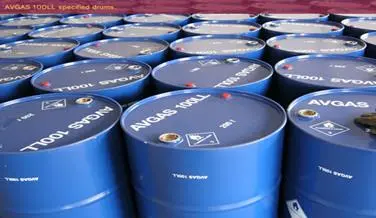
Aviation spirit is used to propel aircrafts. It is a high quality motor gasoline prepared especially for aviation piston engines, and is also known as Avgas, with additives, having the RON ranges between 87-145 depends on its grade/specification which assure performance under flight conditions. Aviation spirit of aviation turbine engines is known as aviation turbine fuel or Avjet . The type of fuel is specific to the type of engines, not the aircraft. Aircrafts including the helicopter generally use two type of engines:
1. PISTON ENGINES - similar to automobile engines which are used in small-airplane and helicopter engines , and run on high quality gasoline which is refined and filtered to be much cleaner than automotive gasoline . This type of fuel is typically 100 octanes (Low Lead).
2. TURBINE ENGINES - usually called a jet engine and by design is similar to the engines of commercial airlines and medium to large helicopters.
Turbine engines use a type of fuel known as "Jet A", which is similar to very clean Kerosene. Airplanes that have jet engines, (not piston engines) are called jets and only using Jet A fuel.
"Aviation spirit, not of a kind used as jet fuel" refers to aviation spirit (Avgas) for air plane and helicopter that use piston engine.
Aviation Spirit, Not of A Kind Used as Jet Fuel, 100 Octane and Above
Avgas is gasoline fuel to reciprocating piston engine aircraft and is not to be confused with jet fuel. As with all gasoline, avgas is very volatile and is extremely flammable at normal operating temperatures. Avgas grades are defined primarily by their octane rating. Two ratings are applied to aviation gasoline (the lean mixture rating and the rich mixture rating) which results in a multiple numbering system. It is common practice to designate the grade by just the lean mixture performance.
Tiếng Việt
Theo mục đích của nhóm 27.10:
a. "Dầu nhẹ" là loại dầu trong đó dầu chiếm 90% trở lên theo thể tích (bao gồm cả hao hụt) chưng cất ở nhiệt độ 210 °C (phương pháp ASTM D 86);
b. "Dầu trung" là loại dầu trong đó dầu chiếm dưới 90% theo thể tích (bao gồm cả hao hụt) chưng cất ở nhiệt độ 210 °C và 65% trở lên theo thể tích (bao gồm cả hao hụt) chưng cất ở nhiệt độ 250°C (phương pháp ASTM D 86);
c. "Dầu nặng" là loại dầu trong đó dầu chiếm dưới 65% theo thể tích (bao gồm cả hao hụt) chưng cất ở nhiệt độ 250 °C theo phương pháp ASTM D 86 hoặc không xác định được tỷ lệ khi chưng cất ở nhiệt độ 250 °C bằng phương pháp này.
(Nguồn Malaysia)
2710.12.31 271012.39
XĂNG MÁY BAY, LOẠI SỬ DỤNG CHO ĐỘNG CƠ MÁY BAY KIỂU PISTON
Xăng máy bay được sử dụng cho các loại phương tiện bay. Là loại nhiên liệu chất lượng cao chuyên dùng cho động cơ máy bay kiểu piston, còn được gọi là Avgas, có thêm phụ gia, với hệ số RON trong khoảng 87-145 phụ thuộc vào chủng loại/thông số kỹ thuật để đảm bảo có thể hoạt động trong điều kiện bay. Xăng máy bay của động cơ máy bay kiểu tua bin là nhiên liệu tua bin máy bay hoặc Avjet, đây là loại nhiên liệu được dành riêng cho loại động cơ này, không phải cho phương tiện bay. Phương tiện bay bao gồm cả trực thăng thường sử dụng 2 loại động cơ sau:
1. ĐỘNG CƠ PISTON - tương tự như động cơ ô tô và được sử dụng trong động cơ máy bay nhỏ và động cơ trực thăng, và chạy bằng nhiên liệu chất lượng cao đã được tinh chế và lọc sạch hơn xăng ô tô. Loại nhiên liệu này thường có chỉ số octan 100 (hàm lượng chì thấp).
2. ĐỘNG CƠ TUA BIN - thường được gọi là động cơ phản lực và được thiết kế tương tự như động cơ của máy bay thương mại và trực thăng cỡ vừa đến cỡ lớn.
Động cơ tua bin sử dụng loại nhiên liệu gọi là "Jet A", tương tự như Kerosene sạch. Phương tiện bay có động cơ phản lực (không phải động cơ piston) được gọi là máy bay phản lực và chỉ sử dụng nhiên liệu Jet A.
"Xăng máy bay, không phải loại sử dụng như nhiên liệu phản lực" được gọi là xăng Avgas dùng cho máy bay và trực thăng sử dụng động cơ piston.
Xăng máy bay, không phải loại sử dụng như nhiên liệu phản lực, có chỉ số octane 100 trở lên
Avgas là nhiên liệu xăng cho máy bay sử dụng động cơ kiểu piston chuyển động tịnh tiến và không bị nhầm lẫn với nhiên liệu phản lực. So với các loại xăng, Avgas rất dễ bay hơi và rất dễ cháy trong nhiệt độ hoạt động bình thường. Loại xăng Avgas được xác định chủ yếu theo tỷ lệ octane. Có hai mức độ đánh giá áp dụng cho xăng máy bay (mức độ hỗn hợp nghèo và mức độ hỗn hợp giàu) được tính theo hệ thống đánh số. Các chủng loại thường được thể hiện chỉ bằng mức độ hỗn hợp nghèo.
Notes for Chapter 27 — Mineral fuels, mineral oils and products of their distillation; bituminous substances; mineral waxes
Notes
1. This Chapter does not cover:
(a) Separate chemically defined organic compounds, other than pure methane and propane which are to be classified in heading 27.11;
(b) Medicaments of heading 30.03 or 30.04; or
(c) Mixed unsaturated hydrocarbons of heading 33.01, 33.02 or 38.05.
2. References in heading 27.10 to “petroleum oils and oils obtained from bituminous minerals” include not only petroleum oils and oils obtained from bituminous minerals but also similar oils, as well as those consisting mainly of mixed unsaturated hydrocarbons, obtained by any process, provided that the weight of the non-aromatic constituents exceeds that of the aromatic constituents.
However, the references do not include liquid synthetic polyolefins of which less than 60% by volume distils at 300°C, after conversion to 1,013 millibars when a reduced-pressure distillation method is used (Chapter 39).
3. For the purposes of heading 27.10, “waste oils” means waste containing mainly petroleum oils and oils obtained from bituminous minerals (as described in Note 2 to this Chapter), whether or not mixed with water. These include:
(a) Such oils no longer fit for use as primary products (for example, used lubricating oils, used hydraulic oils and used transformer oils);
(b) Sludge oils from the storage tanks of petroleum oils, mainly containing such oils and a high concentration of additives (for example, chemicals) used in the manufacture of the primary products; and
(c) Such oils in the form of emulsions in water or mixtures with water, such as those resulting from oil spills, storage tank washings, or from the use of cutting oils for machining operations.
Subheading Notes
1. For the purposes of subheading 2701.11, “anthracite” means coal having a volatile matter limit (on a dry, mineral-matter-free basis) not exceeding 14%.
2. For the purposes of subheading 2701.12, “bituminous coal” means coal having a volatile matter limit (on a dry, mineral-matter-free basis) exceeding 14% and a calorific value limit (on a moist, mineral-matter-free basis) equal to or greater than 5,833 kcal/kg.
3. For the purposes of subheadings 2707.10, 2707.20, 2707.30 and 2707.40 the terms “benzol (benzene)”, “toluol (toluene)”, “xylol (xylenes)” and “naphthalene” apply to products which contain more than 50% by weight of benzene, toluene, xylenes or naphthalene, respectively.
4. For the purposes of subheading 2710.12, “light oils and preparations” are those of which 90% or more by volume (including losses) distil at 210oC according to the ISO 3405 method (equivalent to the ASTM D 86 method).
5. For the purposes of the subheadings of heading 27.10, the term “biodiesel” means mono-alkyl esters of fatty acids of a kind used as a fuel, derived from animal, vegetable or microbial fats and oils whether or not used.
Goods previously classified under this code
1 notice from Vietnam Customs assigning code 27101260
Hexane Polymer
A ruling binds only the applicant that requested it; an analysis result binds only the consignment sampled. Neither is a general precedent — treat them as a reference for how Customs has reasoned about similar goods. Product names are read from scanned PDFs by OCR and may contain errors; open the original notice to check.
Vietnam trade in subheading 2710.12
Figures cover the whole 6-digit subheading 2710.12, not code 27101260 alone — UN Comtrade only publishes to 6 digits. Latest year available for Vietnam is 2023.
Imports
- 2021614 mn USD
- 20222.1 bn USD
- 20232 bn USD
Top partners 2023
- Singapore1.1 bn USD
- Malaysia602 mn USD
- Rep. of Korea194 mn USD
- Kuwait36 mn USD
- United Arab Emirates36 mn USD
- Japan28 mn USD
- Brunei Darussalam11 mn USD
- Thailand5 mn USD
Exports
- 2021294 mn USD
- 2022259 mn USD
- 202396 mn USD
Top partners 2023
- Cambodia96 mn USD
- Lao People's Dem. Rep.311,360 USD
- Morocco141,168 USD
- Rep. of Korea1,133 USD
2025: as reported by partner countries
Vietnam has not filed 2025 yet, so this is rebuilt from what its 16 largest trading partners reported about trade with Vietnam (85% of Vietnam's trade). Not the same measure as the figures above — compare it only with the 2023 row beside it.
| Flow | 2023 | 2025 | Change |
|---|---|---|---|
| Exports | 3 mn USD | 40 mn USD | +1501% |
| Imports | 1.9 bn USD | 1.9 bn USD | +2% |
- Exports 2023: partners reported 3 mn USD where Vietnam reported 96 mn USD — 0.03× on this measure.
- Imports 2023: partners reported 1.9 bn USD where Vietnam reported 2 bn USD — 0.94× on this measure.
The gap is not a rounding difference: goods re-exported through Hong Kong or Singapore, a different heading chosen by the importing customs, and origin-based versus destination-based attribution all pull the two measures apart. Use the year-on-year change, not the level.
Source: UN Comtrade (preview API) — reported by Vietnam. Partner totals are as reported and may differ from partner-country statistics.
Corresponding US tariff lines
Six digits are identical worldwide under the HS Convention, so 2710.12 is the same subheading in both schedules. What differs is how each country splits it: below are the 12 US lines under 2710.12.
| US HTS code | Description | General duty |
|---|---|---|
| 2710.12.15.10 | Petroleum oils and oils obtained from bituminous minerals (other than crude) and preparations not elsewhere specified or included, containing by weight 70 percent or more of petroleum oils or of oils obtained from bituminous minerals, these oils being the basic constituents of the preparations, other than those containing biodiesel and other than waste oils › Light oils and preparations › Motor fuel › Gasoline › Leaded(bbl) | 52.5¢/bbl |
| 2710.12.15.14 | Petroleum oils and oils obtained from bituminous minerals (other than crude) and preparations not elsewhere specified or included, containing by weight 70 percent or more of petroleum oils or of oils obtained from bituminous minerals, these oils being the basic constituents of the preparations, other than those containing biodiesel and other than waste oils › Light oils and preparations › Motor fuel › Gasoline › Unleaded › Reformulated(bbl) | 52.5¢/bbl |
| 2710.12.15.19 | Petroleum oils and oils obtained from bituminous minerals (other than crude) and preparations not elsewhere specified or included, containing by weight 70 percent or more of petroleum oils or of oils obtained from bituminous minerals, these oils being the basic constituents of the preparations, other than those containing biodiesel and other than waste oils › Light oils and preparations › Motor fuel › Gasoline › Unleaded › Other(bbl) | 52.5¢/bbl |
| 2710.12.15.20 | Petroleum oils and oils obtained from bituminous minerals (other than crude) and preparations not elsewhere specified or included, containing by weight 70 percent or more of petroleum oils or of oils obtained from bituminous minerals, these oils being the basic constituents of the preparations, other than those containing biodiesel and other than waste oils › Light oils and preparations › Motor fuel › Jet fuel, naphtha-type(bbl) | 52.5¢/bbl |
| 2710.12.15.50 | Petroleum oils and oils obtained from bituminous minerals (other than crude) and preparations not elsewhere specified or included, containing by weight 70 percent or more of petroleum oils or of oils obtained from bituminous minerals, these oils being the basic constituents of the preparations, other than those containing biodiesel and other than waste oils › Light oils and preparations › Motor fuel › Other(bbl) | 52.5¢/bbl |
| 2710.12.18.05 | Petroleum oils and oils obtained from bituminous minerals (other than crude) and preparations not elsewhere specified or included, containing by weight 70 percent or more of petroleum oils or of oils obtained from bituminous minerals, these oils being the basic constituents of the preparations, other than those containing biodiesel and other than waste oils › Light oils and preparations › Motor fuel blending stock › Reformulated blendstock for oxygenate blending (RBOB)(bbl) | 52.5¢/bbl |
| 2710.12.18.90 | Petroleum oils and oils obtained from bituminous minerals (other than crude) and preparations not elsewhere specified or included, containing by weight 70 percent or more of petroleum oils or of oils obtained from bituminous minerals, these oils being the basic constituents of the preparations, other than those containing biodiesel and other than waste oils › Light oils and preparations › Motor fuel blending stock › Other(bbl) | 52.5¢/bbl |
| 2710.12.25.00 | Petroleum oils and oils obtained from bituminous minerals (other than crude) and preparations not elsewhere specified or included, containing by weight 70 percent or more of petroleum oils or of oils obtained from bituminous minerals, these oils being the basic constituents of the preparations, other than those containing biodiesel and other than waste oils › Light oils and preparations › Naphthas (except motor fuel or motor fuel blending stock)(bbl) | 10.5¢/bbl |
Additional Chapter 99 duties apply to goods of Vietnam
- 9903.02.69 +20% — The duty provided in the applicable subheading + 20%
- 9903.05.84 +12.5% — The duty provided in the applicable subheading + 12.5%
These are added to the General duty above, not in place of it. Whether a given article falls inside their scope — and the exclusion lists — is set out in the U.S. notes to Chapter 99, which are prose and not machine-readable, so this site does not assign them per code. Check the official schedule before quoting a landed cost.
Already terminated: 9903.01.72 +46%
Selling to a US buyer? Screen the parties first — buyer, L/C bank and forwarder against the US restricted lists; a listed party can get the shipment held.
The General column is the rate for Vietnam: the Special column lists US preference programmes (GSP, USMCA, KORUS…) and Vietnam is in none of them. Source: USITC Harmonized Tariff Schedule of the United States — 2026 HTS Revision 18. For reference only — classification on import is decided by US Customs, and anti-dumping, countervailing and Section 232/301 measures are not covered here.
Corresponding Japanese tariff lines
2710.12 is the same subheading in both schedules (six digits are identical worldwide under the HS Convention). Vietnamese goods can enter Japan under four parallel preference routes — the columns below — and the exporter picks whichever C/O gives the better rate.
| Line | Description | MFN | VJEPA | AJCEP | CPTPP | RCEP |
|---|---|---|---|---|---|---|
| 2710.12-111 | Light oils and preparations › (a) Tripropylene(KL/KG) | Free | Free | Free | Free | Free |
| 2710.12-119 | Light oils and preparations › (b) Other(KL/KG) | 2.2% | Free | Free | Free | Free |
| 2710.12-120 | Light oils and preparations › B Of which the fraction 5% to 95% by volume including distillation loss distils within not more than 2��, when determined by the testing method for distillation stipulated by a Cabinet Order, other than mixed alkylenes with a very low degree of polymerisation(KL/KG) | 3.9% | Free | Free | Free | Free |
| 2710.12-181 | Light oils and preparations › (a)Intended for use in the manufacture of petrochemical products stipulated by a Cabinet Order(KL/KG) | #Free | Free | Free | Free | Free |
| 2710.12 | Light oils and preparations › (b)Other | 934 yen/kl | — | — | — | — |
| 2710.12-141 | Light oils and preparations › A Mixed alkylenes with a very low degree of polymerisation(KL/KG) | 2.5% | Free | Free | Free | Free |
| 2710.12-144 | Light oils and preparations › (a)Intended for use in the manufacture of petrochemical products stipulated by a Cabinet Order(KL/KG) | #Free | Free | Free | Free | Free |
| 2710.12 | Light oils and preparations › (b)Other | 346 yen/kl | — | — | — | — |
MFN is the lowest of the schedule's General/Temporary/WTO columns (hover to see all three). The preference columns require the matching certificate of origin; an em dash means that agreement gives no preference for the line. Source: Japan's Tariff Schedule, Japan Customs (as of August 8, 2026). For reference only — classification on import is decided by Japan Customs.
Codes at the same level under 271012
Check neighbouring codes to make sure the classification fits best.
Data updated: 11/08/2026 · Found wrong or missing data? Report a data error