2710 — Petroleum oils and oils obtained from bituminous minerals, other than crude; preparations not elsewhere specified or included, containing by weight 70% or more of petroleum oils or of oils obtained from bituminous minerals, these oils being the basic constituents of the preparations; waste oils
Dầu có nguồn gốc từ dầu mỏ và các loại dầu thu được từ các khoáng bi-tum, trừ dầu thô; các chế phẩm chưa được chi tiết hoặc ghi ở nơi khác, có chứa hàm lượng từ 70% trở lên là dầu có nguồn gốc từ dầu mỏ hoặc các loại dầu thu được từ các khoáng bi-tum, những loại dầu này là thành phần cơ bản của các chế phẩm đó; dầu thải. (SEN)
Hồ sơ mã HS — hscodevn.com/hs/2710 · in ngày 14/9/2026 · chỉ mang tính tham khảo, đối chiếu văn bản pháp lý hiện hành
Codes under heading 2710
- Petroleum oils and oils obtained from bituminous minerals (other than crude) and preparations not elsewhere specified or included, containing by weight 70% or more of petroleum oils or of oils obtained from bituminous minerals, these oils being the basic constituents of the preparations, other than those containing biodiesel and other than waste oils:
- 271012 Light oils and preparations:
- Motor spirit, leaded:
- 27101211 Of RON 97 and above
- 27101212 Of RON 90 and above but below RON 97
- 27101213 Of other RON
- Motor spirit, unleaded:
- Of RON 97 and above:
- 27101221 Unblended
- 27101222 Blended with ethanol
- 27101223 Other
- Of RON 90 and above but below RON 97:
- 27101224 Unblended
- 27101225 Blended with ethanol
- 27101226 Other
- Of other RON:
- 27101227 Unblended
- 27101228 Blended with ethanol
- 27101229 Other
- Aviation spirit, of a kind used in aviation piston-engines:
- 27101231 100 octane and above
- 27101239 Other
- 27101240 Tetrapropylene
- 27101250 White spirit
- 27101260 Low aromatic solvents containing by weight less than 1% aromatic content
- 27101270 Other solvent spirits
- 27101280 Naphtha, reformates and other preparations of a kind used for blending into motor spirits
- Other:
- 27101291 Alpha olefins
- 27101292 Other, petroleum spirit, having a flash point of less than 23 oC
- 27101299 Other
- 271019 Other:
- 27101920 Topped crudes
- 27101930 Carbon black feedstock
- Lubricating oils and greases:
- 27101941 Lubricating oil feedstock
- 27101942 Lubricating oils for aircraft engines
- 27101944 Lubricating greases
- 27101945 Lubricating oils for textile
- 27101946 Other lubricating oils
- 27101950 Hydraulic brake fluid
- 27101960 Transformer and circuit breakers oils
- Diesel fuel; fuel oils:
- 27101971 Automotive diesel fuel
- 27101972 Other diesel fuels
- 27101979 Fuel oils
- 27101981 Aviation turbine fuel (jet fuel) having a flash point of 23 oC or more
- 27101982 Aviation turbine fuel (jet fuel) having a flash point of less than 23 oC
- 27101983 Other kerosene
- 27101989 Other medium oils and preparations
- 27101990 Other
- 27102000 Petroleum oils and oils obtained from bituminous minerals (other than crude) and preparations not elsewhere specified or included, containing by weight 70% or more of petroleum oils or of oils obtained from bituminous minerals, these oils being the basic constituents of the preparations, containing biodiesel, other than waste oils
- Waste oils:
- 27109100 Containing polychlorinated biphenyls (PCBs), polychlorinated terphenyls (PCTs) or polybrominated biphenyls (PBBs)
- 27109900 Other
Distinguish from heading:2709Petroleum oils and oils…2707Oils and other products of the…2620Slag, ash and residues (other…3403Lubricating preparations…
Supplementary Explanatory Notes (SEN, ASEAN 2022)
Product description27.10 27.10LIGHT OILS, MEDIUM OILS AND HEAVY OILS
DẦU NHẸ, DẦU TRUNG VÀ DẦU NẶNG
For the purposes of heading 27.10:
a. “Light oils” means oils of which 90 % or more by volume (including losses) distils at 210 °C (ASTM D 86 method);
b. “Medium oils” means oils of which less than 90 % by volume (including losses) distils at 210 °C and 65 % or more by volume (including losses) distils at 250 °C (ASTM D 86 method);
c. “Heavy oils” means oils of which less than 65 % by volume (including losses) distils at 250 °C by the ASTM D 86 method or of which the distillation percentage at 250 °C cannot be determined by that method.
(Source: Malaysia)
2710.12.31 271012.39
AVIATION SPIRIT, OF A KIND USED IN AVIATION PISTON- ENGINES
Aviation spirit is used to propel aircrafts. It is a high quality motor gasoline prepared especially for aviation piston engines, and is also known as Avgas, with additives, having the RON ranges between 87-145 depends on its grade/specification which assure performance under flight conditions. Aviation spirit of aviation turbine engines is known as aviation turbine fuel or Avjet . The type of fuel is specific to the type of engines, not the aircraft. Aircrafts including the helicopter generally use two type of engines:
1. PISTON ENGINES - similar to automobile engines which are used in small-airplane and helicopter engines , and run on high quality gasoline which is refined and filtered to be much cleaner than automotive gasoline . This type of fuel is typically 100 octanes (Low Lead).
2. TURBINE ENGINES - usually called a jet engine and by design is similar to the engines of commercial airlines and medium to large helicopters.
Turbine engines use a type of fuel known as "Jet A", which is similar to very clean Kerosene. Airplanes that have jet engines, (not piston engines) are called jets and only using Jet A fuel.
"Aviation spirit, not of a kind used as jet fuel" refers to aviation spirit (Avgas) for air plane and helicopter that use piston engine.
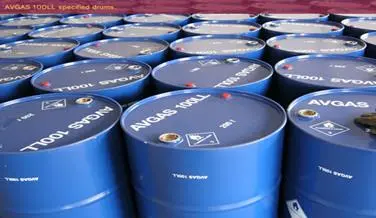
Aviation Spirit, Not of A Kind Used as Jet Fuel, 100 Octane and Above
Avgas is gasoline fuel to reciprocating piston engine aircraft and is not to be confused with jet fuel. As with all gasoline, avgas is very volatile and is extremely flammable at normal operating temperatures. Avgas grades are defined primarily by their octane rating. Two ratings are applied to aviation gasoline (the lean mixture rating and the rich mixture rating) which results in a multiple numbering system. It is common practice to designate the grade by just the lean mixture performance.
Tiếng Việt
Theo mục đích của nhóm 27.10:
a. "Dầu nhẹ" là loại dầu trong đó dầu chiếm 90% trở lên theo thể tích (bao gồm cả hao hụt) chưng cất ở nhiệt độ 210 °C (phương pháp ASTM D 86);
b. "Dầu trung" là loại dầu trong đó dầu chiếm dưới 90% theo thể tích (bao gồm cả hao hụt) chưng cất ở nhiệt độ 210 °C và 65% trở lên theo thể tích (bao gồm cả hao hụt) chưng cất ở nhiệt độ 250°C (phương pháp ASTM D 86);
c. "Dầu nặng" là loại dầu trong đó dầu chiếm dưới 65% theo thể tích (bao gồm cả hao hụt) chưng cất ở nhiệt độ 250 °C theo phương pháp ASTM D 86 hoặc không xác định được tỷ lệ khi chưng cất ở nhiệt độ 250 °C bằng phương pháp này.
(Nguồn Malaysia)
2710.12.31 271012.39
XĂNG MÁY BAY, LOẠI SỬ DỤNG CHO ĐỘNG CƠ MÁY BAY KIỂU PISTON
Xăng máy bay được sử dụng cho các loại phương tiện bay. Là loại nhiên liệu chất lượng cao chuyên dùng cho động cơ máy bay kiểu piston, còn được gọi là Avgas, có thêm phụ gia, với hệ số RON trong khoảng 87-145 phụ thuộc vào chủng loại/thông số kỹ thuật để đảm bảo có thể hoạt động trong điều kiện bay. Xăng máy bay của động cơ máy bay kiểu tua bin là nhiên liệu tua bin máy bay hoặc Avjet, đây là loại nhiên liệu được dành riêng cho loại động cơ này, không phải cho phương tiện bay. Phương tiện bay bao gồm cả trực thăng thường sử dụng 2 loại động cơ sau:
1. ĐỘNG CƠ PISTON - tương tự như động cơ ô tô và được sử dụng trong động cơ máy bay nhỏ và động cơ trực thăng, và chạy bằng nhiên liệu chất lượng cao đã được tinh chế và lọc sạch hơn xăng ô tô. Loại nhiên liệu này thường có chỉ số octan 100 (hàm lượng chì thấp).
2. ĐỘNG CƠ TUA BIN - thường được gọi là động cơ phản lực và được thiết kế tương tự như động cơ của máy bay thương mại và trực thăng cỡ vừa đến cỡ lớn.
Động cơ tua bin sử dụng loại nhiên liệu gọi là "Jet A", tương tự như Kerosene sạch. Phương tiện bay có động cơ phản lực (không phải động cơ piston) được gọi là máy bay phản lực và chỉ sử dụng nhiên liệu Jet A.
"Xăng máy bay, không phải loại sử dụng như nhiên liệu phản lực" được gọi là xăng Avgas dùng cho máy bay và trực thăng sử dụng động cơ piston.
Xăng máy bay, không phải loại sử dụng như nhiên liệu phản lực, có chỉ số octane 100 trở lên
Avgas là nhiên liệu xăng cho máy bay sử dụng động cơ kiểu piston chuyển động tịnh tiến và không bị nhầm lẫn với nhiên liệu phản lực. So với các loại xăng, Avgas rất dễ bay hơi và rất dễ cháy trong nhiệt độ hoạt động bình thường. Loại xăng Avgas được xác định chủ yếu theo tỷ lệ octane. Có hai mức độ đánh giá áp dụng cho xăng máy bay (mức độ hỗn hợp nghèo và mức độ hỗn hợp giàu) được tính theo hệ thống đánh số. Các chủng loại thường được thể hiện chỉ bằng mức độ hỗn hợp nghèo.
Data updated: 11/08/2026 · Found wrong or missing data? Report a data error