Other plates, sheets, film, foil and strip, of plastics, non-cellular and not reinforced, laminated, supported or similarly combined with other materials › Of polymers of propylene
3920.20.10 — Biaxially oriented polypropylene (BOPP) film
Màng polypropylen định hướng hai chiều (BOPP) (SEN)
Unit: kg/m2/unit (kg/m2/chiếc)
Hồ sơ mã HS — hscodevn.com/hs/39202010 · in ngày 15/9/2026 · chỉ mang tính tham khảo, đối chiếu văn bản pháp lý hiện hành
HS code 39202010 covers biaxially oriented polypropylene (bopp) film under heading 3920 (other plates, sheets, film, foil and strip, of plastics, non-cellular and not reinforced, laminated, supported or similarly combined with other materials), Chapter 39. The MFN import duty is 6%; the lowest FTA rate is 0% under ASEAN - China (ACFTA) (C/O form E required). VAT: 8/10%. Unit of quantity: kg/m2/unit.
MFN import duty
6%
Lowest FTA
0%
excl. ID, MM, PH
ASEAN - China (ACFTA)
VAT
8/10%
8% under the current reduction · 10% standard
Excise / Env. tax
—
Not subject
Distinguish from heading:3918Floor coverings of plastics…3921Other plates, sheets, film…
Import duty comparison across FTA schedules
Full table with legal documents & effective dates
| Tax / Schedule | Rate | Document | Effective |
|---|---|---|---|
| Preferential import duty (MFN) | 6% | 26/2023/NĐ-CP | 15/07/2023 |
| Ordinary import duty | 9% | 15/2023/QĐ-TTg | 15/07/2023 |
| ASEAN (ATIGA)(2026) | 0% | 126/2022/NĐ-CP | 30/12/2022 |
| ASEAN - China (ACFTA) | 0%excl. ID, MM, PH | 118/2022/NĐ-CP | 30/12/2022 |
| ASEAN - Japan (AJCEP)(01/04/2026 - 31/3/2027) | 0% | 120/2022/NĐ-CP | 30/12/2022 |
| Vietnam - Japan (VJEPA)(1/4/2026 - 31/3/2027) | 0% | 124/2022/NĐ-CP | 30/12/2022 |
| ASEAN - Korea (AKFTA) | 5% | 119/2022/NĐ-CP | 30/12/2022 |
| ASEAN - Australia/New Zealand (AANZFTA) | 0% | 121/2022/NĐ-CP | 30/12/2022 |
| ASEAN - India (AIFTA)(01/01/2026 - 31/12/2026) | * | 122/2022/NĐ-CP | 30/12/2022 |
| Vietnam - Korea (VKFTA)(2026) | 0% | 125/2022/NĐ-CP | 30/12/2022 |
| Vietnam - Chile (VCFTA)(2026) | 1% | 112/2022/NĐ-CP | 30/12/2022 |
| Vietnam - Eurasian Economic Union (VN-EAEU)(2026) | 0% | 113/2022/NĐ-CP | 30/12/2022 |
| CPTPP Agreement(2026) | 0% | 115/2022/NĐ-CP | 30/12/2022 |
| ASEAN - Hong Kong (AHKFTA)(2026) | 5% | 123/2022/NĐ-CP | 30/12/2022 |
| Vietnam - EU (EVFTA)(2026) | 0% | 116/2022/NĐ-CP | 30/12/2022 |
| Vietnam - UK (UKVFTA)(2026) | 0% | 117/2022/NĐ-CP | 30/12/2022 |
| Vietnam - Laos | 0% | 206/2025/NĐ-CP | 15/07/2025 |
| Vietnam - Israel (VIFTA)(2026) | 0% | 131/2024/NĐ-CP | 15/10/2024 |
| RCEP - Group A (ASEAN)(2026) | 2,5% | 129/2022/NĐ-CP | 30/12/2022 |
| RCEP - Group B (China)(2026) | 2,5% | 129/2022/NĐ-CP | 30/12/2022 |
| RCEP - Group C (Korea)(2026) | 2,5% | 129/2022/NĐ-CP | 30/12/2022 |
| RCEP - Group D (Japan)(2026) | 2,7% | 129/2022/NĐ-CP | 30/12/2022 |
| RCEP - Group E (Australia)(2026) | 2,5% | 129/2022/NĐ-CP | 30/12/2022 |
| RCEP - Group F (New Zealand)(2026) | 2,5% | 129/2022/NĐ-CP | 30/12/2022 |
FTA schedules are cut annually: the rate shown applies to the period in brackets, per the decree's appendix.
FTA duty phase-down
Upcoming reductions for this code — the new rate takes effect on this site automatically on the effective date.
- Vietnam - Chile (VCFTA)1% (2026)0%from 01/01/2027
- RCEP - Group A (ASEAN)2,5% (2026)2%from 01/01/2027…continues per the schedule — see the decree annex
- RCEP - Group B (China)2,5% (2026)2%from 01/01/2027…continues per the schedule — see the decree annex
- RCEP - Group C (Korea)2,5% (2026)2%from 01/01/2027…continues per the schedule — see the decree annex
- RCEP - Group D (Japan)2,7% (2026)2,3%from 01/01/2027…continues per the schedule — see the decree annex
- RCEP - Group E (Australia)2,5% (2026)2%from 01/01/2027…continues per the schedule — see the decree annex
- RCEP - Group F (New Zealand)2,5% (2026)2%from 01/01/2027…continues per the schedule — see the decree annex
- Vietnam - UAE (CEPA)4,5%3%from 01/01/2027…continues per the schedule — see the decree annex
Only the steps present in the data (each schedule's next period) are shown. A schedule not reaching 0% here does not mean it stops — the full schedule is in the decree annex.
VAT · Excise tax · Environmental protection tax
| Tax / Schedule | Rate | Document | Effective |
|---|---|---|---|
| Value added tax (VAT) | 8/10% | 181/2025/NĐ-CP | 01/07/2025 |
Rules of origin by FTA
To claim an FTA rate the goods must meet the origin criterion below AND carry a valid C/O — the right HS code alone is not enough. Step-by-step self-check →
- Of polymers of propylene:
RVC(40) or CTH
RVC(40) hoặc CTH
CTHRVC40
Source: Circular No. 44/2025/TT-BCT · annex uses HS 2022 while this site uses AHTN 2022 — check headings that changed between versions
Other plates, sheets, film, foil and strip, of plastics, non-cellular and not reinforced, laminated, supported or similarly combined with other materials
CTH; or an RVC of not less than: a) 30% under the direct formula; or b) 40% under the indirect formula.
CTH; hoặc RVC không thấp hơn: a) 30% theo công thức tính trực tiếp; hoặc b) 40% theo công thức tính gián tiếp.
CTH
Source: Circular No. 03/2019/TT-BCT · annex uses HS 2012 while this site uses AHTN 2022 — check headings that changed between versions
Plastics and articles thereof
Sử dụng nguyên liệu từ bất kỳ Nhóm nào để sản xuất, ngoại trừ Nhóm của sản phẩm. Tuy nhiên, được phép sử dụng nguyên liệu cùng Nhóm của sản phẩm với điều kiện tổng trị giá sử dụng không vượt quá 20% giá xuất xưởng của sản phẩm; hoặc Trị giá nguyên liệu được sử dụng không vượt quá 50% giá xuất xưởng của sản phẩm.
Source: Circular No. 14/2026/TT-BCT
Other plates, sheets, film, foil and strip, of plastics, non-cellular and not reinforced, laminated, supported or similarly combined with other materials
CTH or RVC40
CTH hoặc RVC40
CTHRVC40
Source: Circular No. 32/2022/TT-BCT · annex uses HS 2022 while this site uses AHTN 2022 — check headings that changed between versions
Plastics and articles thereof
Manufacture from materials of any heading, except that of the product. However, materials of the same heading as the product may be used, provided that their total value does not exceed 20% of the ex-works price of the product; or the value of the materials does not exceed 50% of the ex-works price of the product.
Sản xuất từ nguyên liệu thuộc bất kỳ Nhóm nào, ngoại trừ Nhóm của sản phẩm. Tuy nhiên, có thể sử dụng nguyên liệu cùng Nhóm với sản phẩm với điều kiện tổng trị giá các nguyên liệu này không vượt quá 20% giá xuất xưởng của sản phẩm; hoặc trị giá nguyên liệu không vượt quá 50% giá xuất xưởng của sản phẩm.
Source: Circular No. 02/2021/TT-BCT
- Of polymers of propylene:
CTH or RVC(40)
CTH hoặc RVC(40)
CTHRVC40
Source: Circular No. 09/2022/TT-BCT · annex uses HS 2017 while this site uses AHTN 2022 — check headings that changed between versions
- Of polymers of propylene:
CTH
CTH
CTH
Source: Circular No. 01/2024/TT-BCT · annex uses HS 2022 while this site uses AHTN 2022 — check headings that changed between versions
Plastics and articles thereof
CTH
CTH
CTH
or
QVC 35%
QVC 35%
QVC35
Source: Circular No. 24/2026/TT-BCT · annex uses HS 2022 while this site uses AHTN 2022 — check headings that changed between versions
Agreements with no rule specific to this code
This code carries a preferential rate under the agreements below but has no line of its own in the product-specific rules annex. The goods must still meet an origin requirement.
The agreement sets a general rule for codes outside the annex:
1. The goods referred to in Clause 3, Article 5 of this Circular, other than the goods provided in Clause 2 of this Article, are considered originating if:
a) The goods have a regional value content (RVC) of not less than 40% of the FOB value calculated in accordance with Article 8 of this Circular and the last production process is carried out in a Member State; or
b) Goods of Chapters 25, 26, 28, 29, 31 and 39; Chapters 42 to 49; Chapters 57 to 59; Chapters 61, 62 and 64; Chapters 66 to 71; Chapters 73 to 83; Chapters 86 and 88; and Chapters 91 to 97 of the Harmonized Commodity Description and Coding System using non-originating materials undergo a change in tariff classification at the 4-digit level (CTH), except for headings 29.01, 29.02, 31.05, 39.01, 39.02, 39.03, 39.07 and 39.08, to which the RVC 40% origin criterion applies.
CTHRVC40
Source: Circular No. 12/2019/TT-BCT · Article 7(1)
The agreement sets a general rule for codes outside the annex:
1. The goods referred to in Clause 3, Article 5 of this Circular, other than the goods provided in Clause 2 of this Article, are considered originating if they have an RVC of not less than 40% calculated in accordance with Article 8 of this Circular.
Source: Circular No. 21/2019/TT-BCT · Article 7(1)
The agreement sets a general rule for codes outside the annex:
1. Products referred to in Clause 2, Article 2 are considered originating if:
a) The AIFTA content is not less than thirty-five per cent (35%) of the FOB value; and
b) The non-originating materials used in the production of that product have undergone a change in tariff classification at the six (6)-digit level (CTSH) of the Harmonized System.
provided that the last production process is carried out in the territory of the exporting Member State.
CTSH
Source: Circular No. 15/2010/TT-BCT · Article 4(1) of Appendix 1
The agreement sets a general rule for codes outside the annex:
1. For the purposes of paragraph 2 of Article 5 of this Circular, goods shall be considered as originating in a Member State in one of the following cases:
a) The Regional Value Content (RVC) is not less than 40%, calculated according to the formula provided for in Article 8 of this Circular, and the final process of production is performed in that Member State.
b) All non-originating materials used in the production of the goods have undergone a change in tariff classification (CTC) at the four (04)-digit level (change of Heading) of the Harmonized Commodity Description and Coding System in that Member State.
The exporter of each Member State may choose to apply the origin criterion provided for in point a or point b of paragraph 1 of this Article to determine the origin of goods.
CTC
Source: Circular No. 37/2022/TT-BCT · Article 7(1)
The agreement sets a general rule for codes outside the annex:
1. For the purposes of point b clause 1 Article 5 of this Circular, goods not covered by Article 8 of this Circular shall be considered as originating if they have a regional value content (hereinafter referred to as RVC) of at least 40% of the FOB value, or if they have undergone a change in tariff classification at the 4-digit level (hereinafter referred to as CTH) of the Harmonized System.
CTH
Source: Circular No. 49/2025/TT-BCT · Article 7(1)
The agreement sets a general rule for codes outside the annex:
1. General origin criteria:
a) Goods referred to in Clause 2, Article 2 of this Appendix are considered originating in the Member State where the production or processing of those goods took place if:
- The goods have a regional value content (hereinafter referred to as the “ASEAN Value Content” or the “Regional Value Content (RVC)”) of not less than 40% (forty per cent), calculated in accordance with the formula provided in Article 5 of this Appendix; or
- All non-originating materials used in the production of those goods have undergone a change in tariff classification (hereinafter referred to as “CTC”) at the 4 (four)-digit level (that is, a change of heading) of the Harmonized System.
b) Each Member State shall allow the exporter of the goods to decide whether to use the criterion of “RVC of not less than 40% (forty per cent)” or that of “a change in tariff classification at the 4 (four)-digit level” referred to at Point a, Clause 1 in determining the origin of the goods.
CTC
Source: Circular No. 22/2016/TT-BCT · Article 4(1) of Appendix I
The agreement sets a general rule for codes outside the annex:
1. For the purposes of Clause 2, Article 2, goods are considered originating in the Member State where the production or processing took place if:
a) The goods have a regional value content (RVC) of not less than forty per cent (40%), calculated in accordance with Article 5; or
b) All the non-originating materials used in the production of those goods undergo a change in tariff classification (hereinafter referred to as “CTC”) at the four (4)-digit level (that is, a change of heading) of the Harmonized System.
2. Each Member State shall allow the exporter to use either of the criteria provided at Point a, Clause 1 or Point b, Clause 1 of this Article to determine the origin of the goods.
CTC
Source: Circular No. 31/2013/TT-BCT · Article 4(1)
The agreement sets a general rule for codes outside the annex:
1. For the purposes of Clause 2, Article 2, goods are considered originating in a Member State if:
a) The goods have a local value content (hereinafter referred to as “LVC”), calculated in accordance with the formula provided in Article 5, of not less than forty (40) per cent, and the last production process for those goods is carried out in that Member State; or
b) All non-originating materials used in the production of the goods in that Member State have undergone a change in tariff classification (hereinafter referred to as CTC) at the 4-digit level (change of heading) under the Harmonized System.
CTCLVC
Source: Circular No. 10/2009/TT-BCT · Article 4(1) of Appendix 1
The agreement sets a general rule for codes outside the annex:
1. General origin criterion
a) Goods specified in Clause 2 of Article 2 shall be considered as originating in the Member State where the working or processing of those goods has taken place if:
- The goods have a regional value content (hereinafter referred to as the “Viet Nam - Laos value content” or the “regional value content (LVC)”) of not less than forty percent (40%), calculated in accordance with the formula provided in Article 5; or
- All non-originating materials used in the production of those goods have undergone a change in tariff classification (hereinafter referred to as “CTC”) at the four (4)-digit level (meaning a change of heading) of the Harmonized System.
b) Each Member State shall allow the exporter of the goods to decide to use either of the two criteria “LVC of not less than forty percent (40%)” or “change in tariff classification at the four (04)-digit level” referred to at point a of Clause 1 in order to determine the origin of the goods.
CTCLVC
Source: Circular No. 04/2010/TT-BCT · Article 4(1) of Appendix 1
Criteria are translated for reference; the Vietnamese wording quoted underneath is the binding text.
Supplementary Explanatory Notes (SEN, ASEAN 2022)
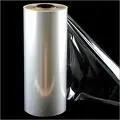
Product description3920.20.10BIAXIALLY ORIENTED POLYPROPYLENE (BOPP) FILM
MÀNG POLYPROPYLEN ĐỊNH HƯỚNG HAI CHIỀU (BOPP)
Biaxial orientation is the process of forming hot plastic films in cross machine directions, resulting in a stronger film. One of the most common biaxially oriented films is Biaxially Oriented Polypropylene (BOPP) film. “Biaxially oriented" means the polypropylene film has been stretched in both the Machine Direction (MD) and the Across Machine Direction (AMD), resulting in the film being able to stretch in X and Y directions, thus making it suitable for the wrapping of goods.
(Source: Malaysia)
Tiếng Việt
Định hướng hai chiều là quá trình hình thành màng plastic nóng theo các hướng ngang dọc, nhằm tạo ra loại màng có độ bền cao hơn. Một trong những loại màng định hướng hai chiều phổ biến nhất là màng BOPP. “Định hướng hai chiều” có nghĩa là lớp màng polyproplylen được kéo dài theo cả hai hướng hướng dọc-trực hướng (MD) và hướng ngang-đẳng hướng (AMD), làm cho lớp màng được kéo dài theo hướng X và hướng Y, do đó thích hợp cho việc gói bọc hàng hóa.
(Nguồn: Ma-lai-xi-a)
Supplementary Explanatory Notes (SEN, ASEAN 2022)
Product description39.20 39.21“PLATES AND SHEETS”; FILM OR FOIL
“TẤM VÀ PHIẾN”; MÀNG HOẶC LÁ
For the purpose of ASEAN Subheadings within these headings, "plates and sheets” refers to products which meet the requirements of Note 10 to Chapter 39, of rectangular (including square) shape and with thickness exceeding 0.25 mm.
Product which does not meet the above description shall be classified as Film or Foil.
(Based on ASTM D 6988-13)
(Source: Indonesia)
Tiếng Việt
Theo mục đích của các phân nhóm ASEAN trong các nhóm này, "tấm và phiến" dùng để chỉ các sản phẩm đáp ứng các yêu cầu của Chú giải 10 của Chương 39, có hình chữ nhật (kể cả hình vuông) và có độ dày trên 0,25 mm.
Sản phẩm không đáp ứng mô tả trên sẽ được phân loại là màng hoặc lá.
(Dựa trên ASTM D 6988-13)
(Nguồn: Indonesia)
Notes for Section VII — PLASTICS AND ARTICLES THEREOF; RUBBER AND ARTICLES THEREOF
Notes
1. Goods put up in sets consisting of two or more separate constituents, some or all of which fall in this Section and are intended to be mixed together to obtain a product of Section VI or VII, are to be classified in the heading appropriate to that product, provided that the constituents are:
(a) having regard to the manner in which they are put up, clearly identifiable as being intended to be used together without first being repacked;
(b) presented together; and
(c) identifiable, whether by their nature or by the relative proportions in which they are present, as being complementary one to another.
2. Except for the goods of heading 39.18 or 39.19, plastics, rubber, and articles thereof, printed with motifs, characters or pictorial representations, which are not merely subsidiary to the primary use of the goods, fall in Chapter 49.
Notes for Chapter 39 — Plastics and articles thereof
Notes
1. Throughout the Nomenclature the expression “plastics” means those materials of headings 39.01 to 39.14 which are or have been capable, either at the moment of polymerisation or at some subsequent stage, of being formed under external influence (usually heat and pressure, if necessary with a solvent or plasticiser) by moulding, casting, extruding, rolling or other process into shapes which are retained on the removal of the external influence.
Throughout the Nomenclature any reference to “plastics” also includes vulcanised fibre. The expression, however, does not apply to materials regarded as textile materials of Section XI.
2. This Chapter does not cover:
(a) Lubricating preparations of heading 27.10 or 34.03;
(b) Waxes of heading 27.12 or 34.04;
(c) Separate chemically defined organic compounds (Chapter 29);
(d) Heparin or its salts (heading 30.01);
(e) Solutions (other than collodions) consisting of any of the products specified in headings 39.01 to 39.13 in volatile organic solvents when the weight of the solvent exceeds 50% of the weight of the solution (heading 32.08); stamping foils of heading 32.12;
(f) Organic surface-active agents or preparations of heading 34.02;
(g) Run gums or ester gums (heading 38.06);
(h) Prepared additives for mineral oils (including gasoline) or for other liquids used for the same purposes as mineral oils (heading 38.11);
(ij) Prepared hydraulic fluids based on polyglycols, silicones or other polymers of Chapter 39 (heading 38.19);
(k) Diagnostic or laboratory reagents on a backing of plastics (heading 38.22);
(l) Synthetic rubber, as defined for the purposes of Chapter 40, or articles thereof;
(m) Saddlery or harness (heading 42.01) or trunks, suitcases, handbags or other containers of heading 42.02;
(n) Plaits, wickerwork or other articles of Chapter 46;
(o) Wall coverings of heading 48.14;
(p) Goods of Section XI (textiles and textile articles);
(q) Articles of Section XII (for example, footwear, headgear, umbrellas, sun umbrellas, walking-sticks, whips, riding-crops or parts thereof);
(r) Imitation jewellery of heading 71.17;
(s) Articles of Section XVI (machines and mechanical or electrical appliances);
(t) Parts of aircraft or vehicles of Section XVII;
(u) Articles of Chapter 90 (for example, optical elements, spectacle frames, drawing instruments);
(v) Articles of Chapter 91 (for example, clock or watch cases);
(w) Articles of Chapter 92 (for example, musical instruments or parts thereof);
(x) Articles of Chapter 94 (for example, furniture, luminaires and lighting fittings, illuminated signs, prefabricated buildings);
(y) Articles of Chapter 95 (for example, toys, games, sports requisites); or
(z) Articles of Chapter 96 (for example, brushes, buttons, slide fasteners, combs, mouthpieces or stems for smoking pipes, cigarette-holders or the like, parts of vacuum flasks or the like, pens, propelling pencils, and monopods, bipods, tripods and similar articles).
3. Headings 39.01 to 39.11 apply only to goods of a kind produced by chemical synthesis, falling in the following categories:
(a) Liquid synthetic polyolefins of which less than 60% by volume distils at 300oC, after conversion to 1,013 millibars when a reduced-pressure distillation method is used (headings 39.01 and 39.02);
(b) Resins, not highly polymerised, of the coumarone-indene type (heading 39.11);
(c) Other synthetic polymers with an average of at least 5 monomer units;
(d) Silicones (heading 39.10);
(e) Resols (heading 39.09) and other prepolymers.
4. The expression “copolymers” covers all polymers in which no single monomer unit contributes 95% or more by weight to the total polymer content.
For the purposes of this Chapter, except where the context otherwise requires, copolymers (including co-polycondensates, co-polyaddition products, block copolymers and graft copolymers) and polymer blends are to be classified in the heading covering polymers of that comonomer unit which predominates by weight over every other single comonomer unit. For the purposes of this Note, constituent comonomer units of polymers falling in the same heading shall be taken together.
If no single comonomer unit predominates, copolymers or polymer blends, as the case may be, are to be classified in the heading which occurs last in numerical order among those which equally merit consideration.
5. Chemically modified polymers, that is those in which only appendages to the main polymer chain have been changed by chemical reaction, are to be classified in the heading appropriate to the unmodified polymer. This provision does not apply to graft copolymers.
6. In headings 39.01 to 39.14, the expression “primary forms” applies only to the following forms:
(a) Liquids and pastes, including dispersions (emulsions and suspensions) and solutions;
(b) Blocks of irregular shape, lumps, powders (including moulding powders), granules, flakes and similar bulk forms.
7. Heading 39.15 does not apply to waste, parings and scrap of a single thermoplastic material, transformed into primary forms (headings 39.01 to 39.14).
8. For the purposes of heading 39.17, the expression “tubes, pipes and hoses” means hollow products, whether semi-manufactures or finished products, of a kind generally used for conveying, conducting or distributing gases or liquids (for example, ribbed garden hose, perforated tubes). This expression also includes sausage casings and other lay-flat tubing. However, except for the last-mentioned, those having an internal cross-section other than round, oval, rectangular (in which the length does not exceed 1.5 times the width) or in the shape of a regular polygon are not to be regarded as tubes, pipes and hoses but as profile shapes.
9. For the purposes of heading 39.18, the expression “wall or ceiling coverings of plastics” applies to products in rolls, of a width not less than 45 cm, suitable for wall or ceiling decoration, consisting of plastics fixed permanently on a backing of any material other than paper, the layer of plastics (on the face side) being grained, embossed, coloured, design-printed or otherwise decorated.
10. In headings 39.20 and 39.21, the expression “plates, sheets, film, foil and strip” applies only to plates, sheets, film, foil and strip (other than those of Chapter 54) and to blocks of regular geometric shape, whether or not printed or otherwise surface-worked, uncut or cut into rectangles (including squares) but not further worked (even if when so cut they become articles ready for use).
11. Heading 39.25 applies only to the following articles, not being products covered by any of the earlier headings of sub-Chapter II:
(a) Reservoirs, tanks (including septic tanks), vats and similar containers, of a capacity exceeding 300 l;
(b) Structural elements used, for example, in floors, walls or partitions, ceilings or roofs;
(c) Gutters and fittings therefor;
(d) Doors, windows and their frames and thresholds for doors;
(e) Balconies, balustrades, fencing, gates and similar barriers;
(f) Shutters, blinds (including Venetian blinds) and similar articles and parts and fittings thereof;
(g) Large-scale shelving for assembly and permanent installation, for example, in shops, workshops, warehouses;
(h) Ornamental architectural features, for example, flutings, cupolas, dovecotes; and
(ij) Fittings and mountings intended for permanent installation in or on doors, windows, staircases, walls or other parts of buildings, for example, knobs, handles, hooks, brackets, towel rails, switch-plates and other protective plates.
Subheading Notes
1. Within any one heading of this Chapter, polymers (including copolymers) and chemically modified polymers are to be classified according to the following provisions:
(a) Where there is a subheading named “Other” in the same series:
(1) The designation in a subheading of a polymer by the prefix “poly” (for example, polyethylene and polyamide-6,6) means that the constituent monomer unit or monomer units of the named polymer taken together must contribute 95% or more by weight of the total polymer content.
(2) The copolymers named in subheadings 3901.30, 3901.40, 3903.20, 3903.30 and 3904.30 are to be classified in those subheadings, provided that the comonomer units of the named copolymers contribute 95% or more by weight of the total polymer content.
(3) Chemically modified polymers are to be classified in the subheading named “Other”, provided that the chemically modified polymers are not more specifically covered by another subheading.
(4) Polymers not meeting (1), (2) or (3) above, are to be classified in the subheading, among the remaining subheadings in the series, covering polymers of that monomer unit which predominates by weight over every other single comonomer unit. For this purpose, constituent monomer units of polymers falling in the same subheading shall be taken together. Only the constituent comonomer units of the polymers in the series of subheadings under consideration are to be compared.
(b) Where there is no subheading named “Other” in the same series:
(1) Polymers are to be classified in the subheading covering polymers of that monomer unit which predominates by weight over every other single comonomer unit. For this purpose, constituent monomer units of polymers falling in the same subheading shall be taken together. Only the constituent comonomer units of the polymers in the series under consideration are to be compared.
(2) Chemically modified polymers are to be classified in the subheading appropriate to the unmodified polymer.
Polymer blends are to be classified in the same subheading as polymers of the same monomer units in the same proportions.
2. For the purposes of subheading 3920.43, the term “plasticisers” includes secondary plasticisers.
Vietnam trade in subheading 3920.20
Figures cover the whole 6-digit subheading 3920.20, not code 39202010 alone — UN Comtrade only publishes to 6 digits. Latest year available for Vietnam is 2023.
Imports
- 2021213 mn USD
- 2022206 mn USD
- 2023144 mn USD
Top partners 2023
- China68 mn USD
- Indonesia31 mn USD
- Rep. of Korea14 mn USD
- Thailand9 mn USD
- Japan8 mn USD
- Other Asia, nes6 mn USD
- Malaysia2 mn USD
- Germany1 mn USD
Exports
- 202162 mn USD
- 202255 mn USD
- 202331 mn USD
Top partners 2023
- Japan9 mn USD
- Thailand3 mn USD
- Rep. of Korea3 mn USD
- Malaysia3 mn USD
- Indonesia2 mn USD
- Cambodia2 mn USD
- USA2 mn USD
- Spain1 mn USD
2025: as reported by partner countries
Vietnam has not filed 2025 yet, so this is rebuilt from what its 16 largest trading partners reported about trade with Vietnam (85% of Vietnam's trade). Not the same measure as the figures above — compare it only with the 2023 row beside it.
| Flow | 2023 | 2025 | Change |
|---|---|---|---|
| Exports | 32 mn USD | 40 mn USD | +23% |
| Imports | 75 mn USD | 57 mn USD | -23% |
- Exports 2023: partners reported 32 mn USD where Vietnam reported 31 mn USD — 1.04× on this measure.
- Imports 2023: partners reported 75 mn USD where Vietnam reported 144 mn USD — 0.52× on this measure.
The gap is not a rounding difference: goods re-exported through Hong Kong or Singapore, a different heading chosen by the importing customs, and origin-based versus destination-based attribution all pull the two measures apart. Use the year-on-year change, not the level.
Source: UN Comtrade (preview API) — reported by Vietnam. Partner totals are as reported and may differ from partner-country statistics.
Corresponding US tariff lines
Six digits are identical worldwide under the HS Convention, so 3920.20 is the same subheading in both schedules. What differs is how each country splits it: below are the 3 US lines under 3920.20.
| US HTS code | Description | General duty |
|---|---|---|
| 3920.20.00.15 | Of polymers of propylene › Strip put up in packaging for use as decorative or gift-wrapping ribbon(kg) | 4.2% |
| 3920.20.00.20 | Of polymers of propylene › Gift wrap(kg) | 4.2% |
| 3920.20.00.55 | Of polymers of propylene › Other(kg) | 4.2% |
Additional Chapter 99 duties apply to goods of Vietnam
- 9903.02.69 +20% — The duty provided in the applicable subheading + 20%
- 9903.05.84 +12.5% — The duty provided in the applicable subheading + 12.5%
These are added to the General duty above, not in place of it. Whether a given article falls inside their scope — and the exclusion lists — is set out in the U.S. notes to Chapter 99, which are prose and not machine-readable, so this site does not assign them per code. Check the official schedule before quoting a landed cost.
Already terminated: 9903.01.72 +46%
Selling to a US buyer? Screen the parties first — buyer, L/C bank and forwarder against the US restricted lists; a listed party can get the shipment held.
The General column is the rate for Vietnam: the Special column lists US preference programmes (GSP, USMCA, KORUS…) and Vietnam is in none of them. Source: USITC Harmonized Tariff Schedule of the United States — 2026 HTS Revision 18. For reference only — classification on import is decided by US Customs, and anti-dumping, countervailing and Section 232/301 measures are not covered here.
Corresponding Japanese tariff lines
3920.20 is the same subheading in both schedules (six digits are identical worldwide under the HS Convention). Vietnamese goods can enter Japan under four parallel preference routes — the columns below — and the exporter picks whichever C/O gives the better rate.
| Line | Description | MFN | VJEPA | AJCEP | CPTPP | RCEP |
|---|---|---|---|---|---|---|
| 3920.20-000 | Of polymers of propylene(KG) | 4.8% | Free | Free | Free | Free |
MFN is the lowest of the schedule's General/Temporary/WTO columns (hover to see all three). The preference columns require the matching certificate of origin; an em dash means that agreement gives no preference for the line. Source: Japan's Tariff Schedule, Japan Customs (as of August 8, 2026). For reference only — classification on import is decided by Japan Customs.
Data updated: 11/08/2026 · Found wrong or missing data? Report a data error