Glass beads, imitation pearls, imitation precious or semi-precious stones and similar glass smallwares, and articles thereof other than imitation jewellery; glass eyes other than prosthetic articles; statuettes and other ornaments of lamp-worked glass, other than imitation jewellery; glass microspheres not exceeding 1 mm in diameter. › Other
7018.90.10 — Glass eyes
Mắt thủy tinh(SEN)
Unit: kg/unit (kg/chiếc)
Hồ sơ mã HS — hscodevn.com/hs/70189010 · in ngày 15/9/2026 · chỉ mang tính tham khảo, đối chiếu văn bản pháp lý hiện hành
HS code 70189010 covers glass eyes under heading 7018 (glass beads, imitation pearls, imitation precious or semi-precious stones and similar glass smallwares, and articles thereof other than imitation jewellery; glass eyes other than prosthetic articles; statuettes and other ornaments of lamp-worked glass, other than imitation jewellery; glass microspheres not exceeding 1 mm in diameter.), Chapter 70. The MFN import duty is 0%; the lowest FTA rate is 0% under ASEAN - China (ACFTA) (C/O form E required). VAT: 8/10%. Unit of quantity: kg/unit.
MFN import duty
0%
Lowest FTA
0%
ASEAN - China (ACFTA)
VAT
8/10%
8% under the current reduction · 10% standard
Excise / Env. tax
—
Not subject
Distinguish from heading:9503Tricycles, scooters, pedal cars…3207Prepared pigments, prepared…9021Orthopaedic appliances…7013Glassware of a kind used for…
Import duty comparison across FTA schedules
Full table with legal documents & effective dates
| Tax / Schedule | Rate | Document | Effective |
|---|---|---|---|
| Preferential import duty (MFN) | 0% | 26/2023/NĐ-CP | 15/07/2023 |
| Ordinary import duty | 5% | 15/2023/QĐ-TTg | 15/07/2023 |
| ASEAN (ATIGA)(2026) | 0% | 126/2022/NĐ-CP | 30/12/2022 |
| ASEAN - China (ACFTA) | 0% | 118/2022/NĐ-CP | 30/12/2022 |
| ASEAN - Japan (AJCEP)(01/04/2026 - 31/3/2027) | 0% | 120/2022/NĐ-CP | 30/12/2022 |
| Vietnam - Japan (VJEPA)(1/4/2026 - 31/3/2027) | 0% | 124/2022/NĐ-CP | 30/12/2022 |
| ASEAN - Korea (AKFTA) | 0% | 119/2022/NĐ-CP | 30/12/2022 |
| ASEAN - Australia/New Zealand (AANZFTA) | 0% | 121/2022/NĐ-CP | 30/12/2022 |
| ASEAN - India (AIFTA)(01/01/2026 - 31/12/2026) | * | 122/2022/NĐ-CP | 30/12/2022 |
| Vietnam - Korea (VKFTA)(2026) | 0% | 125/2022/NĐ-CP | 30/12/2022 |
| Vietnam - Chile (VCFTA)(2026) | 0% | 112/2022/NĐ-CP | 30/12/2022 |
| Vietnam - Eurasian Economic Union (VN-EAEU)(2026) | 0% | 113/2022/NĐ-CP | 30/12/2022 |
| CPTPP Agreement(2026) | 0% | 115/2022/NĐ-CP | 30/12/2022 |
| ASEAN - Hong Kong (AHKFTA)(2026) | * | 123/2022/NĐ-CP | 30/12/2022 |
| Vietnam - EU (EVFTA)(2026) | 3,7% | 116/2022/NĐ-CP | 30/12/2022 |
| Vietnam - UK (UKVFTA)(2026) | 3,7% | 117/2022/NĐ-CP | 30/12/2022 |
| Vietnam - Laos | 0% | 206/2025/NĐ-CP | 15/07/2025 |
| Vietnam - Israel (VIFTA)(2026) | 17,1% | 131/2024/NĐ-CP | 15/10/2024 |
| RCEP - Group A (ASEAN)(2026) | 15% | 129/2022/NĐ-CP | 30/12/2022 |
| RCEP - Group B (China)(2026) | 15% | 129/2022/NĐ-CP | 30/12/2022 |
| RCEP - Group C (Korea)(2026) | 15% | 129/2022/NĐ-CP | 30/12/2022 |
| RCEP - Group D (Japan)(2026) | 16,4% | 129/2022/NĐ-CP | 30/12/2022 |
| RCEP - Group E (Australia)(2026) | 15% | 129/2022/NĐ-CP | 30/12/2022 |
| RCEP - Group F (New Zealand)(2026) | 15% | 129/2022/NĐ-CP | 30/12/2022 |
FTA schedules are cut annually: the rate shown applies to the period in brackets, per the decree's appendix.
FTA duty phase-down
Upcoming reductions for this code — the new rate takes effect on this site automatically on the effective date.
- Vietnam - EU (EVFTA)3,7% (2026)0%from 01/01/2027
- Vietnam - UK (UKVFTA)3,7% (2026)0%from 01/01/2027
- RCEP - Group A (ASEAN)15% (2026)12%from 01/01/2027…continues per the schedule — see the decree annex
- RCEP - Group B (China)15% (2026)12%from 01/01/2027…continues per the schedule — see the decree annex
- RCEP - Group C (Korea)15% (2026)12%from 01/01/2027…continues per the schedule — see the decree annex
- RCEP - Group D (Japan)16,4% (2026)13,6%from 01/01/2027…continues per the schedule — see the decree annex
- RCEP - Group E (Australia)15% (2026)12%from 01/01/2027…continues per the schedule — see the decree annex
- RCEP - Group F (New Zealand)15% (2026)12%from 01/01/2027…continues per the schedule — see the decree annex
- Vietnam - Israel (VIFTA)17,1% (2026)12,9%from 01/01/2027…continues per the schedule — see the decree annex
Only the steps present in the data (each schedule's next period) are shown. A schedule not reaching 0% here does not mean it stops — the full schedule is in the decree annex.
VAT · Excise tax · Environmental protection tax
| Tax / Schedule | Rate | Document | Effective |
|---|---|---|---|
| Value added tax (VAT) | 8/10% | 181/2025/NĐ-CP | 01/07/2025 |
Rules of origin by FTA
To claim an FTA rate the goods must meet the origin criterion below AND carry a valid C/O — the right HS code alone is not enough. Step-by-step self-check →
- Other:
RVC(40) or CTH
RVC(40) hoặc CTH
CTHRVC40
Source: Circular No. 44/2025/TT-BCT · annex uses HS 2022 while this site uses AHTN 2022 — check headings that changed between versions
- Other:
CC
CC
CC
Source: Circular No. 37/2022/TT-BCT · annex uses HS 2017 while this site uses AHTN 2022 — check headings that changed between versions
Glass beads, imitation pearls, imitation precious or semi-precious stones and similar glass smallwares, and articles thereof other than imitation jewellery; glass eyes other than prosthetic articles; statuettes and other ornaments of lamp-worked glass, other than imitation jewellery; glass microspheres not exceeding 1 mm in diameter.
CTH
CTH
CTH
Source: Circular No. 03/2019/TT-BCT · annex uses HS 2012 while this site uses AHTN 2022 — check headings that changed between versions
Glass and glassware; except:
Sử dụng nguyên liệu từ bất kỳ Nhóm nào để sản xuất, ngoại trừ Nhóm của sản phẩm; hoặc Trị giá của tất cả các nguyên liệu được sử dụng không vượt quá 70% giá xuất xưởng của sản phẩm.
Source: Circular No. 14/2026/TT-BCT
Glass beads, imitation pearls, imitation precious or semi-precious stones and similar glass smallwares, and articles thereof other than imitation jewellery; glass eyes other than prosthetic articles; statuettes and other ornaments of lamp-worked glass, other than imitation jewellery; glass microspheres not exceeding 1 mm in diameter.
CTH or RVC40
CTH hoặc RVC40
CTHRVC40
Source: Circular No. 32/2022/TT-BCT · annex uses HS 2022 while this site uses AHTN 2022 — check headings that changed between versions
Glass and glassware; except:
Manufacture from materials of any heading, except that of the product; or the value of the materials does not exceed 70% of the ex-works price of the product.
Sản xuất từ nguyên liệu thuộc bất kỳ Nhóm nào, ngoại trừ Nhóm của sản phẩm; hoặc trị giá nguyên liệu không vượt quá 70% giá xuất xưởng của sản phẩm.
Source: Circular No. 02/2021/TT-BCT
- Other:
CTH or RVC(40)
CTH hoặc RVC(40)
CTHRVC40
Source: Circular No. 09/2022/TT-BCT · annex uses HS 2017 while this site uses AHTN 2022 — check headings that changed between versions
- Other:
CTH
CTH
CTH
Source: Circular No. 01/2024/TT-BCT · annex uses HS 2022 while this site uses AHTN 2022 — check headings that changed between versions
Glass and glassware
CTH
CTH
CTH
or
QVC 35%
QVC 35%
QVC35
Source: Circular No. 24/2026/TT-BCT · annex uses HS 2022 while this site uses AHTN 2022 — check headings that changed between versions
Agreements with no rule specific to this code
This code carries a preferential rate under the agreements below but has no line of its own in the product-specific rules annex. The goods must still meet an origin requirement.
The agreement sets a general rule for codes outside the annex:
1. The goods referred to in Clause 3, Article 5 of this Circular, other than the goods provided in Clause 2 of this Article, are considered originating if:
a) The goods have a regional value content (RVC) of not less than 40% of the FOB value calculated in accordance with Article 8 of this Circular and the last production process is carried out in a Member State; or
b) Goods of Chapters 25, 26, 28, 29, 31 and 39; Chapters 42 to 49; Chapters 57 to 59; Chapters 61, 62 and 64; Chapters 66 to 71; Chapters 73 to 83; Chapters 86 and 88; and Chapters 91 to 97 of the Harmonized Commodity Description and Coding System using non-originating materials undergo a change in tariff classification at the 4-digit level (CTH), except for headings 29.01, 29.02, 31.05, 39.01, 39.02, 39.03, 39.07 and 39.08, to which the RVC 40% origin criterion applies.
CTHRVC40
Source: Circular No. 12/2019/TT-BCT · Article 7(1)
The agreement sets a general rule for codes outside the annex:
1. The goods referred to in Clause 3, Article 5 of this Circular, other than the goods provided in Clause 2 of this Article, are considered originating if they have an RVC of not less than 40% calculated in accordance with Article 8 of this Circular.
Source: Circular No. 21/2019/TT-BCT · Article 7(1)
The agreement sets a general rule for codes outside the annex:
1. Products referred to in Clause 2, Article 2 are considered originating if:
a) The AIFTA content is not less than thirty-five per cent (35%) of the FOB value; and
b) The non-originating materials used in the production of that product have undergone a change in tariff classification at the six (6)-digit level (CTSH) of the Harmonized System.
provided that the last production process is carried out in the territory of the exporting Member State.
CTSH
Source: Circular No. 15/2010/TT-BCT · Article 4(1) of Appendix 1
The agreement sets a general rule for codes outside the annex:
1. For the purposes of point b clause 1 Article 5 of this Circular, goods not covered by Article 8 of this Circular shall be considered as originating if they have a regional value content (hereinafter referred to as RVC) of at least 40% of the FOB value, or if they have undergone a change in tariff classification at the 4-digit level (hereinafter referred to as CTH) of the Harmonized System.
CTH
Source: Circular No. 49/2025/TT-BCT · Article 7(1)
The agreement sets a general rule for codes outside the annex:
1. General origin criteria:
a) Goods referred to in Clause 2, Article 2 of this Appendix are considered originating in the Member State where the production or processing of those goods took place if:
- The goods have a regional value content (hereinafter referred to as the “ASEAN Value Content” or the “Regional Value Content (RVC)”) of not less than 40% (forty per cent), calculated in accordance with the formula provided in Article 5 of this Appendix; or
- All non-originating materials used in the production of those goods have undergone a change in tariff classification (hereinafter referred to as “CTC”) at the 4 (four)-digit level (that is, a change of heading) of the Harmonized System.
b) Each Member State shall allow the exporter of the goods to decide whether to use the criterion of “RVC of not less than 40% (forty per cent)” or that of “a change in tariff classification at the 4 (four)-digit level” referred to at Point a, Clause 1 in determining the origin of the goods.
CTC
Source: Circular No. 22/2016/TT-BCT · Article 4(1) of Appendix I
The agreement sets a general rule for codes outside the annex:
1. For the purposes of Clause 2, Article 2, goods are considered originating in the Member State where the production or processing took place if:
a) The goods have a regional value content (RVC) of not less than forty per cent (40%), calculated in accordance with Article 5; or
b) All the non-originating materials used in the production of those goods undergo a change in tariff classification (hereinafter referred to as “CTC”) at the four (4)-digit level (that is, a change of heading) of the Harmonized System.
2. Each Member State shall allow the exporter to use either of the criteria provided at Point a, Clause 1 or Point b, Clause 1 of this Article to determine the origin of the goods.
CTC
Source: Circular No. 31/2013/TT-BCT · Article 4(1)
The agreement sets a general rule for codes outside the annex:
1. General origin criterion
a) Goods specified in Clause 2 of Article 2 shall be considered as originating in the Member State where the working or processing of those goods has taken place if:
- The goods have a regional value content (hereinafter referred to as the “Viet Nam - Laos value content” or the “regional value content (LVC)”) of not less than forty percent (40%), calculated in accordance with the formula provided in Article 5; or
- All non-originating materials used in the production of those goods have undergone a change in tariff classification (hereinafter referred to as “CTC”) at the four (4)-digit level (meaning a change of heading) of the Harmonized System.
b) Each Member State shall allow the exporter of the goods to decide to use either of the two criteria “LVC of not less than forty percent (40%)” or “change in tariff classification at the four (04)-digit level” referred to at point a of Clause 1 in order to determine the origin of the goods.
CTCLVC
Source: Circular No. 04/2010/TT-BCT · Article 4(1) of Appendix 1
Criteria are translated for reference; the Vietnamese wording quoted underneath is the binding text.
Supplementary Explanatory Notes (SEN, ASEAN 2022)
Product description7018.90.10GLASS EYES
MẮT THỦY TINH
Glass in form of spherical, oval or round without external frame or mechanism, diameter about 4-36 mm. They can be many different colors, whether or not be decorated, painted. They use to make doll eyes, toy's eyes or eyes for articles of Chapter 95
Tiếng Việt
Thủy tinh dạng cầu, ô van hoặc tròn không có khung hoặc cơ cấu cơ khí bên ngoài, đường kính 4-36 mm. Chúng có thể có nhiều màu khác nhau, được hoặc không được trang trí, sơn. Chúng sử dụng để làm mắt búp bê, mắt đồ chơi hoặc mắt các sản phẩm thuộc Chương 95
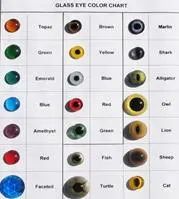
Notes for Chapter 70 — Glass and glassware
Notes
1. This Chapter does not cover:
(a) Goods of heading 32.07 (for example, vitrifiable enamels and glazes, glass frit, other glass in the form of powder, granules or flakes);
(b) Articles of Chapter 71 (for example, imitation jewellery);
(c) Optical fibre cables of heading 85.44, electrical insulators (heading 85.46) or fittings of insulating material of heading 85.47;
(d) Front windscreens (windshields), rear windows and other windows, framed, for vehicles of Chapters 86 to 88;
(e) Front windscreens (windshields), rear windows and other windows, whether or not framed, incorporating heating devices or other electrical or electronic devices, for vehicles of Chapters 86 to 88;
(f) Optical fibres, optically worked optical elements, hypodermic syringes, artificial eyes, thermometers, barometers, hydrometers or other articles of Chapter 90;
(g) Luminaires and lighting fittings, illuminated signs, illuminated name-plates or the like, having a permanently fixed light source, or parts thereof of heading 94.05;
(h) Toys, games, sports requisites, Christmas tree ornaments or other articles of Chapter 95 (excluding glass eyes without mechanisms for dolls or for other articles of Chapter 95); or
(ij) Buttons, fitted vacuum flasks, scent or similar sprays or other articles of Chapter 96.
2. For the purposes of headings 70.03, 70.04 and 70.05:
(a) glass is not regarded as “worked” by reason of any process it has undergone before annealing;
(b) cutting to shape does not affect the classification of glass in sheets;
(c) the expression “absorbent, reflecting or non-reflecting layer” means a microscopically thin coating of metal or of a chemical compound (for example, metal oxide) which absorbs, for example, infra-red light or improves the reflecting qualities of the glass while still allowing it to retain a degree of transparency or translucency; or which prevents light from being reflected on the surface of the glass.
3. The products referred to in heading 70.06 remain classified in that heading whether or not they have the character of articles.
4. For the purposes of heading 70.19, the expression “glass wool” means:
(a) Mineral wools with a silica (SiO2) content not less than 60% by weight;
(b) Mineral wools with a silica (SiO2) content less than 60% but with an alkaline oxide (K2O or Na2O) content exceeding 5% by weight or a boric oxide (B2O3) content exceeding 2% by weight.
Mineral wools which do not comply with the above specifications fall in heading 68.06.
5. Throughout the Nomenclature, the expression “glass” includes fused quartz and other fused silica.
Subheading Note
1. For the purposes of subheadings 7013.22, 7013.33, 7013.41 and 7013.91, the expression “lead crystal” means only glass having a minimum lead monoxide (PbO) content by weight of 24%.
Vietnam trade in subheading 7018.90
Figures cover the whole 6-digit subheading 7018.90, not code 70189010 alone — UN Comtrade only publishes to 6 digits. Latest year available for Vietnam is 2023.
Imports
- 20213 mn USD
- 20222 mn USD
- 20233 mn USD
Top partners 2023
- China3 mn USD
- Japan133,608 USD
- Other Asia, nes76,794 USD
- Rep. of Korea25,646 USD
- Türkiye24,734 USD
- Portugal10,527 USD
- Myanmar6,540 USD
- Czechia5,502 USD
Exports
- 202198,025 USD
- 2022106,667 USD
- 2023173,925 USD
Top partners 2023
- Germany165,795 USD
- Singapore3,264 USD
- USA2,921 USD
- Myanmar1,944 USD
2025: as reported by partner countries
Vietnam has not filed 2025 yet, so this is rebuilt from what its 16 largest trading partners reported about trade with Vietnam (85% of Vietnam's trade). Not the same measure as the figures above — compare it only with the 2023 row beside it.
| Flow | 2023 | 2025 | Change |
|---|---|---|---|
| Exports | 1 mn USD | 2 mn USD | +28% |
| Imports | 157,530 USD | 101,154 USD | -36% |
- Exports 2023: partners reported 1 mn USD where Vietnam reported 173,925 USD — 7.39× on this measure.
- Imports 2023: partners reported 157,530 USD where Vietnam reported 3 mn USD — 0.05× on this measure.
The gap is not a rounding difference: goods re-exported through Hong Kong or Singapore, a different heading chosen by the importing customs, and origin-based versus destination-based attribution all pull the two measures apart. Use the year-on-year change, not the level.
Source: UN Comtrade (preview API) — reported by Vietnam. Partner totals are as reported and may differ from partner-country statistics.
Corresponding US tariff lines
Six digits are identical worldwide under the HS Convention, so 7018.90 is the same subheading in both schedules. What differs is how each country splits it: below are the 2 US lines under 7018.90.
| US HTS code | Description | General duty |
|---|---|---|
| 7018.90.10.00 | Other › Glass eyes, except prosthetic articles(kg) | 3.2% |
| 7018.90.50.00 | Other › Other(kg) | 6.6% |
Additional Chapter 99 duties apply to goods of Vietnam
- 9903.02.69 +20% — The duty provided in the applicable subheading + 20%
- 9903.05.84 +12.5% — The duty provided in the applicable subheading + 12.5%
These are added to the General duty above, not in place of it. Whether a given article falls inside their scope — and the exclusion lists — is set out in the U.S. notes to Chapter 99, which are prose and not machine-readable, so this site does not assign them per code. Check the official schedule before quoting a landed cost.
Already terminated: 9903.01.72 +46%
Selling to a US buyer? Screen the parties first — buyer, L/C bank and forwarder against the US restricted lists; a listed party can get the shipment held.
The General column is the rate for Vietnam: the Special column lists US preference programmes (GSP, USMCA, KORUS…) and Vietnam is in none of them. Source: USITC Harmonized Tariff Schedule of the United States — 2026 HTS Revision 18. For reference only — classification on import is decided by US Customs, and anti-dumping, countervailing and Section 232/301 measures are not covered here.
Corresponding Japanese tariff lines
7018.90 is the same subheading in both schedules (six digits are identical worldwide under the HS Convention). Vietnamese goods can enter Japan under four parallel preference routes — the columns below — and the exporter picks whichever C/O gives the better rate.
| Line | Description | MFN | VJEPA | AJCEP | CPTPP | RCEP |
|---|---|---|---|---|---|---|
| 7018.90-010 | Other › 1 Combined with precious metal or metal plated with precious metal(KG) | 6.6% | Free | Free | 1.2% | 4.1% |
| 7018.90-090 | Other › 2 Other(KG) | Free | Free | Free | Free | Free |
MFN is the lowest of the schedule's General/Temporary/WTO columns (hover to see all three). The preference columns require the matching certificate of origin; an em dash means that agreement gives no preference for the line. Source: Japan's Tariff Schedule, Japan Customs (as of August 8, 2026). For reference only — classification on import is decided by Japan Customs.
Codes at the same level under 701890
Check neighbouring codes to make sure the classification fits best.
Data updated: 11/08/2026 · Found wrong or missing data? Report a data error