Cabbages, cauliflowers, kohlrabi, kale and similar edible brassicas, fresh or chilled › Other
0704.90.20 — Chinese mustard
Cải bẹ xanh (Chinese mustard) (SEN)
Unit: kg (kg)
Hồ sơ mã HS — hscodevn.com/hs/07049020 · in ngày 15/9/2026 · chỉ mang tính tham khảo, đối chiếu văn bản pháp lý hiện hành
HS code 07049020 covers chinese mustard under heading 0704 (cabbages, cauliflowers, kohlrabi, kale and similar edible brassicas, fresh or chilled), Chapter 07. The MFN import duty is 20%; the lowest FTA rate is 0% under ASEAN - China (ACFTA) (C/O form E required). VAT: */5/8/10. Unit of quantity: kg.
MFN import duty
20%
Lowest FTA
0%
ASEAN - China (ACFTA)
VAT
*/5/8/10
8% under the current reduction · 10% standard · 5% specific groups · * some cases not subject
Excise / Env. tax
—
Not subject
Distinguish from heading:0706Carrots, turnips, salad…1214Swedes, mangolds, fodder roots…
Import duty comparison across FTA schedules
Full table with legal documents & effective dates
| Tax / Schedule | Rate | Document | Effective |
|---|---|---|---|
| Preferential import duty (MFN) | 20% | 26/2023/NĐ-CP | 15/07/2023 |
| Ordinary import duty | 30% | 15/2023/QĐ-TTg | 15/07/2023 |
| ASEAN (ATIGA)(2026) | 0% | 126/2022/NĐ-CP | 30/12/2022 |
| ASEAN - China (ACFTA) | 0% | 118/2022/NĐ-CP | 30/12/2022 |
| ASEAN - Japan (AJCEP)(01/04/2026 - 31/3/2027) | 0% | 120/2022/NĐ-CP | 30/12/2022 |
| Vietnam - Japan (VJEPA)(1/4/2026 - 31/3/2027) | 0% | 124/2022/NĐ-CP | 30/12/2022 |
| ASEAN - Korea (AKFTA) | 0%excl. KH, LA, MM, PH | 119/2022/NĐ-CP | 30/12/2022 |
| ASEAN - Australia/New Zealand (AANZFTA) | 0% | 121/2022/NĐ-CP | 30/12/2022 |
| ASEAN - India (AIFTA)(01/01/2026 - 31/12/2026) | 0% | 122/2022/NĐ-CP | 30/12/2022 |
| Vietnam - Korea (VKFTA)(2026) | 0% | 125/2022/NĐ-CP | 30/12/2022 |
| Vietnam - Chile (VCFTA)(2026) | 0% | 112/2022/NĐ-CP | 30/12/2022 |
| Vietnam - Eurasian Economic Union (VN-EAEU)(2026) | 0% | 113/2022/NĐ-CP | 30/12/2022 |
| CPTPP Agreement(2026) | 0% | 115/2022/NĐ-CP | 30/12/2022 |
| ASEAN - Hong Kong (AHKFTA)(2026) | 4% | 123/2022/NĐ-CP | 30/12/2022 |
| Vietnam - EU (EVFTA)(2026) | 0% | 116/2022/NĐ-CP | 30/12/2022 |
| Vietnam - UK (UKVFTA)(2026) | 0% | 117/2022/NĐ-CP | 30/12/2022 |
| Vietnam - Laos | 0% | 206/2025/NĐ-CP | 15/07/2025 |
| Vietnam - Israel (VIFTA)(2026) | 11,4% | 131/2024/NĐ-CP | 15/10/2024 |
| RCEP - Group A (ASEAN)(2026) | 0% | 129/2022/NĐ-CP | 30/12/2022 |
| RCEP - Group B (China)(2026) | 0% | 129/2022/NĐ-CP | 30/12/2022 |
| RCEP - Group C (Korea)(2026) | 0% | 129/2022/NĐ-CP | 30/12/2022 |
| RCEP - Group D (Japan)(2026) | 0% | 129/2022/NĐ-CP | 30/12/2022 |
| RCEP - Group E (Australia)(2026) | 0% | 129/2022/NĐ-CP | 30/12/2022 |
| RCEP - Group F (New Zealand)(2026) | 0% | 129/2022/NĐ-CP | 30/12/2022 |
FTA schedules are cut annually: the rate shown applies to the period in brackets, per the decree's appendix.
FTA duty phase-down
Upcoming reductions for this code — the new rate takes effect on this site automatically on the effective date.
- ASEAN - Hong Kong (AHKFTA)4% (2026)0%from 01/01/2027
- Vietnam - Israel (VIFTA)11,4% (2026)8,6%from 01/01/2027…continues per the schedule — see the decree annex
- Vietnam - UAE (CEPA)17,5%15%from 01/01/2027…continues per the schedule — see the decree annex
Only the steps present in the data (each schedule's next period) are shown. A schedule not reaching 0% here does not mean it stops — the full schedule is in the decree annex.
VAT · Excise tax · Environmental protection tax
| Tax / Schedule | Rate | Document | Effective |
|---|---|---|---|
| Value added tax (VAT) | */5/8/10 | 181/2025/NĐ-CP | 01/07/2025 |
Rules of origin by FTA
To claim an FTA rate the goods must meet the origin criterion below AND carry a valid C/O — the right HS code alone is not enough. Step-by-step self-check →
- Other:
WO
WO
WO
Source: Circular No. 44/2025/TT-BCT · annex uses HS 2022 while this site uses AHTN 2022 — check headings that changed between versions
- Other:
WO
WO
WO
Source: Circular No. 21/2019/TT-BCT · annex uses HS 2012 while this site uses AHTN 2022 — check headings that changed between versions
Edible vegetables and certain roots and tubers
CC
CC
CC
Source: Circular No. 37/2022/TT-BCT · annex uses HS 2017 while this site uses AHTN 2022 — check headings that changed between versions
Edible vegetables and certain roots and tubers
WO
WO
WO
Source: Circular No. 49/2025/TT-BCT · annex uses HS 2022 while this site uses AHTN 2022 — check headings that changed between versions
- Other:
WO
WO
WO
Source: Circular No. 03/2023/TT-BCT · annex uses HS 2022 while this site uses AHTN 2022 — check headings that changed between versions
Cabbages, cauliflowers, kohlrabi, kale and similar edible brassicas, fresh or chilled
CC
CC
CC
Source: Circular No. 03/2019/TT-BCT · annex uses HS 2012 while this site uses AHTN 2022 — check headings that changed between versions
Edible vegetables and certain roots and tubers
Materials of Chapter 7 must be wholly obtained.
Nguyên liệu thuộc Chương 7 có xuất xứ thuần túy.
WO
Source: Circular No. 14/2026/TT-BCT
Cabbages, cauliflowers, kohlrabi, kale and similar edible brassicas, fresh or chilled
WO
WO
WO
Source: Circular No. 32/2022/TT-BCT · annex uses HS 2022 while this site uses AHTN 2022 — check headings that changed between versions
Edible vegetables and certain roots and tubers
Materials of Chapter 7 must be wholly obtained.
Nguyên liệu thuộc Chương 7 có xuất xứ thuần túy.
WO
Source: Circular No. 02/2021/TT-BCT
- Other:
WO
WO
WO
Source: Circular No. 09/2022/TT-BCT · annex uses HS 2017 while this site uses AHTN 2022 — check headings that changed between versions
- Other:
CC
CC
CC
Source: Circular No. 01/2024/TT-BCT · annex uses HS 2022 while this site uses AHTN 2022 — check headings that changed between versions
Edible vegetables and certain roots and tubers
Toàn bộ nguyên liệu thuộc Chương 7 có xuất xứ thuần túy
WO
Source: Circular No. 24/2026/TT-BCT · annex uses HS 2022 while this site uses AHTN 2022 — check headings that changed between versions
Agreements with no rule specific to this code
This code carries a preferential rate under the agreements below but has no line of its own in the product-specific rules annex. The goods must still meet an origin requirement.
The agreement sets a general rule for codes outside the annex:
1. Products referred to in Clause 2, Article 2 are considered originating if:
a) The AIFTA content is not less than thirty-five per cent (35%) of the FOB value; and
b) The non-originating materials used in the production of that product have undergone a change in tariff classification at the six (6)-digit level (CTSH) of the Harmonized System.
provided that the last production process is carried out in the territory of the exporting Member State.
CTSH
Source: Circular No. 15/2010/TT-BCT · Article 4(1) of Appendix 1
The agreement sets a general rule for codes outside the annex:
1. General origin criterion
a) Goods specified in Clause 2 of Article 2 shall be considered as originating in the Member State where the working or processing of those goods has taken place if:
- The goods have a regional value content (hereinafter referred to as the “Viet Nam - Laos value content” or the “regional value content (LVC)”) of not less than forty percent (40%), calculated in accordance with the formula provided in Article 5; or
- All non-originating materials used in the production of those goods have undergone a change in tariff classification (hereinafter referred to as “CTC”) at the four (4)-digit level (meaning a change of heading) of the Harmonized System.
b) Each Member State shall allow the exporter of the goods to decide to use either of the two criteria “LVC of not less than forty percent (40%)” or “change in tariff classification at the four (04)-digit level” referred to at point a of Clause 1 in order to determine the origin of the goods.
CTCLVC
Source: Circular No. 04/2010/TT-BCT · Article 4(1) of Appendix 1
Criteria are translated for reference; the Vietnamese wording quoted underneath is the binding text.
Commodity policy for this HS code
Unofficial English rendering of the Vietnamese source; the document numbers link to the full text.
Managing authority: Ministry of Industry and Trade · Ministry of Agriculture and Environment
- Goods imported in the form of buying, selling, and exchange by border residents (42/2019/TT-BCT & 34/2025/TT-BCT )Listed· Ministry of Industry and Trade
- Plant quarantine (01/2024/TT-BNNPTNT M9)Quarantine· Ministry of Agriculture and Environment
Related documents (full text)
Supplementary Explanatory Notes (SEN, ASEAN 2022)
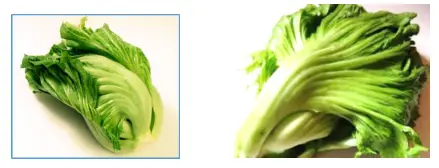
Product description0704.90.20CHINESE MUSTARD
CẢI BẸ XANH (CHINESE MUSTARD)
Chinese mustard (Brassica juncea) or in Cantonese -Kai Choi, also known as green mustard cabbage. Cabbage (Brassica oleracea) is the same family species with Chinese mustard -brassica. Brassica juncea. belongs to the Cruciferae (Brassicaceae) plant family, commonly known as the mustard family. The name is derived from the shape of the flowers that have four diagonally opposed petals in the form of a cross. Brassica juncea has pale green foliage, with a few hairs on the first leaves and leaf blades that terminate well up the petiole. Mature Brassica juncea plants grow to a height of one to two meters. The lower leaves are deeply lobed, while the upper leaves are narrow and entire.
Cabbage
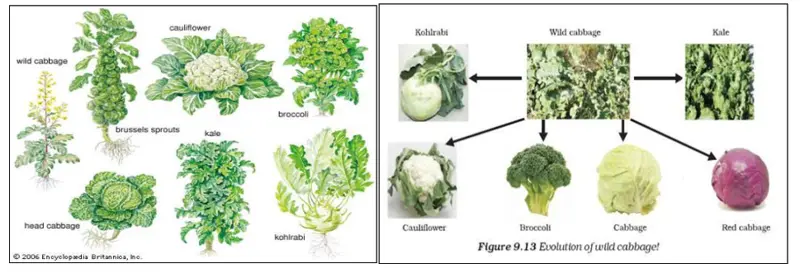
Cabbage (Brassica oleracea), vegetable and fodder plant the various forms of which are said to have been developed by long cultivation from the wild, or sea, cabbage (Brassica oleracea) found near the seacoast in various parts of England and continental Europe. The common horticultural forms of Brassica oleracea may be classified according to the plant parts used for food and the structure or arrangement of those parts:
(1) Leaves:
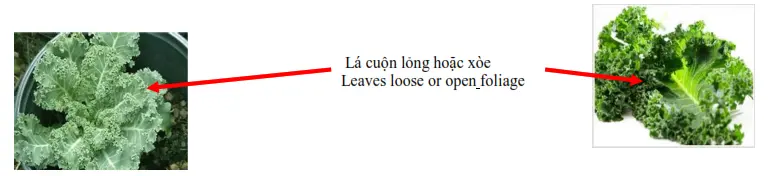
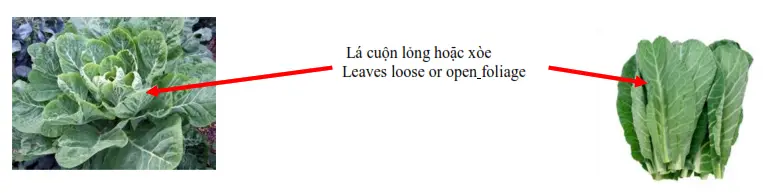
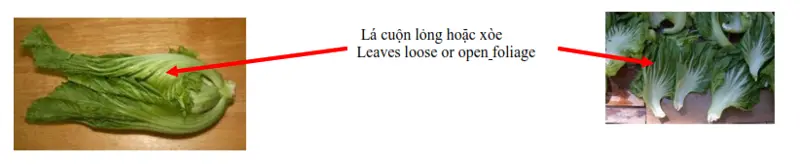
i. loose or open foliage - (e.g. kale and collards)
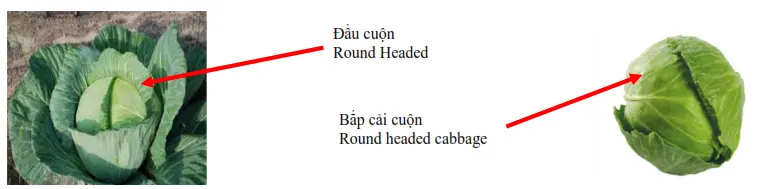
ii. Leaves folded into compact heads leaves (large terminal heads) - (e.g., common cabbage and savoy cabbage)
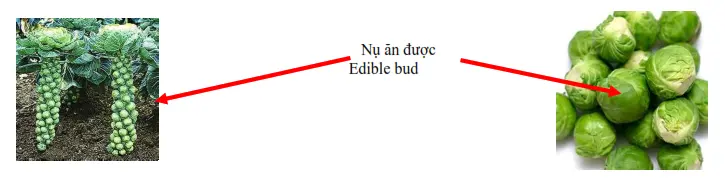
iii.Small axillary heads - (e.g., Brussels sprouts);
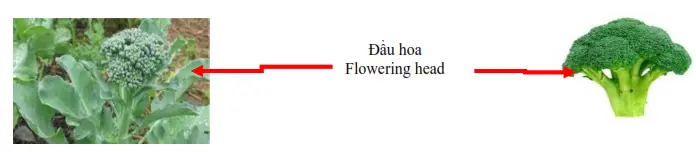
(2) Flowers: flower much thickened and modified - (e.g. cauliflower and heading broccoli);
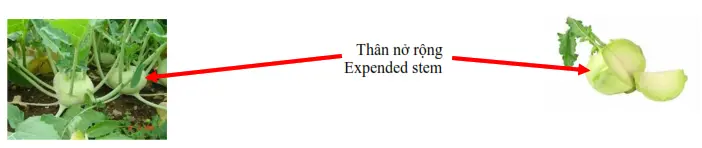
(3) Stem: stem much expanded to a bulbous structure- (e.g. kohlrabi).
| BẮP CẢI | MÔ TẢ | CÁC LOÀI BRASSICA OLERACEA | CABBAGE | DESCRIPTION | BRASSICA OLERACEA SPECIES |
| Súp lơ xanh | Súp lơ xanh là một loại cây xanh ăn được trong họ bắp cải, loại có đầu hoa lớn được sử dụng như một loại rau. | Thứ Brassica oleracea L. var. botrytis L. | Broccoli | Broccoli is an edible green plant in the cabbage family, whose large flowering head is used as a vegetable. | Variety Brassica oleracea L. var. botrytis L. |
| Cải Bruc-xen | Cải Bruc-xen là một loại cây trồng trong nhóm Gemmifera của bắp cải (Brassica oleracea), được trồng để lấy nụ để ăn (nhiều đầu nhỏ ở nách lá). | Thứ Brassica oleracea L. var. gemmifera DC. | Brussels sprout | The Brussels sprout is a cultivar in the Gemmifera group of cabbages (Brassica oleracea), grown for its edible buds (small axillary heads). | Variety Brassicaolera cea L. var. gemmifera |
| Su hào | Su hào (củ cải Đức hoặc bắp cải củ) (nhóm Brassica oleracea Gongylode) là một loại rau trồng hàng năm, và là một giống thấp, mập mạp của họ bắp cải. Thân nở rộng theo dạng củ hành được sử dụng như rau. | Thứ Brassica oleracea L. var. gongylodes L. | Kohlrabi | Kohlrabi (German turnip or turnip cabbage) (Brassica oleracea Gongylodes group) is an annual vegetable, and is a low, stout cultivar of cabbage. The stem much expanded to a bulbous structure is used as vegetable. | Variety Brassica oleracea L. var. gongylodes L. |
| Cải xoăn | Cải xoăn (Brassica oleracea Acephala Group) là một loại rau có lá màu xanh lá cây hoặc màu tím, trong đó những lá ở giữa không khum lại (lá cuộn lỏng hoặc xòe). | Nhóm Brassica oleraceaAcephala | Kale | Kale or borecole (Brassica oleracea Acephala Group) is a vegetable with green or purple leaves, in which the central leaves do not form a head (leaves loose or open foliage). | Brassica oleracea Ace-phala Group |
| Cải búp | Cải búp xanh (collard) là từ Anh Mỹ chỉ các loại cây trồng lá cuộn lỏng thuộc loài Brassica oleracea. | Brassicaceae/ Cruciferae (Họ bắp cải) | Collard | Collard greens (collards) is the American English term for various loose-leafed cultivars of Brassica oleracea. | Brassicaceae/ Cruciferae (cabbage Family) |
| Bắp cải | Bắp cải (Brassica oleracea hoặc các loại khác) là một loại cây hai năm, màu xanh lá hoặc màu tím, được thu hoạch hàng năm để lấy phần đầu cuộn. | Bắp cải (Brassica oleracea hoặc các loại khác) | Cabbage | Cabbage (Brassica oleracea or variants) is a leafy green or purple biennial plant, grown as an annual vegetable crop for its dense- leaved heads. | Cabbage (Brassica oleracea or variants) |
| Cải bẹ xanh | Brassica juncea, cải cay, cải cay Ấn Độ, cải bẹ xanh, Kai Choi hoặc cải đông dư là một loài cây cải cay. | Brassica juncea | Chinese mustard | Brassica juncea, mustard greens, Indian mustard, Chinese mustard, Kai Choi or leaf mustard is a species of mustard plant. | Brassica juncea |
Tiếng Việt
Cải bẹ xanh (chinese mustard) (Brassica juncea) hoặc theo tiếng Quảng Đông gọi là Kai Choi, còn được gọi là bắp cải xanh cay. Bắp cải cuộn (Brassica oleracea) là loài cùng họ với cải bẹ xanh - brassica. Brassica juncea thuộc họ thực vật Cruciferae (Brassicaceae), thường được gọi là họ cải cay. Cái tên được bắt nguồn từ hình dạng của những bông hoa có bốn cánh hoa theo đường chéo đối xứng trong hình thánh giá. Brassica juncea có lá màu xanh lá cây nhạt, với một vài sợi lông trên lá đầu tiên và phiến lá và kết thúc trên cuống lá. Cây Brassica juncea trưởng thành cao 1-2 mét. Các lá thấp hơn có dạng thùy, trong khi các lá phía trên đều hẹp.
Bắp cải
Bắp cải (Brassica oleracea), được sử dụng làm rau và thức ăn gia súc, có nhiều loài khác nhau được trồng lâu đời trong môi trường tự nhiên hoặc vùng biển, bắp cải (Brassica oleracea) được tìm thấy gần bờ biển ở các vùng khác nhau của Anh và lục địa Châu Âu. Các dạng của Brassica oleracea được trồng phổ biến có thể được phân loại theo các bộ phận của cây được sử dụng làm thực phẩm và theo cấu trúc hoặc bố trí của các bộ phận này:
(1) Lá:
i. Lá cuộn lỏng hoặc xòe- (ví dụ cải xoăn và cải búp)
ii. Lá cuộn chặt ở phần đầu (đầu cuốn lớn) - (Ví dụ, bắp cải thông thường và bắp cải savoy)
iii. Nhiều đầu nhỏ ở nách lá (Ví dụ., Cải Bruc-xen);
(2) Hoa: hoa dày và không đều - (ví dụ súp lơ và súp lơ xanh);
(3) Thân: thân nở rộng theo dạng củ hành (ví dụ su hào)
Notes for Section II — VEGETABLE PRODUCTS
1. In this Section the term “pellets” means products which have been agglomerated either directly by compression or by the addition of a binder in a proportion not exceeding 3% by weight.
Notes for Chapter 07 — Edible vegetables and certain roots and tubers
Notes
1. This Chapter does not cover forage products of heading 12.14.
2. In headings 07.09, 07.10, 07.11 and 07.12 the word “vegetables” includes edible mushrooms, truffles, olives, capers, marrows, pumpkins, aubergines, sweet corn (Zea mays var. saccharata), fruits of the genus Capsicum or of the genus Pimenta, fennel, parsley, chervil, tarragon, cress and sweet marjoram (Majorana hortensis or Origanum majorana).
3. Heading 07.12 covers all dried vegetables of the kinds falling in headings 07.01 to 07.11, other than:
(a) dried leguminous vegetables, shelled (heading 07.13);
(b) sweet corn in the forms specified in headings 11.02 to 11.04;
(c) flour, meal, powder, flakes, granules and pellets of potatoes (heading 11.05);
(d) flour, meal and powder of the dried leguminous vegetables of heading 07.13 (heading 11.06).
4. However, dried or crushed or ground fruits of the genus Capsicum or of the genus Pimenta are excluded from this Chapter (heading 09.04).
5. Heading 07.11 applies to vegetables which have been treated solely to ensure their provisional preservation during transport or storage prior to use (for example, by sulphur dioxide gas, in brine, in sulphur water or in other preservative solutions), provided they remain unsuitable for immediate consumption in that state.
Vietnam trade in subheading 0704.90
Figures cover the whole 6-digit subheading 0704.90, not code 07049020 alone — UN Comtrade only publishes to 6 digits. Latest year available for Vietnam is 2023.
Imports
- 202125 mn USD
- 202231 mn USD
- 202330 mn USD
Top partners 2023
- China30 mn USD
- Australia74,491 USD
- Rep. of Korea34,905 USD
- Netherlands2,219 USD
- Belgium1,325 USD
Exports
- 202115 mn USD
- 202212 mn USD
- 202317 mn USD
Top partners 2023
- Other Asia, nes17 mn USD
- Norway259,830 USD
- Lao People's Dem. Rep.121,582 USD
- Switzerland70,594 USD
- Malaysia47,614 USD
- Singapore17,394 USD
- Canada13,366 USD
- Australia8,808 USD
2025: as reported by partner countries
Vietnam has not filed 2025 yet, so this is rebuilt from what its 16 largest trading partners reported about trade with Vietnam (85% of Vietnam's trade). Not the same measure as the figures above — compare it only with the 2023 row beside it.
| Flow | 2023 | 2025 | Change |
|---|---|---|---|
| Exports | 86,410 USD | 3 mn USD | +3385% |
| Imports | 99,053 USD | 53,631 USD | -46% |
- Exports 2023: partners reported 86,410 USD where Vietnam reported 17 mn USD — 0.01× on this measure.
- Imports 2023: partners reported 99,053 USD where Vietnam reported 30 mn USD — 0.00× on this measure.
The gap is not a rounding difference: goods re-exported through Hong Kong or Singapore, a different heading chosen by the importing customs, and origin-based versus destination-based attribution all pull the two measures apart. Use the year-on-year change, not the level.
Source: UN Comtrade (preview API) — reported by Vietnam. Partner totals are as reported and may differ from partner-country statistics.
Corresponding US tariff lines
Six digits are identical worldwide under the HS Convention, so 0704.90 is the same subheading in both schedules. What differs is how each country splits it: below are the 8 US lines under 0704.90.
| US HTS code | Description | General duty |
|---|---|---|
| 0704.90.20.00 | Other (including sprouting broccoli (Brassica oleracea var. italica)) › Cabbage(kg) | 0.54¢/kg |
| 0704.90.40.15 | Other (including sprouting broccoli (Brassica oleracea var. italica)) › Other › Bok choy(kg) | 20% |
| 0704.90.40.22 | Other (including sprouting broccoli (Brassica oleracea var. italica)) › Other › Broccoli › Certified organic(kg) | 20% |
| 0704.90.40.24 | Other (including sprouting broccoli (Brassica oleracea var. italica)) › Other › Broccoli › Other(kg) | 20% |
| 0704.90.40.28 | Other (including sprouting broccoli (Brassica oleracea var. italica)) › Other › Collards(kg) | 20% |
| 0704.90.40.35 | Other (including sprouting broccoli (Brassica oleracea var. italica)) › Other › Kale(kg) | 20% |
| 0704.90.40.45 | Other (including sprouting broccoli (Brassica oleracea var. italica)) › Other › Napa cabbage(kg) | 20% |
| 0704.90.40.55 | Other (including sprouting broccoli (Brassica oleracea var. italica)) › Other › Other(kg) | 20% |
Additional Chapter 99 duties apply to goods of Vietnam
- 9903.02.69 +20% — The duty provided in the applicable subheading + 20%
- 9903.05.84 +12.5% — The duty provided in the applicable subheading + 12.5%
These are added to the General duty above, not in place of it. Whether a given article falls inside their scope — and the exclusion lists — is set out in the U.S. notes to Chapter 99, which are prose and not machine-readable, so this site does not assign them per code. Check the official schedule before quoting a landed cost.
Already terminated: 9903.01.72 +46%
Selling to a US buyer? Screen the parties first — buyer, L/C bank and forwarder against the US restricted lists; a listed party can get the shipment held.
The General column is the rate for Vietnam: the Special column lists US preference programmes (GSP, USMCA, KORUS…) and Vietnam is in none of them. Source: USITC Harmonized Tariff Schedule of the United States — 2026 HTS Revision 18. For reference only — classification on import is decided by US Customs, and anti-dumping, countervailing and Section 232/301 measures are not covered here.
Corresponding Japanese tariff lines
0704.90 is the same subheading in both schedules (six digits are identical worldwide under the HS Convention). Vietnamese goods can enter Japan under four parallel preference routes — the columns below — and the exporter picks whichever C/O gives the better rate.
| Line | Description | MFN | VJEPA | AJCEP | CPTPP | RCEP |
|---|---|---|---|---|---|---|
| 0704.90 | Other | 3% | — | — | — | — |
MFN is the lowest of the schedule's General/Temporary/WTO columns (hover to see all three). The preference columns require the matching certificate of origin; an em dash means that agreement gives no preference for the line. Source: Japan's Tariff Schedule, Japan Customs (as of August 8, 2026). For reference only — classification on import is decided by Japan Customs.
Codes at the same level under 070490
Check neighbouring codes to make sure the classification fits best.
Data updated: 11/08/2026 · Found wrong or missing data? Report a data error