Other › Other
0810.90.94 — Pomegranate (Punica spp.), soursop or sweetsops (Annona spp.), bell fruit (Syzygium spp., Eugenia spp.), marian plum (Bouea spp.), passion fruit (Passiflora spp.), cottonfruit (Sandoricum spp.), jujube (Ziziphus spp.) and tampoi or rambai (Baccaurea spp.)
Quả lựu (Punica spp.), quả mãng cầu hoặc quả na (Annona spp.), quả roi (bell fruit) (Syzygium spp., Eugenia spp.), quả thanh trà (Bouea spp.), quả chanh leo (dây) (Passiflora spp.), quả sấu đỏ (Sandoricum spp.), quả táo ta (Ziziphus spp.) và quả dâu da đất (Baccaurea spp.) (SEN)
Unit: kg (kg)
Hồ sơ mã HS — hscodevn.com/hs/08109094 · in ngày 15/9/2026 · chỉ mang tính tham khảo, đối chiếu văn bản pháp lý hiện hành
HS code 08109094 covers pomegranate (punica spp.), soursop or sweetsops (annona spp.), bell fruit (syzygium spp., eugenia spp.), marian plum (bouea spp.), passion fruit (passiflora spp.), cottonfruit (sandoricum spp.), jujube (ziziphus spp.) and tampoi or rambai (baccaurea spp.) under heading 0810 (other fruit, fresh), Chapter 08. The MFN import duty is 25%; the lowest FTA rate is 0% under ASEAN - China (ACFTA) (C/O form E required). VAT: */5/8/10. Unit of quantity: kg.
MFN import duty
25%
Lowest FTA
0%
ASEAN - China (ACFTA)
VAT
*/5/8/10
8% under the current reduction · 10% standard · 5% specific groups · * some cases not subject
Excise / Env. tax
—
Not subject
Distinguish from heading:0909Seeds of anise, badian, fennel…
Import duty comparison across FTA schedules
Full table with legal documents & effective dates
| Tax / Schedule | Rate | Document | Effective |
|---|---|---|---|
| Preferential import duty (MFN) | 25% | 26/2023/NĐ-CP | 15/07/2023 |
| Ordinary import duty | 37.5% | 15/2023/QĐ-TTg | 15/07/2023 |
| ASEAN (ATIGA)(2026) | 0% | 126/2022/NĐ-CP | 30/12/2022 |
| ASEAN - China (ACFTA) | 0% | 118/2022/NĐ-CP | 30/12/2022 |
| ASEAN - Japan (AJCEP)(01/04/2026 - 31/3/2027) | 0% | 120/2022/NĐ-CP | 30/12/2022 |
| Vietnam - Japan (VJEPA)(1/4/2026 - 31/3/2027) | 0% | 124/2022/NĐ-CP | 30/12/2022 |
| ASEAN - Korea (AKFTA) | 0%excl. KH, LA, MM | 119/2022/NĐ-CP | 30/12/2022 |
| ASEAN - Australia/New Zealand (AANZFTA) | 0% | 121/2022/NĐ-CP | 30/12/2022 |
| ASEAN - India (AIFTA)(01/01/2026 - 31/12/2026) | 0% | 122/2022/NĐ-CP | 30/12/2022 |
| Vietnam - Korea (VKFTA)(2026) | 0% | 125/2022/NĐ-CP | 30/12/2022 |
| Vietnam - Chile (VCFTA)(2026) | 0% | 112/2022/NĐ-CP | 30/12/2022 |
| Vietnam - Eurasian Economic Union (VN-EAEU)(2026) | 0% | 113/2022/NĐ-CP | 30/12/2022 |
| CPTPP Agreement(2026) | 0% | 115/2022/NĐ-CP | 30/12/2022 |
| ASEAN - Hong Kong (AHKFTA)(2026) | 5% | 123/2022/NĐ-CP | 30/12/2022 |
| Vietnam - Cuba(2023 - 2027) | 0% | 114/2022/NĐ-CP | 30/12/2022 |
| Vietnam - EU (EVFTA)(2026) | 0% | 116/2022/NĐ-CP | 30/12/2022 |
| Vietnam - UK (UKVFTA)(2026) | 0% | 117/2022/NĐ-CP | 30/12/2022 |
| Vietnam - Laos | 0% | 206/2025/NĐ-CP | 15/07/2025 |
| Vietnam - Israel (VIFTA)(2026) | 17,5% | 131/2024/NĐ-CP | 15/10/2024 |
| RCEP - Group A (ASEAN)(2026) | 0% | 129/2022/NĐ-CP | 30/12/2022 |
| RCEP - Group B (China)(2026) | 0% | 129/2022/NĐ-CP | 30/12/2022 |
| RCEP - Group C (Korea)(2026) | 0% | 129/2022/NĐ-CP | 30/12/2022 |
| RCEP - Group D (Japan)(2026) | 0% | 129/2022/NĐ-CP | 30/12/2022 |
| RCEP - Group E (Australia)(2026) | 0% | 129/2022/NĐ-CP | 30/12/2022 |
| RCEP - Group F (New Zealand)(2026) | 0% | 129/2022/NĐ-CP | 30/12/2022 |
FTA schedules are cut annually: the rate shown applies to the period in brackets, per the decree's appendix.
FTA duty phase-down
Upcoming reductions for this code — the new rate takes effect on this site automatically on the effective date.
- ASEAN - Hong Kong (AHKFTA)5% (2026)0%from 01/01/2027
- Vietnam - Israel (VIFTA)17,5% (2026)15%from 01/01/2027…continues per the schedule — see the decree annex
- Vietnam - UAE (CEPA)21,9%18,8%from 01/01/2027…continues per the schedule — see the decree annex
Only the steps present in the data (each schedule's next period) are shown. A schedule not reaching 0% here does not mean it stops — the full schedule is in the decree annex.
VAT · Excise tax · Environmental protection tax
| Tax / Schedule | Rate | Document | Effective |
|---|---|---|---|
| Value added tax (VAT) | */5/8/10 | 181/2025/NĐ-CP | 01/07/2025 |
Rules of origin by FTA
To claim an FTA rate the goods must meet the origin criterion below AND carry a valid C/O — the right HS code alone is not enough. Step-by-step self-check →
- Other:
WO
WO
WO
Source: Circular No. 44/2025/TT-BCT · annex uses HS 2022 while this site uses AHTN 2022 — check headings that changed between versions
- Other:
WO
WO
WO
Source: Circular No. 21/2019/TT-BCT · annex uses HS 2012 while this site uses AHTN 2022 — check headings that changed between versions
Edible fruit and nuts; peel of citrus fruit or melons
CC
CC
CC
Source: Circular No. 37/2022/TT-BCT · annex uses HS 2017 while this site uses AHTN 2022 — check headings that changed between versions
Other fruit, fresh
WO
WO
WO
Source: Circular No. 49/2025/TT-BCT · annex uses HS 2022 while this site uses AHTN 2022 — check headings that changed between versions
- Other:
WO
WO
WO
Source: Circular No. 03/2023/TT-BCT · annex uses HS 2022 while this site uses AHTN 2022 — check headings that changed between versions
Other fruit, fresh
CC
CC
CC
Source: Circular No. 03/2019/TT-BCT · annex uses HS 2012 while this site uses AHTN 2022 — check headings that changed between versions
Edible fruit and nuts; peel of citrus fruit or melons
- Nguyên liệu là các loại quả, quả hạch và vỏ quả thuộc họ cam quýt hoặc các loại dưa thuộc Chương 8 có xuất xứ thuần túy; và - Trọng lượng đường không vượt quá 20% trọng lượng sản phẩm.
WO
Source: Circular No. 14/2026/TT-BCT
Other fruit, fresh
CC
CC
CC
Source: Circular No. 32/2022/TT-BCT · annex uses HS 2022 while this site uses AHTN 2022 — check headings that changed between versions
Edible fruit and nuts; peel of citrus fruit or melons
Quá trình sản xuất, trong đó: - Nguyên liệu là các loại quả, quả hạch và vỏ quả thuộc họ cam quýt hoặc các loại dưa thuộc Chương 8 có xuất xứ thuần túy; và - Trọng lượng đường không vượt quá 20% trọng lượng sản phẩm.
WO
Source: Circular No. 02/2021/TT-BCT
- Other:
WO
WO
WO
Source: Circular No. 09/2022/TT-BCT · annex uses HS 2017 while this site uses AHTN 2022 — check headings that changed between versions
- Other:
CC
CC
CC
Source: Circular No. 01/2024/TT-BCT · annex uses HS 2022 while this site uses AHTN 2022 — check headings that changed between versions
Edible fruit and nuts; peel of citrus fruit or melons
Toàn bộ nguyên liệu thuộc Chương 8 có xuất xứ thuần túy
WO
Source: Circular No. 24/2026/TT-BCT · annex uses HS 2022 while this site uses AHTN 2022 — check headings that changed between versions
Agreements with no rule specific to this code
This code carries a preferential rate under the agreements below but has no line of its own in the product-specific rules annex. The goods must still meet an origin requirement.
The agreement sets a general rule for codes outside the annex:
1. Products referred to in Clause 2, Article 2 are considered originating if:
a) The AIFTA content is not less than thirty-five per cent (35%) of the FOB value; and
b) The non-originating materials used in the production of that product have undergone a change in tariff classification at the six (6)-digit level (CTSH) of the Harmonized System.
provided that the last production process is carried out in the territory of the exporting Member State.
CTSH
Source: Circular No. 15/2010/TT-BCT · Article 4(1) of Appendix 1
The agreement sets a general rule for codes outside the annex:
1. General origin criterion
a) Goods specified in Clause 2 of Article 2 shall be considered as originating in the Member State where the working or processing of those goods has taken place if:
- The goods have a regional value content (hereinafter referred to as the “Viet Nam - Laos value content” or the “regional value content (LVC)”) of not less than forty percent (40%), calculated in accordance with the formula provided in Article 5; or
- All non-originating materials used in the production of those goods have undergone a change in tariff classification (hereinafter referred to as “CTC”) at the four (4)-digit level (meaning a change of heading) of the Harmonized System.
b) Each Member State shall allow the exporter of the goods to decide to use either of the two criteria “LVC of not less than forty percent (40%)” or “change in tariff classification at the four (04)-digit level” referred to at point a of Clause 1 in order to determine the origin of the goods.
CTCLVC
Source: Circular No. 04/2010/TT-BCT · Article 4(1) of Appendix 1
Criteria are translated for reference; the Vietnamese wording quoted underneath is the binding text.
Commodity policy for this HS code
Unofficial English rendering of the Vietnamese source; the document numbers link to the full text.
Managing authority: Ministry of Industry and Trade · Ministry of Agriculture and Environment
- Goods imported in the form of buying, selling, and exchange by border residents (42/2019/TT-BCT & 34/2025/TT-BCT )Listed· Ministry of Industry and Trade
- List of goods bought, sold, and exchanged through auxiliary border gates and border openings by traders (42/2019/TT-BCT, 33/2025/TT-BCT)Listed· Ministry of Industry and Trade
- Plant quarantine (01/2024/TT-BNNPTNT M9)Quarantine· Ministry of Agriculture and Environment
Related documents (full text)
Supplementary Explanatory Notes (SEN, ASEAN 2022)
Note0810.90.94POMEGRANATE (PUNICA SPP.), SOURSOP OR SWEETSOPS (ANNONA SPP.), BELL FRUIT (SYZYGIUM SPP., EUGENIA SPP.), MARIAN PLUM (BOUEA SPP.), PASSION FRUIT (PASSIFLORA SPP.), COTTONFRUIT (SANDORICUM SPP.), JUJUBE (ZIZIPHUS SPP.) AND TAMPOI OR RAMBAI (BACCAUREA SPP.)
These are local fruits that are grown or produced and processed in ASEAN Member States.
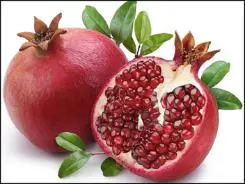
1. Pomegranate
Common name: Pomegranate
Scientific name: Punica granatum
Local name in Malaysia: Delima
Quả lựu
Pomegranate
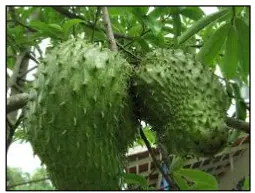
2. Soursop
Common name: Soursop
Scientific name: Annona muricata
Local name in Malaysia: Durian Belanda/Nona
Local name in Indonesia: Sirsak
Mãng cầu/mãng cầu xiêm
Soursop
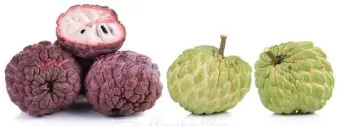
3. Sweetsop
Common name: Sweetsop
Scientific name: Annona squamosa
Local name in Malaysia: Nona serikaya
Quả na/quả mãng cầu ta
Sweetsop
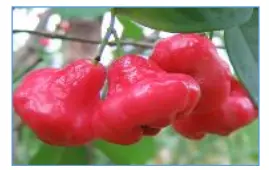
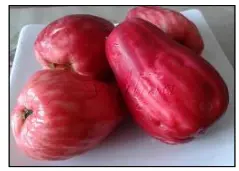
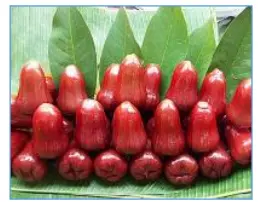
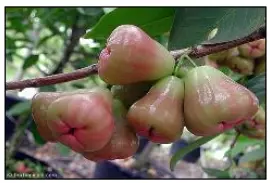
4. Bell fruit
Common name: Bell fruit
Scientific name: Syzygjum aqueum, Eugenia aquea
Local name in Malaysia: Jambu Air
Quả roi (Bell fruit/Jambu Air)
Quả roi (Bell fruit)
Tên địa phương tại Malaysia: Jambu Bol (Syzygjum malaccanese)
Quả roi (Bell fruit
Quả roi (Bell fruit))
Tên địa phương tại Malaysia: Jambu Mawar (Syzygjum jambos, Eugenia jambos)
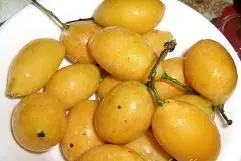
5. Marian Plum
Common name: Marian Plum
Scientific name: Bouea macrophylla
Local name in Malaysia: Kundang
Quả thanh trà
Marian Plum
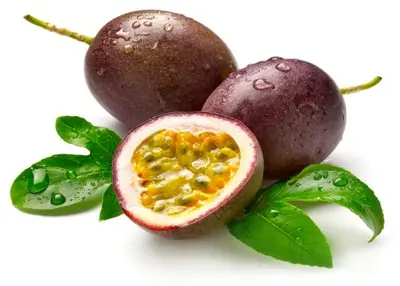
6. Passion fruit
Common name: Markisa
Scientific name: Passiflora spp.
Local name in Malaysia: Buah susu
Quả chanh leo/chanh dây
Passion fruit
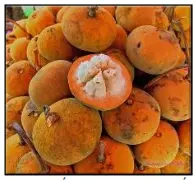
7. Cottonfruit
Common name: Cottonfruit
Scientific name: Sandoricum koetjape, Sandoricum indicum, Sandoricum nervosum
Local names in Malaysia: Kecapi/ Sentol/ Sentul/ Santol
Local names in Thailand: Krathon/Sathon
Quả sấu đỏ (mạy song, sấu tía)
Cottonfruit
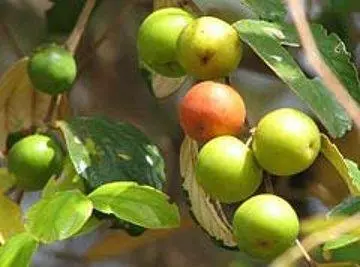
8. Jujube
Common name: Jujube
Scientific name: Ziziphus spp.
Local name in Malaysia: Bidara
Quả táo ta
Jujube
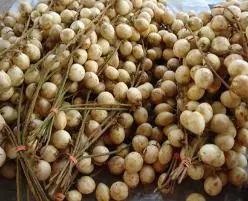
9. Tampoi or Rambai
Common name: Rambai
Scientific name: Baccaurea motleyana
Local name in Malaysia: Rambai or tampoi
Quả dâu da đất
Tampoi or Rambai
Tiếng Việt
QUẢ LỰU (PUNICA SPP.), QUẢ MÃNG CẦU HOẶC QUẢ NA (ANNONA SPP.), QUẢ ROI (BELL FRUIT) (SYZYGIUM SPP., EUGENIA SPP.), QUẢ THANH TRÀ (BOUEA SPP.), QUẢ CHANH LEO (DÂY) (PASSIFLORA SPP.), QUẢ SẤU ĐỎ (SANDORICUM SPP.), QUẢ TÁO TA (ZIZIPHUS SPP.) VÀ QUẢ DÂU DA ĐẤT (BACCAUREA SPP.)
Đây là những loại trái cây địa phương được trồng hoặc sản xuất và chế biến ở các nước thành viên ASEAN.
1. Quả lựu
Tên thông dụng: Quả lựu
Tên khoa học: Punica granatum
Tên địa phương tại Malaysia: Delima
Quả lựu
Pomegranate
2. Mãng cầu
Tên thông dụng: Mãng cầu/mãng cầu xiêm (Soursop)
Tên khoa học: Annona muricata
Tên địa phương tại Malaysia: Durian Belanda/Nona
Tên địa phương tại Indonesia: Sirsak
Mãng cầu/mãng cầu xiêm
Soursop
3. Quả na
Tên thông dụng: Quả na/quả mãng cầu ta (Sweetsop)
Tên khoa học: Annona squamosa
Tên địa phương tại Malaysia: Nona serikaya
Quả na/quả mãng cầu ta
Sweetsop
4. Quả roi (bell fruit)
Tên thông dụng: Quả roi (bell fruit)
Tên khoa học: Syzygjum aqueum, Eugenia aquea
Tên địa phương tại Malaysia: Jambu Air
Quả roi (Bell fruit/Jambu Air)
Quả roi (Bell fruit)
Tên địa phương tại Malaysia: Jambu Bol (Syzygjum malaccanese)
Quả roi (Bell fruit
Quả roi (Bell fruit))
Tên địa phương tại Malaysia: Jambu Mawar (Syzygjum jambos, Eugenia jambos)
5. Quả thanh trà (marian plum)
Tên thông dụng: Quả thanh trà
Tên khoa học: Bouea macrophylla
Tên địa phương tại Malaysia: Kundang
Quả thanh trà
Marian Plum
6. Quả chanh leo
Tên thông dụng: Quả chanh leo/ chanh dây
Tên khoa học: Passiflora spp.
Tên địa phương tại Malaysia: Buah susu
Quả chanh leo/chanh dây
Passion fruit
7. Quả sấu đỏ (mậy tong, sấu tía)
Tên thông dụng: Quả sấu đỏ (mậy tong, sấu tía)
Tên khoa học: Sandoricum koetjape, Sandoricum indicum, Sandoricum nervosum
Tên địa phương tại Ma-lai-xi-a: Kecapi/ Sentol/ Sentul/ Santol
Tên địa phương tại Thái Lan: Krathon/Sathon
Quả sấu đỏ (mạy song, sấu tía)
Cottonfruit
8. Quả táo ta (jujube)
Tên thông dụng: Quả táo ta/đại táo/hồng táo/táo tàu - Jujube
Tên khoa học: Ziziphus spp.
Tên địa phương tại Malaysia: Bidara
Quả táo ta
Jujube
9. Quả dâu da đất
Tên thông dụng: Rambai
Tên khoa học: Baccaurea motleyana
Tên địa phương tại Malaysia: Rambai hoặc tampoi
Quả dâu da đất
Tampoi or Rambai
Notes for Section II — VEGETABLE PRODUCTS
1. In this Section the term “pellets” means products which have been agglomerated either directly by compression or by the addition of a binder in a proportion not exceeding 3% by weight.
Notes for Chapter 08 — Edible fruit and nuts; peel of citrus fruit or melons
Notes
1. This Chapter does not cover inedible nuts or fruits.
2. Chilled fruits and nuts are to be classified in the same headings as the corresponding fresh fruits and nuts.
3. Dried fruit or dried nuts of this Chapter may be partially rehydrated, or treated for the following purposes:
(a) For additional preservation or stabilisation (for example, by moderate heat treatment, sulphuring, the addition of sorbic acid or potassium sorbate),
(b) To improve or maintain their appearance (for example, by the addition of vegetable oil or small quantities of glucose syrup), provided that they retain the character of dried fruit or dried nuts.
4. Heading 08.12 applies to fruit and nuts which have been treated solely to ensure their provisional preservation during transport or storage prior to use (for example, by sulphur dioxide gas, in brine, in sulphur water or in other preservative solutions), provided they remain unsuitable for immediate consumption in that state.
Vietnam trade in subheading 0810.90
Figures cover the whole 6-digit subheading 0810.90, not code 08109094 alone — UN Comtrade only publishes to 6 digits. Latest year available for Vietnam is 2023.
Imports
- 202123 mn USD
- 202229 mn USD
- 202324 mn USD
Top partners 2023
- China12 mn USD
- Thailand11 mn USD
- Lao People's Dem. Rep.1 mn USD
- Cambodia58,207 USD
- Myanmar33,712 USD
- New Zealand4,650 USD
Exports
- 20211.3 bn USD
- 2022843 mn USD
- 2023929 mn USD
Top partners 2023
- China747 mn USD
- India38 mn USD
- France19 mn USD
- USA17 mn USD
- United Arab Emirates15 mn USD
- Rep. of Korea14 mn USD
- Canada11 mn USD
- China, Hong Kong SAR10 mn USD
2025: as reported by partner countries
Vietnam has not filed 2025 yet, so this is rebuilt from what its 16 largest trading partners reported about trade with Vietnam (85% of Vietnam's trade). Not the same measure as the figures above — compare it only with the 2023 row beside it.
| Flow | 2023 | 2025 | Change |
|---|---|---|---|
| Exports | 131 mn USD | 188 mn USD | +43% |
| Imports | 14 mn USD | 35 mn USD | +148% |
- Exports 2023: partners reported 131 mn USD where Vietnam reported 929 mn USD — 0.14× on this measure.
- Imports 2023: partners reported 14 mn USD where Vietnam reported 24 mn USD — 0.59× on this measure.
The gap is not a rounding difference: goods re-exported through Hong Kong or Singapore, a different heading chosen by the importing customs, and origin-based versus destination-based attribution all pull the two measures apart. Use the year-on-year change, not the level.
Source: UN Comtrade (preview API) — reported by Vietnam. Partner totals are as reported and may differ from partner-country statistics.
Corresponding US tariff lines
Six digits are identical worldwide under the HS Convention, so 0810.90 is the same subheading in both schedules. What differs is how each country splits it: below are the 10 US lines under 0810.90.
| US HTS code | Description | General duty |
|---|---|---|
| 0810.90.27.30 | Other › Other berries; tamarinds › Tamarinds(kg) | Free |
| 0810.90.27.60 | Other › Other berries; tamarinds › Berries(kg) | Free |
| 0810.90.46.20 | Other › Other › Cactus pears(kg) | 2.2% |
| 0810.90.46.30 | Other › Other › Dragon fruit(kg) | 2.2% |
| 0810.90.46.40 | Other › Other › Jackfruit(kg) | 2.2% |
| 0810.90.46.50 | Other › Other › Lychee(kg) | 2.2% |
| 0810.90.46.60 | Other › Other › Pomegranates(kg) | 2.2% |
| 0810.90.46.70 | Other › Other › Rambutan(kg) | 2.2% |
Additional Chapter 99 duties apply to goods of Vietnam
- 9903.02.69 +20% — The duty provided in the applicable subheading + 20%
- 9903.05.84 +12.5% — The duty provided in the applicable subheading + 12.5%
These are added to the General duty above, not in place of it. Whether a given article falls inside their scope — and the exclusion lists — is set out in the U.S. notes to Chapter 99, which are prose and not machine-readable, so this site does not assign them per code. Check the official schedule before quoting a landed cost.
Already terminated: 9903.01.72 +46%
Selling to a US buyer? Screen the parties first — buyer, L/C bank and forwarder against the US restricted lists; a listed party can get the shipment held.
The General column is the rate for Vietnam: the Special column lists US preference programmes (GSP, USMCA, KORUS…) and Vietnam is in none of them. Source: USITC Harmonized Tariff Schedule of the United States — 2026 HTS Revision 18. For reference only — classification on import is decided by US Customs, and anti-dumping, countervailing and Section 232/301 measures are not covered here.
Corresponding Japanese tariff lines
0810.90 is the same subheading in both schedules (six digits are identical worldwide under the HS Convention). Vietnamese goods can enter Japan under four parallel preference routes — the columns below — and the exporter picks whichever C/O gives the better rate.
| Line | Description | MFN | VJEPA | AJCEP | CPTPP | RCEP |
|---|---|---|---|---|---|---|
| 0810.90 | Other | 10% | — | — | — | — |
MFN is the lowest of the schedule's General/Temporary/WTO columns (hover to see all three). The preference columns require the matching certificate of origin; an em dash means that agreement gives no preference for the line. Source: Japan's Tariff Schedule, Japan Customs (as of August 8, 2026). For reference only — classification on import is decided by Japan Customs.
Codes at the same level under “Other:”
Check neighbouring codes to make sure the classification fits best.
Data updated: 11/08/2026 · Found wrong or missing data? Report a data error