Of nylon or other polyamides › Other
5703.29.10 — Prayer rugs
Thảm cầu nguyện (SEN)
Unit: m2/unit (m2/chiếc)
Hồ sơ mã HS — hscodevn.com/hs/57032910 · in ngày 15/9/2026 · chỉ mang tính tham khảo, đối chiếu văn bản pháp lý hiện hành
HS code 57032910 covers prayer rugs under heading 5703 (carpets and other textile floor coverings (including turf), tufted, whether or not made up), Chapter 57. The MFN import duty is 12%; the lowest FTA rate is 0% under ASEAN - China (ACFTA) (C/O form E required). VAT: 5/8/10%. Unit of quantity: m2/unit.
MFN import duty
12%
Lowest FTA
0%
ASEAN - China (ACFTA)
VAT
5/8/10%
8% under the current reduction · 10% standard · 5% specific groups
Excise / Env. tax
—
Not subject
Distinguish from heading:5802Terry towelling and similar…
Import duty comparison across FTA schedules
Full table with legal documents & effective dates
| Tax / Schedule | Rate | Document | Effective |
|---|---|---|---|
| Preferential import duty (MFN) | 12% | 26/2023/NĐ-CP | 15/07/2023 |
| Ordinary import duty | 18% | 15/2023/QĐ-TTg | 15/07/2023 |
| ASEAN (ATIGA)(2026) | 0% | 126/2022/NĐ-CP | 30/12/2022 |
| ASEAN - China (ACFTA) | 0% | 118/2022/NĐ-CP | 30/12/2022 |
| ASEAN - Japan (AJCEP)(01/04/2026 - 31/3/2027) | 0% | 120/2022/NĐ-CP | 30/12/2022 |
| Vietnam - Japan (VJEPA)(1/4/2026 - 31/3/2027) | 0% | 124/2022/NĐ-CP | 30/12/2022 |
| ASEAN - Korea (AKFTA) | 0% | 119/2022/NĐ-CP | 30/12/2022 |
| ASEAN - Australia/New Zealand (AANZFTA) | 0% | 121/2022/NĐ-CP | 30/12/2022 |
| ASEAN - India (AIFTA)(01/01/2026 - 31/12/2026) | 0% | 122/2022/NĐ-CP | 30/12/2022 |
| Vietnam - Korea (VKFTA)(2026) | 0% | 125/2022/NĐ-CP | 30/12/2022 |
| Vietnam - Chile (VCFTA)(2026) | 0% | 112/2022/NĐ-CP | 30/12/2022 |
| Vietnam - Eurasian Economic Union (VN-EAEU)(2026) | 0% | 113/2022/NĐ-CP | 30/12/2022 |
| CPTPP Agreement(2026) | 0% | 115/2022/NĐ-CP | 30/12/2022 |
| ASEAN - Hong Kong (AHKFTA)(2026) | 0% | 123/2022/NĐ-CP | 30/12/2022 |
| Vietnam - EU (EVFTA)(2026) | 0% | 116/2022/NĐ-CP | 30/12/2022 |
| Vietnam - UK (UKVFTA)(2026) | 0% | 117/2022/NĐ-CP | 30/12/2022 |
| Vietnam - Laos | 0% | 206/2025/NĐ-CP | 15/07/2025 |
| Vietnam - Israel (VIFTA)(2026) | 6,9% | 131/2024/NĐ-CP | 15/10/2024 |
| RCEP - Group A (ASEAN)(2026) | 0% | 129/2022/NĐ-CP | 30/12/2022 |
| RCEP - Group B (China)(2026) | 0% | 129/2022/NĐ-CP | 30/12/2022 |
| RCEP - Group C (Korea)(2026) | 0% | 129/2022/NĐ-CP | 30/12/2022 |
| RCEP - Group D (Japan)(2026) | 0% | 129/2022/NĐ-CP | 30/12/2022 |
| RCEP - Group E (Australia)(2026) | 0% | 129/2022/NĐ-CP | 30/12/2022 |
| RCEP - Group F (New Zealand)(2026) | 0% | 129/2022/NĐ-CP | 30/12/2022 |
FTA schedules are cut annually: the rate shown applies to the period in brackets, per the decree's appendix.
FTA duty phase-down
Upcoming reductions for this code — the new rate takes effect on this site automatically on the effective date.
- Vietnam - Israel (VIFTA)6,9% (2026)5,1%from 01/01/2027…continues per the schedule — see the decree annex
- Vietnam - UAE (CEPA)10%8%from 01/01/2027…continues per the schedule — see the decree annex
Only the steps present in the data (each schedule's next period) are shown. A schedule not reaching 0% here does not mean it stops — the full schedule is in the decree annex.
VAT · Excise tax · Environmental protection tax
| Tax / Schedule | Rate | Document | Effective |
|---|---|---|---|
| Value added tax (VAT) | 5/8/10% | 181/2025/NĐ-CP | 01/07/2025 |
Rules of origin by FTA
To claim an FTA rate the goods must meet the origin criterion below AND carry a valid C/O — the right HS code alone is not enough. Step-by-step self-check →
- - Other:
CC
CC
CC
Source: Circular No. 44/2025/TT-BCT · annex uses HS 2022 while this site uses AHTN 2022 — check headings that changed between versions
Carpets and other textile floor coverings
CC except from heading 50.07, headings 51.11 to 51.13, headings 52.08 to 52.12, headings 53.09 to 53.11, heading 54.07, heading 54.08 or headings 55.12 to 55.16, provided that, where non-originating materials of headings 50.04 to 50.06, headings 51.06 to 51.10, headings 52.04 to 52.07, headings 53.06 to 53.08, headings 54.01 to 54.06 or headings 55.08 to 55.11 are used, those materials are spun entirely in one or more of the Member States.
CC ngoại trừ từ nhóm 50.07, nhóm 51.11 đến nhóm 51.13, nhóm 52.08 đến nhóm 52.12, nhóm 53.09 đến nhóm 53.11, nhóm 54.07, nhóm 54.08 hoặc nhóm 55.12 đến nhóm 55.16, với điều kiện khi sử dụng nguyên liệu không có xuất xứ thuộc từ nhóm 50.04 đến nhóm 50.06, nhóm 51.06 đến nhóm 51.10, nhóm 52.04 đến nhóm 52.07, nhóm 53.06 đến nhóm 53.08, nhóm 54.01 đến nhóm 54.06 hoặc nhóm 55.08 đến nhóm 55.11, các nguyên liệu này phải được xe sợi toàn bộ tại ít nhất một trong các nước thành viên.
CC
Source: Circular No. 37/2022/TT-BCT · annex uses HS 2017 while this site uses AHTN 2022 — check headings that changed between versions
Carpets and other textile floor coverings
CC; or RVC 40%
CC; hoặc RVC 40%
CCRVC40
Source: Circular No. 49/2025/TT-BCT · annex uses HS 2022 while this site uses AHTN 2022 — check headings that changed between versions
- - Other:
RVC40; or CC; or the textile rule
RVC40; hoặc CC; hoặc Quy tắc hàng dệt may
CCRVC40
Source: Circular No. 03/2023/TT-BCT · annex uses HS 2022 while this site uses AHTN 2022 — check headings that changed between versions
Carpets and other textile floor coverings
Kéo từ xơ tự nhiên hoặc xơ staple nhân tạo hoặc đùn thành sợi filament nhân tạo, mỗi trường hợp đều kèm theo công đoạn dệt thoi; Sản xuất từ sợi dừa hoặc sợi xizan hoặc sợi đay; Phủ xơ vụn/cấy nhung kèm nhuộm hoặc in; hoặc Khâu thảm kèm nhuộm hoặc in. Kéo thành xơ nhân tạo kèm theo các kỹ thuật không dệt bao gồm cả xuyên kim. Tuy nhiên, cho phép sử dụng: - sợi filement từ polypropylene thuộc Nhóm 5402, - xơ polypropylene thuộc Nhóm 5503 hoặc 5506, hoặc - tô filament từ polypropylene thuộc Nhóm 5501, trong đó xơ hoặc sợi filament đơn trong mọi trường hợp nhỏ hơn 9 decitex, với điều kiện tổng trị giá nguyên liệu đó không vượt quá 40% giá xuất xưởng của sản phẩm. Vải đay được phép sử dụng làm vải nền.
Source: Circular No. 14/2026/TT-BCT
Carpets and other textile floor coverings
CC
CC
CC
Source: Circular No. 32/2022/TT-BCT · annex uses HS 2022 while this site uses AHTN 2022 — check headings that changed between versions
Carpets and other textile floor coverings
Kéo sợi từ xơ tự nhiên hoặc xơ staple nhân tạo hoặc đùn thành sợi filament nhân tạo, rồi dệt thành sản phẩm; sản xuất từ sợi xơ dừa hoặc sợi xizan hoặc sợi đay; Phủ xơ vụn/cấy nhung rồi nhuộm hoặc in; hoặc chần (thảm) rồi nhuộm hoặc in. Đùn thành xơ nhân tạo rồi sản xuất bằng kỹ thuật không dệt bao gồm xuyên kim;3 Tuy nhiên, được sử dụng: - sợi filement từ polypropylene thuộc Nhóm 5402; - xơ polypropylene thuộc Nhóm 5503 hoặc 5506, hoặc - tô filament từ polypropylene thuộc Nhóm 5501, trong đó xơ hoặc sợi filament đơn trong mọi trường hợp có chi số nhỏ hơn 9 decitex, với điều kiện tổng trị giá nguyên liệu nói trên không vượt quá 40% giá xuất xưởng của sản phẩm. Được sử dụng vải đay làm vải nền.
Source: Circular No. 02/2021/TT-BCT
Carpets and other textile floor coverings
CC ngoại trừ từ nhóm 50.07, 51.11 - 51.13, 52.08 - 52.12, 53.09 - 53.11, 54.07 - 54.08 hoặc 55.12 - 55.16, với điều kiện khi sử dụng nguyên liệu không có xuất xứ thuộc từ nhóm 50.04 - 50.06, 51.06 - 51.10, 52.04 - 52.07, 53.06 - 53.08, 54.01 - 54.06 hoặc 55.08 - 55.11, các nguyên liệu này phải được xe sợi toàn bộ tại ít nhất một trong các nước thành viên hoặc một nước ASEAN.
CC
Source: Circular No. 10/2009/TT-BCT
- - Other:
CC
CC
CC
Source: Circular No. 01/2024/TT-BCT · annex uses HS 2022 while this site uses AHTN 2022 — check headings that changed between versions
Carpets and other textile floor coverings
CTH
CTH
CTH
or
QVC 35%
QVC 35%
QVC35
Source: Circular No. 24/2026/TT-BCT · annex uses HS 2022 while this site uses AHTN 2022 — check headings that changed between versions
Agreements with no rule specific to this code
This code carries a preferential rate under the agreements below but has no line of its own in the product-specific rules annex. The goods must still meet an origin requirement.
The agreement sets a general rule for codes outside the annex:
1. The goods referred to in Clause 3, Article 5 of this Circular, other than the goods provided in Clause 2 of this Article, are considered originating if:
a) The goods have a regional value content (RVC) of not less than 40% of the FOB value calculated in accordance with Article 8 of this Circular and the last production process is carried out in a Member State; or
b) Goods of Chapters 25, 26, 28, 29, 31 and 39; Chapters 42 to 49; Chapters 57 to 59; Chapters 61, 62 and 64; Chapters 66 to 71; Chapters 73 to 83; Chapters 86 and 88; and Chapters 91 to 97 of the Harmonized Commodity Description and Coding System using non-originating materials undergo a change in tariff classification at the 4-digit level (CTH), except for headings 29.01, 29.02, 31.05, 39.01, 39.02, 39.03, 39.07 and 39.08, to which the RVC 40% origin criterion applies.
CTHRVC40
Source: Circular No. 12/2019/TT-BCT · Article 7(1)
The agreement sets a general rule for codes outside the annex:
1. The goods referred to in Clause 3, Article 5 of this Circular, other than the goods provided in Clause 2 of this Article, are considered originating if they have an RVC of not less than 40% calculated in accordance with Article 8 of this Circular.
Source: Circular No. 21/2019/TT-BCT · Article 7(1)
The agreement sets a general rule for codes outside the annex:
1. Products referred to in Clause 2, Article 2 are considered originating if:
a) The AIFTA content is not less than thirty-five per cent (35%) of the FOB value; and
b) The non-originating materials used in the production of that product have undergone a change in tariff classification at the six (6)-digit level (CTSH) of the Harmonized System.
provided that the last production process is carried out in the territory of the exporting Member State.
CTSH
Source: Circular No. 15/2010/TT-BCT · Article 4(1) of Appendix 1
The agreement sets NO general rule. Apart from wholly obtained goods and goods produced entirely from originating materials, the only route is to meet the annex — and no annex line matches this code, so check the circular itself:
a) Is wholly obtained or produced entirely in the territory of one or more Member countries as provided in Article 6 of this Circular;
b) Is produced entirely in the territory of one or more Member countries exclusively from originating materials;
c) Is produced entirely in the territory of one or more Member countries using non-originating materials, provided that the good satisfies all applicable requirements set out in Appendix I issued together with this Circular.
Source: Circular No. 03/2019/TT-BCT · Article 5(1)
The agreement sets a general rule for codes outside the annex:
1. For the purposes of Clause 2, Article 2, goods are considered originating in the Member State where the production or processing took place if:
a) The goods have a regional value content (RVC) of not less than forty per cent (40%), calculated in accordance with Article 5; or
b) All the non-originating materials used in the production of those goods undergo a change in tariff classification (hereinafter referred to as “CTC”) at the four (4)-digit level (that is, a change of heading) of the Harmonized System.
2. Each Member State shall allow the exporter to use either of the criteria provided at Point a, Clause 1 or Point b, Clause 1 of this Article to determine the origin of the goods.
CTC
Source: Circular No. 31/2013/TT-BCT · Article 4(1)
The agreement sets NO general rule. Apart from wholly obtained goods and goods produced entirely from originating materials, the only route is to meet the annex — and no annex line matches this code, so check the circular itself:
1. For the purposes of Point b, Clause 1, Article 2 of this Appendix, goods that are not wholly obtained are considered originating if they satisfy the Product Specific Rules provided in Appendix II.
Source: Circular No. 40/2015/TT-BCT · Article 4(1) of Appendix I
The agreement sets a general rule for codes outside the annex:
1. General origin criterion
a) Goods specified in Clause 2 of Article 2 shall be considered as originating in the Member State where the working or processing of those goods has taken place if:
- The goods have a regional value content (hereinafter referred to as the “Viet Nam - Laos value content” or the “regional value content (LVC)”) of not less than forty percent (40%), calculated in accordance with the formula provided in Article 5; or
- All non-originating materials used in the production of those goods have undergone a change in tariff classification (hereinafter referred to as “CTC”) at the four (4)-digit level (meaning a change of heading) of the Harmonized System.
b) Each Member State shall allow the exporter of the goods to decide to use either of the two criteria “LVC of not less than forty percent (40%)” or “change in tariff classification at the four (04)-digit level” referred to at point a of Clause 1 in order to determine the origin of the goods.
CTCLVC
Source: Circular No. 04/2010/TT-BCT · Article 4(1) of Appendix 1
Criteria are translated for reference; the Vietnamese wording quoted underneath is the binding text.
Commodity policy for this HS code
Unofficial English rendering of the Vietnamese source; the document numbers link to the full text.
Managing authority: Ministry of Industry and Trade
- Used consumer goods banned from import (08/2023/TT-BCT - PL1.I)Prohibited· Ministry of Industry and Trade
- Goods temporarily suspended from temporary import for re-export business through border gates (08/2023/TT-BCT - PL2)Suspended· Ministry of Industry and Trade
- List of items exempted from specialized inspection requirements (765/QĐ-BCT dated 29/03/2019)*Specialised inspection· Ministry of Industry and Trade
Related documents (full text)
Supplementary Explanatory Notes (SEN, ASEAN 2022)
Product description57.01 57.02 57.03 57.05PRAYER RUGS
THẢM CẦU NGUYỆN
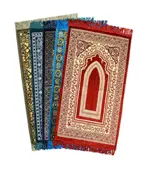
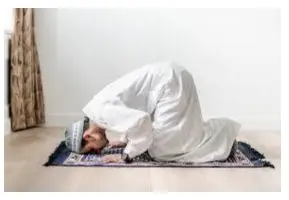
Prayer rugs, also known as prayer mats (sajjada in Arabic) are made of textile materials such as cotton, man-made fibres, wool or other vegetable fibres. The rectangular dimensions are approximately 70cm in width x 120cm in length. They are decorated with religious images of Islamic symbols or architectural designs.
Tiếng Việt
Thảm cầu nguyện, hay còn được gọi là chiếu cầu nguyện (sajjada trong tiếng Ả Rập) được làm từ các vật liệu dệt như bông, sợi nhân tạo, len hoặc các loại sợi thực vật khác. Kích thước tấm hình chữ nhật chiều rộng xấp xỉ 70cm và chiều dài xấp xỉ 120cm. Chúng được trang trí bằng những biểu tượng của Hồi Giáo hoặc các công trình kiến trúc.
Notes for Section XI — TEXTILES AND TEXTILE ARTICLES
Notes
1. This Section does not cover:
(a) Animal brush making bristles or hair (heading 05.02); horsehair or horsehair waste (heading 05.11);
(b) Human hair or articles of human hair (heading 05.01, 67.03 or 67.04), except filtering or straining cloth of a kind commonly used in oil presses or the like (heading 59.11);
(nhóm 05.01, 67.03 hoặc 67.04), trừ vải lọc dùng trong công nghệ ép dầu hoặc tương tự (nhóm 59.11);
(c) Cotton linters or other vegetable materials of Chapter 14;
(d) Asbestos of heading 25.24 or articles of asbestos or other products of heading 68.12 or 68.13;
(e) Articles of heading 30.05 or 30.06; yarn used to clean between the teeth (dental floss), in individual retail packages, of heading 33.06;
(f) Sensitised textiles of headings 37.01 to 37.04;
(g) Monofilament of which any cross-sectional dimension exceeds 1 mm or strip or the like (for example, artificial straw) of an apparent width exceeding 5 mm, of plastics (Chapter 39), or plaits or fabrics or other basketware or wickerwork of such monofilament or strip (Chapter 46);
(h) Woven, knitted or crocheted fabrics, felt or nonwovens, impregnated, coated, covered or laminated with plastics, or articles thereof, of Chapter 39;
(ij) Woven, knitted or crocheted fabrics, felt or nonwovens, impregnated, coated, covered or laminated with rubber, or articles thereof, of Chapter 40;
(k) Hides or skins with their hair or wool on (Chapter 41 or 43) or articles of furskin, artificial fur or articles thereof, of heading 43.03 or 43.04;
(l) Articles of textile materials of heading 42.01 or 42.02;
(m) Products or articles of Chapter 48 (for example, cellulose wadding);
(n) Footwear or parts of footwear, gaiters or leggings or similar articles of Chapter 64;
(o) Hair-nets or other headgear or parts thereof of Chapter 65;
(p) Goods of Chapter 67;
(q) Abrasive-coated textile material (heading 68.05) and also carbon fibres or articles of carbon fibres of heading 68.15;
(r) Glass fibres or articles of glass fibres, other than embroidery with glass thread on a visible ground of fabric (Chapter 70);
(s) Articles of Chapter 94 (for example, furniture, bedding, luminaires and lighting fittings);
(t) Articles of Chapter 95 (for example, toys, games, sports requisites and nets);
(u) Articles of Chapter 96 (for example, brushes, travel sets for sewing, slide fasteners, typewriter ribbons, sanitary towels (pads) and tampons, napkins (diapers) and napkin liners); or
(v) Articles of Chapter 97.
2. (A) Goods classifiable in Chapters 50 to 55 or in heading 58.09 or 59.02 and of a mixture of two or more textile materials are to be classified as if consisting wholly of that one textile material which predominates by weight over any other single textile material.
When no one textile material predominates by weight, the goods are to be classified as if consisting wholly of that one textile material which is covered by the heading which occurs last in numerical order among those which equally merit consideration.
(B) For the purposes of the above rule:
(a) Gimped horsehair yarn (heading 51.10) and metallised yarn (heading 56.05) are to be treated as a single textile material the weight of which is to be taken as the aggregate of the weights of its components; for the classification of woven fabrics, metal thread is to be regarded as a textile material;
(b) The choice of appropriate heading shall be effected by determining first the Chapter and then the applicable heading within that Chapter, disregarding any materials not classified in that Chapter;
(c) When both Chapters 54 and 55 are involved with any other Chapter, Chapters 54 and 55 are to be treated as a single Chapter;
(d) Where a Chapter or a heading refers to goods of different textile materials, such materials are to be treated as a single textile material.
(C) The provisions of paragraphs (A) and (B) above apply also to the yarns referred to in Note 3, 4, 5 or 6 below.
3. (A) For the purposes of this Section, and subject to the exceptions in paragraph (B) below, yarns (single, multiple (folded) or cabled) of the following descriptions are to be treated as “twine, cordage, ropes and cables”:
(a) Of silk or waste silk, measuring more than 20,000 decitex;
(b) Of man-made fibres (including yarn of two or more monofilaments of Chapter 54), measuring more than 10,000 decitex;
(c) Of true hemp or flax:
(i) Polished or glazed, measuring 1,429 decitex or more; or
(ii) Not polished or glazed, measuring more than 20,000 decitex;
(d) Of coir, consisting of three or more plies;
(e) Of other vegetable fibres, measuring more than 20,000 decitex; or
(f) Reinforced with metal thread.
(B) Exceptions:
(a) Yarn of wool or other animal hair and paper yarn, other than yarn reinforced with metal thread;
(b) Man-made filament tow of Chapter 55 and multifilament yarn without twist or with a twist of less than 5 turns per metre of Chapter 54;
(c) Silk worm gut of heading 50.06, and monofilaments of Chapter 54;
(d) Metallised yarn of heading 56.05; yarn reinforced with metal thread is subject to paragraph (A) (f) above; and
(e) Chenille yarn, gimped yarn and loop wale-yarn of heading 56.06.
4. (A) For the purposes of Chapters 50, 51, 52, 54 and 55, the expression “put up for retail sale” in relation to yarn means, subject to the exceptions in paragraph (B) below, yarn (single, multiple (folded) or cabled) put up:
(a) On cards, reels, tubes or similar supports, of a weight (including support) not exceeding:
(i) 85 g in the case of silk, waste silk or man-made filament yarn; or
(ii) 125 g in other cases;
(b) In balls, hanks or skeins of a weight not exceeding:
(i) 85 g in the case of man-made filament yarn of less than 3,000 decitex, silk or silk waste;
(ii) 125 g in the case of all other yarns of less than 2,000 decitex; or
(iii) 500 g in other cases;
(c) In hanks or skeins comprising several smaller hanks or skeins separated by dividing threads which render them independent one of the other, each of uniform weight not exceeding:
(i) 85 g in the case of silk, waste silk or man-made filament yarn; or
(ii) 125 g in other cases.
(B) Exceptions:
(a) Single yarn of any textile material, except:
(i) Single yarn of wool or fine animal hair, unbleached; and
(ii) Single yarn of wool or fine animal hair, bleached, dyed or printed, measuring more than 5,000 decitex;
(b) Multiple (folded) or cabled yarn, unbleached:
(i) Of silk or waste silk, however put up; or
(ii) Of other textile material except wool or fine animal hair, in hanks or skeins;
(c) Multiple (folded) or cabled yarn of silk or waste silk, bleached, dyed or printed, measuring 133 decitex or less; and
(d) Single, multiple (folded) or cabled yarn of any textile material:
(i) In cross-reeled hanks or skeins; or
(ii) Put up on supports or in some other manner indicating its use in the textile industry (for example, on cops, twisting mill tubes, pirns, conical bobbins or spindles, or reeled in the form of cocoons for embroidery looms).
5. For the purposes of headings 52.04, 54.01 and 55.08, the expression “sewing thread” means multiple (folded) or cabled yarn:
(a) Put up on supports (for example, reels, tubes) of a weight (including support) not exceeding 1,000 g;
(b) Dressed for use as sewing thread; and
(c) With a final “Z” twist.
6. For the purposes of this Section, the expression “high tenacity yarn” means yarn having a tenacity, expressed in cN/tex (centinewtons per tex), greater than the following:
Single yarn of nylon or other polyamides, or of polyesters....... ................................. 60 cN/tex
Multiple (folded) or cabled yarn of nylon or other polyamides, or of polyesters................................................ ...................... 53 cN/tex
Single, multiple (folded) or cabled yarn of viscose rayon .................................. 27 cN/tex.
7. For the purposes of this Section, the expression “made up” means:
(a) Cut otherwise than into squares or rectangles;
(b) Produced in the finished state, ready for use (or merely needing separation by cutting dividing threads) without sewing or other working (for example, certain dusters, towels, table cloths, scarf squares, blankets);
(c) Cut to size and with at least one heat-sealed edge with a visibly tapered or compressed border and the other edges treated as described in any other subparagraph of this Note, but excluding fabrics the cut edges of which have been prevented from unravelling by hot cutting or by other simple means;
(d) Hemmed or with rolled edges, or with a knotted fringe at any of the edges, but excluding fabrics the cut edges of which have been prevented from unravelling by whipping or by other simple means;
(e) Cut to size and having undergone a process of drawn thread work;
(f) Assembled by sewing, gumming or otherwise (other than piece goods consisting of two or more lengths of identical material joined end to end and piece goods composed of two or more textiles assembled in layers, whether or not padded);
(g) Knitted or crocheted to shape, whether presented as separate items or in the form of a number of items in the length.
8. For the purposes of Chapters 50 to 60:
(a) Chapters 50 to 55 and 60 and, except where the context otherwise requires, Chapters 56 to 59 do not apply to goods made up within the meaning of Note 7 above; and
(b) Chapters 50 to 55 and 60 do not apply to goods of Chapters 56 to 59.
9. The woven fabrics of Chapters 50 to 55 include fabrics consisting of layers of parallel textile yarns superimposed on each other at acute or right angles. These layers are bonded at the intersections of the yarns by an adhesive or by thermal bonding.
10. Elastic products consisting of textile materials combined with rubber threads are classified in this Section.
11. For the purposes of this Section, the expression “impregnated” includes “dipped”.
12. For the purposes of this Section, the expression “polyamides” includes “aramids”.
13. For the purposes of this Section and, where applicable, throughout the Nomenclature, the expression "elastomeric yarn" means filament yarn, including monofilament, of synthetic textile material, other than textured yarn, which does not break on being extended to three times its original length and which returns, after being extended to twice its original length, within a period of five minutes, to a length not greater than one and a half times its original length.
14. Unless the context otherwise requires, textile garments of different headings are to be classified in their own headings even if put up in sets for retail sale. For the purposes of this Note, the expression “textile garments” means garments of headings 61.01 to 61.14 and headings 62.01 to 62.11.
15. Subject to Note 1 to Section XI, textiles, garments and other textile articles, incorporating chemical, mechanical or electronic components for additional functionality, whether incorporated as built-in components or within the fibre or fabric, are classified in their respective headings in Section XI provided that they retain the essential character of the goods of this Section.
Subheading Notes
1. In this Section and, where applicable, throughout the Nomenclature, the following expressions have the meanings hereby assigned to them:
(a) Unbleached yarn
Yarn which:
(i) has the natural colour of its constituent fibres and has not been bleached, dyed (whether or not in the mass) or printed; or
(ii) is of indeterminate colour (“grey yarn”), manufactured from garneted stock.
Such yarn may have been treated with a colourless dressing or fugitive dye (which disappears after simple washing with soap) and, in the case of man-made fibres, treated in the mass with delustring agents (for example, titanium dioxide).
(b) Bleached yarn
Yarn which:
(i) has undergone a bleaching process, is made of bleached fibres or, unless the context otherwise requires, has been dyed white (whether or not in the mass) or treated with a white dressing;
(ii) consists of a mixture of unbleached and bleached fibres; or
(iii) is multiple (folded) or cabled and consists of unbleached and bleached yarns.
(c) Coloured (dyed or printed) yarn
Yarn which:
(i) is dyed (whether or not in the mass) other than white or in a fugitive colour, or printed, or made from dyed or printed fibres;
(ii) consists of a mixture of dyed fibres of different colours or of a mixture of unbleached or bleached fibres with coloured fibres (marl or mixture yarns), or is printed in one or more colours at intervals to give the impression of dots;
(iii) is obtained from slivers or rovings which have been printed; or
(iv) is multiple (folded) or cabled and consists of unbleached or bleached yarn and coloured yarn.
The above definitions also apply, mutatis mutandis, to monofilament and to strip or the like of Chapter 54.
(d) Unbleached woven fabric
Woven fabric made from unbleached yarn and which has not been bleached, dyed or printed. Such fabric may have been treated with a colourless dressing or a fugitive dye.
(e) Bleached woven fabric
Woven fabric which:
(i) has been bleached or, unless the context otherwise requires, dyed white or treated with a white dressing, in the piece;
(ii) consists of bleached yarn; or
(iii) consists of unbleached and bleached yarn.
(f) Dyed woven fabric
Woven fabric which:
(i) is dyed a single uniform colour other than white (unless the context otherwise requires) or has been treated with a coloured finish other than white (unless the context otherwise requires), in the piece; or
(ii) consists of coloured yarn of a single uniform colour.
(g) Woven fabric of yarns of different colours
Woven fabric (other than printed woven fabric) which:
(i) consists of yarns of different colours or yarns of different shades of the same colour (other than the natural colour of the constituent fibres);
(ii) consists of unbleached or bleached yarn and coloured yarn; or
(iii) consists of marl or mixture yarns.
(In all cases, the yarn used in selvedges and piece ends is not taken into consideration.)
(h) Printed woven fabric
Woven fabric which has been printed in the piece, whether or not made from yarns of different colours.
(The following are also regarded as printed woven fabrics: woven fabrics bearing designs made, for example, with a brush or spray gun, by means of transfer paper, by flocking or by the batik process.)
The process of mercerisation does not affect the classification of yarns or fabrics within the above categories.
The definitions at (d) to (h) above apply, mutatis mutandis, to knitted or crocheted fabrics.
(ij) Plain weave
A fabric construction in which each yarn of the weft passes alternately over and under successive yarns of the warp and each yarn of the warp passes alternately over and under successive yarns of the weft.
2. (A) Products of Chapters 56 to 63 containing two or more textile materials are to be regarded as consisting wholly of that textile material which would be selected under Note 2 to this Section for the classification of a product of Chapters 50 to 55 or of heading 58.09 consisting of the same textile materials.
(B) For the application of this rule:
(a) where appropriate, only the part which determines the classification under Interpretative Rule 3 shall be taken into account;
(b) in the case of textile products consisting of a ground fabric and a pile or looped surface no account shall be taken of the ground fabric;
(c) in the case of embroidery of heading 58.10 and goods thereof, only the ground fabric shall be taken into account. However, embroidery without visible ground, and goods thereof, shall be classified with reference to the embroidering threads alone.
Notes for Chapter 57 — Carpets and other textile floor coverings
Notes
1. For the purposes of this Chapter, the term “carpets and other textile floor coverings” means floor coverings in which textile materials serve as the exposed surface of the article when in use and includes articles having the characteristics of textile floor coverings but intended for use for other purposes.
2. This Chapter does not cover floor covering underlays.
Vietnam trade in subheading 5703.29
Figures cover the whole 6-digit subheading 5703.29, not code 57032910 alone — UN Comtrade only publishes to 6 digits. Latest year available for Vietnam is 2023.
Imports
- 20226 mn USD
- 20236 mn USD
Top partners 2023
- China5 mn USD
- Japan376,025 USD
- Belgium107,479 USD
- Thailand97,312 USD
- Denmark74,235 USD
- USA49,007 USD
- India41,949 USD
- Germany20,982 USD
Exports
- 2022303,695 USD
- 2023261,243 USD
Top partners 2023
- USA154,669 USD
- Mexico75,029 USD
- Cambodia15,931 USD
- China, Hong Kong SAR10,315 USD
- Rep. of Korea2,785 USD
- United Kingdom1,002 USD
- Japan787 USD
- Myanmar724 USD
2025: as reported by partner countries
Vietnam has not filed 2025 yet, so this is rebuilt from what its 16 largest trading partners reported about trade with Vietnam (85% of Vietnam's trade). Not the same measure as the figures above — compare it only with the 2023 row beside it.
| Flow | 2023 | 2025 | Change |
|---|---|---|---|
| Exports | 1 mn USD | 2 mn USD | +71% |
| Imports | 3 mn USD | 3 mn USD | +1% |
- Exports 2023: partners reported 1 mn USD where Vietnam reported 261,243 USD — 5.42× on this measure.
- Imports 2023: partners reported 3 mn USD where Vietnam reported 6 mn USD — 0.59× on this measure.
The gap is not a rounding difference: goods re-exported through Hong Kong or Singapore, a different heading chosen by the importing customs, and origin-based versus destination-based attribution all pull the two measures apart. Use the year-on-year change, not the level.
Source: UN Comtrade (preview API) — reported by Vietnam. Partner totals are as reported and may differ from partner-country statistics.
Corresponding US tariff lines
Six digits are identical worldwide under the HS Convention, so 5703.29 is the same subheading in both schedules. What differs is how each country splits it: below are the 3 US lines under 5703.29.
| US HTS code | Description | General duty |
|---|---|---|
| 5703.29.10.00 | Of nylon or other polyamides › Other › Hand-hooked, that is, in which the tufts were inserted by hand or by means of a hand tool (665)(m2, kg) | 5.8% |
| 5703.29.20.10 | Of nylon or other polyamides › Other › Other › Measuring not more than 5.25 m2 in area (665)(m2, kg) | 6.7% |
| 5703.29.20.90 | Of nylon or other polyamides › Other › Other › Other (665)(m2, kg) | 6.7% |
Additional Chapter 99 duties apply to goods of Vietnam
- 9903.02.69 +20% — The duty provided in the applicable subheading + 20%
- 9903.05.84 +12.5% — The duty provided in the applicable subheading + 12.5%
These are added to the General duty above, not in place of it. Whether a given article falls inside their scope — and the exclusion lists — is set out in the U.S. notes to Chapter 99, which are prose and not machine-readable, so this site does not assign them per code. Check the official schedule before quoting a landed cost.
Already terminated: 9903.01.72 +46%
Selling to a US buyer? Screen the parties first — buyer, L/C bank and forwarder against the US restricted lists; a listed party can get the shipment held.
The General column is the rate for Vietnam: the Special column lists US preference programmes (GSP, USMCA, KORUS…) and Vietnam is in none of them. Source: USITC Harmonized Tariff Schedule of the United States — 2026 HTS Revision 18. For reference only — classification on import is decided by US Customs, and anti-dumping, countervailing and Section 232/301 measures are not covered here.
Corresponding Japanese tariff lines
5703.29 is the same subheading in both schedules (six digits are identical worldwide under the HS Convention). Vietnamese goods can enter Japan under four parallel preference routes — the columns below — and the exporter picks whichever C/O gives the better rate.
| Line | Description | MFN | VJEPA | AJCEP | CPTPP | RCEP |
|---|---|---|---|---|---|---|
| 5703.29 | Other | 6.3% | — | — | — | — |
| 5703.29-100 | Other › 1 Of size and shape suitable for incorporation in motor vehicles(KG) | Free | Free | Free | Free | Free |
| 5703.29 | Other › 2 Other | 9.6% | — | — | — | — |
MFN is the lowest of the schedule's General/Temporary/WTO columns (hover to see all three). The preference columns require the matching certificate of origin; an em dash means that agreement gives no preference for the line. Source: Japan's Tariff Schedule, Japan Customs (as of August 8, 2026). For reference only — classification on import is decided by Japan Customs.
Codes at the same level under 570329
Check neighbouring codes to make sure the classification fits best.
Data updated: 11/08/2026 · Found wrong or missing data? Report a data error