Other › Other motor cars (including station wagons and sports cars, but not including vans), of four-wheel drive
8703.40.71 — Of a cylinder capacity not exceeding 1,000 cc
Dung tích xi lanh không quá 1.000 cc
Unit: unit (chiếc)
Hồ sơ mã HS — hscodevn.com/hs/87034071 · in ngày 15/9/2026 · chỉ mang tính tham khảo, đối chiếu văn bản pháp lý hiện hành
HS code 87034071 covers of a cylinder capacity not exceeding 1,000 cc under heading 8703 (motor cars and other motor vehicles principally designed for the transport of persons (other than those of heading 87.02), including station wagons and racing cars), Chapter 87. The MFN import duty is 70%; the lowest FTA rate is 0% under ASEAN (ATIGA) (C/O form D required). VAT: 10/8%; subject to excise tax. Unit of quantity: unit.
MFN import duty
70%
Lowest FTA
0%
ASEAN (ATIGA)
VAT
10/8%
8% under the current reduction · 10% standard
Excise / Env. tax
Own schedule
Excise tax
Distinguish from heading:8702Motor vehicles for the…
Import duty comparison across FTA schedules
Full table with legal documents & effective dates
| Tax / Schedule | Rate | Document | Effective |
|---|---|---|---|
| Preferential import duty (MFN) | 70% | 73/2025/NĐ-CP | 31/03/2025 |
| Ordinary import duty | 105% | 15/2023/QĐ-TTg | 15/07/2023 |
| ASEAN (ATIGA)(2026) | 0% | 126/2022/NĐ-CP | 30/12/2022 |
| ASEAN - China (ACFTA) | 50% | 118/2022/NĐ-CP | 30/12/2022 |
| ASEAN - Japan (AJCEP)(01/04/2026 - 31/3/2027) | * | 120/2022/NĐ-CP | 30/12/2022 |
| Vietnam - Japan (VJEPA)(1/4/2026 - 31/3/2027) | * | 124/2022/NĐ-CP | 30/12/2022 |
| ASEAN - Korea (AKFTA) | * | 119/2022/NĐ-CP | 30/12/2022 |
| ASEAN - Australia/New Zealand (AANZFTA) | 25% | 121/2022/NĐ-CP | 30/12/2022 |
| ASEAN - India (AIFTA)(01/01/2026 - 31/12/2026) | * | 122/2022/NĐ-CP | 30/12/2022 |
| Vietnam - Korea (VKFTA)(2026) | 78% | 125/2022/NĐ-CP | 30/12/2022 |
| Vietnam - Chile (VCFTA)(2026) | 8% | 112/2022/NĐ-CP | 30/12/2022 |
| Vietnam - Eurasian Economic Union (VN-EAEU)(2026) | * | 113/2022/NĐ-CP | 30/12/2022 |
| CPTPP Agreement(2026) | 28; M: 35 | 115/2022/NĐ-CP | 30/12/2022 |
| ASEAN - Hong Kong (AHKFTA)(2026) | * | 123/2022/NĐ-CP | 30/12/2022 |
| Vietnam - EU (EVFTA)(2026) | 28,3% | 116/2022/NĐ-CP | 30/12/2022 |
| Vietnam - UK (UKVFTA)(2026) | 28,3% | 117/2022/NĐ-CP | 30/12/2022 |
| Vietnam - Laos | 0% | 206/2025/NĐ-CP | 15/07/2025 |
| Vietnam - Israel (VIFTA)(2026) | * | 131/2024/NĐ-CP | 15/10/2024 |
| RCEP - Group A (ASEAN)(2026) | 70% | 129/2022/NĐ-CP | 30/12/2022 |
| RCEP - Group B (China)(2026) | 70% | 129/2022/NĐ-CP | 30/12/2022 |
| RCEP - Group C (Korea)(2026) | 70% | 129/2022/NĐ-CP | 30/12/2022 |
| RCEP - Group D (Japan)(2026) | * | 129/2022/NĐ-CP | 30/12/2022 |
| RCEP - Group E (Australia)(2026) | * | 129/2022/NĐ-CP | 30/12/2022 |
| RCEP - Group F (New Zealand)(2026) | 70% | 129/2022/NĐ-CP | 30/12/2022 |
FTA schedules are cut annually: the rate shown applies to the period in brackets, per the decree's appendix.
FTA duty phase-down
Upcoming reductions for this code — the new rate takes effect on this site automatically on the effective date.
- CPTPP Agreement28; M: 35 (2026)21; M: 28from 01/01/2027…continues per the schedule — see the decree annex
- Vietnam - EU (EVFTA)28,3% (2026)21,2%from 01/01/2027…continues per the schedule — see the decree annex
- Vietnam - UK (UKVFTA)28,3% (2026)21,2%from 01/01/2027…continues per the schedule — see the decree annex
Only the steps present in the data (each schedule's next period) are shown. A schedule not reaching 0% here does not mean it stops — the full schedule is in the decree annex.
VAT · Excise tax · Environmental protection tax
| Tax / Schedule | Rate | Document | Effective |
|---|---|---|---|
| Value added tax (VAT) | 10/8% | 174/2025/NĐ-CP - PL2 | 30/06/20025 |
| Special consumption tax (excise) | Own schedule | 66/2025/QH15 | 14/06/2025 |
VAT reduction: Not eligible for the VAT reduction under Decree 174/2025/NĐ-CP (Annex 2): Motor vehicles of fewer than 24 seats, including passenger cars; Not eligible for the VAT reduction (Decree 174/2025/NĐ-CP): four-wheeled motorised passenger vehicles; Not eligible for the VAT reduction (Decree 174/2025/NĐ-CP): pick-up passenger cars; Not eligible for the VAT reduction (Decree 174/2025/NĐ-CP): double-cab pick-up trucks; Not eligible for the VAT reduction (Decree 174/2025/NĐ-CP): VAN trucks with two or more seat rows and a fixed partition between the passenger and cargo compartments
Excise duty follows its own schedule — use the Calculator to pick the rate.
Rules of origin by FTA
To claim an FTA rate the goods must meet the origin criterion below AND carry a valid C/O — the right HS code alone is not enough. Step-by-step self-check →
- Other vehicles, with both spark-ignition internal combustion piston engine and electric motor as motors for propulsion, other than those capable of being charged by plugging to external source of electric power:
RVC(40)
RVC(40)
RVC40
Source: Circular No. 44/2025/TT-BCT · annex uses HS 2022 while this site uses AHTN 2022 — check headings that changed between versions
Motor cars and other motor vehicles principally designed for the transport of persons (other than those of heading 87.02), including station wagons and racing cars
RVC 40%
RVC 40%
RVC40
Source: Circular No. 37/2022/TT-BCT · annex uses HS 2017 while this site uses AHTN 2022 — check headings that changed between versions
- Other vehicles, with both spark-ignition internal combustion piston engine and electric motor as motors for propulsion, other than those capable of being charged by plugging to external source of electric power:
RVC 45%
RVC 45%
RVC45
Source: Circular No. 49/2025/TT-BCT · annex uses HS 2022 while this site uses AHTN 2022 — check headings that changed between versions
- Other vehicles, with both spark-ignition internal combustion piston engine and electric motor as motors for propulsion, other than those capable of being charged by plugging to external source of electric power:
RVC40
RVC40
RVC40
Source: Circular No. 03/2023/TT-BCT · annex uses HS 2022 while this site uses AHTN 2022 — check headings that changed between versions
Motor cars and other motor vehicles principally designed for the transport of persons (other than those of heading 87.02), including station wagons and racing cars
an RVC of not less than: a) 45% under the net cost formula; or b) 55% under the indirect formula.
RVC không thấp hơn: a) 45% theo công thức tính chi phí tịnh; hoặc b) 55% theo công thức tính gián tiếp.
Source: Circular No. 03/2019/TT-BCT · annex uses HS 2012 while this site uses AHTN 2022 — check headings that changed between versions
Vehicles other than railway or tramway rolling-stock, and parts and accessories thereof; except:
The value of the materials used does not exceed 45% of the ex-works price of the product.
Trị giá nguyên liệu được sử dụng không vượt quá 45% giá xuất xưởng của sản phẩm.
Source: Circular No. 14/2026/TT-BCT
Motor cars and other motor vehicles principally designed for the transport of persons (other than those of heading 87.02), including station wagons and racing cars
RVC40
RVC40
RVC40
Source: Circular No. 32/2022/TT-BCT · annex uses HS 2022 while this site uses AHTN 2022 — check headings that changed between versions
Vehicles other than railway or tramway rolling-stock, and parts and accessories thereof; except:
The value of the materials does not exceed 45% of the ex-works price of the product.
Trị giá nguyên liệu không vượt quá 45% giá xuất xưởng của sản phẩm.
Source: Circular No. 02/2021/TT-BCT
Vehicles other than railway or tramway rolling-stock, and parts and accessories thereof
CTH
CTH
CTH
or
60%
60%
Source: Circular No. 11/2024/TT-BCT
Motor cars and other motor vehicles principally designed for the transport of persons (other than those of heading 87.02), including station wagons and racing cars
LVC 40%
LVC 40%
LVC
Source: Circular No. 10/2009/TT-BCT
- Other vehicles, with both spark-ignition internal combustion piston engine and electric motor as motors for propulsion, other than those capable of being charged by plugging to external source of electric power:
RVC(45)
RVC(45)
RVC45
Source: Circular No. 09/2022/TT-BCT · annex uses HS 2017 while this site uses AHTN 2022 — check headings that changed between versions
Vehicles other than railway or tramway rolling-stock, and parts and accessories thereof
CTH, tuy nhiên trong trường hợp hàng hóa và các bộ phận hoặc phụ kiện của chúng được phân loại trong cùng một nhóm thì áp dụng quy tắc CTSH thay vì CTH
CTHCTSH
or
QVC 35%
QVC 35%
QVC35
Source: Circular No. 24/2026/TT-BCT · annex uses HS 2022 while this site uses AHTN 2022 — check headings that changed between versions
Agreements with no rule specific to this code
This code carries a preferential rate under the agreements below but has no line of its own in the product-specific rules annex. The goods must still meet an origin requirement.
The agreement sets a general rule for codes outside the annex:
1. The goods referred to in Clause 3, Article 5 of this Circular, other than the goods provided in Clause 2 of this Article, are considered originating if:
a) The goods have a regional value content (RVC) of not less than 40% of the FOB value calculated in accordance with Article 8 of this Circular and the last production process is carried out in a Member State; or
b) Goods of Chapters 25, 26, 28, 29, 31 and 39; Chapters 42 to 49; Chapters 57 to 59; Chapters 61, 62 and 64; Chapters 66 to 71; Chapters 73 to 83; Chapters 86 and 88; and Chapters 91 to 97 of the Harmonized Commodity Description and Coding System using non-originating materials undergo a change in tariff classification at the 4-digit level (CTH), except for headings 29.01, 29.02, 31.05, 39.01, 39.02, 39.03, 39.07 and 39.08, to which the RVC 40% origin criterion applies.
CTHRVC40
Source: Circular No. 12/2019/TT-BCT · Article 7(1)
The agreement sets a general rule for codes outside the annex:
1. The goods referred to in Clause 3, Article 5 of this Circular, other than the goods provided in Clause 2 of this Article, are considered originating if they have an RVC of not less than 40% calculated in accordance with Article 8 of this Circular.
Source: Circular No. 21/2019/TT-BCT · Article 7(1)
The agreement sets a general rule for codes outside the annex:
1. Products referred to in Clause 2, Article 2 are considered originating if:
a) The AIFTA content is not less than thirty-five per cent (35%) of the FOB value; and
b) The non-originating materials used in the production of that product have undergone a change in tariff classification at the six (6)-digit level (CTSH) of the Harmonized System.
provided that the last production process is carried out in the territory of the exporting Member State.
CTSH
Source: Circular No. 15/2010/TT-BCT · Article 4(1) of Appendix 1
The agreement sets a general rule for codes outside the annex:
1. For the purposes of Clause 2, Article 2, goods are considered originating in the Member State where the production or processing took place if:
a) The goods have a regional value content (RVC) of not less than forty per cent (40%), calculated in accordance with Article 5; or
b) All the non-originating materials used in the production of those goods undergo a change in tariff classification (hereinafter referred to as “CTC”) at the four (4)-digit level (that is, a change of heading) of the Harmonized System.
2. Each Member State shall allow the exporter to use either of the criteria provided at Point a, Clause 1 or Point b, Clause 1 of this Article to determine the origin of the goods.
CTC
Source: Circular No. 31/2013/TT-BCT · Article 4(1)
The agreement sets NO general rule. Apart from wholly obtained goods and goods produced entirely from originating materials, the only route is to meet the annex — and no annex line matches this code, so check the circular itself:
a) They are wholly obtained or produced entirely in a Party under Article 4 of this Appendix; or
b) They are produced entirely in one or both Parties, exclusively from materials originating in one or both Parties; or
c) They are produced in a Party using non-originating materials and satisfy the product specific rules provided in Appendix II to this Circular.
Source: Circular No. 21/2016/TT-BCT · Article 3 of Appendix I
The agreement sets a general rule for codes outside the annex:
1. General origin criterion
a) Goods specified in Clause 2 of Article 2 shall be considered as originating in the Member State where the working or processing of those goods has taken place if:
- The goods have a regional value content (hereinafter referred to as the “Viet Nam - Laos value content” or the “regional value content (LVC)”) of not less than forty percent (40%), calculated in accordance with the formula provided in Article 5; or
- All non-originating materials used in the production of those goods have undergone a change in tariff classification (hereinafter referred to as “CTC”) at the four (4)-digit level (meaning a change of heading) of the Harmonized System.
b) Each Member State shall allow the exporter of the goods to decide to use either of the two criteria “LVC of not less than forty percent (40%)” or “change in tariff classification at the four (04)-digit level” referred to at point a of Clause 1 in order to determine the origin of the goods.
CTCLVC
Source: Circular No. 04/2010/TT-BCT · Article 4(1) of Appendix 1
Criteria are translated for reference; the Vietnamese wording quoted underneath is the binding text.
Commodity policy for this HS code
Unofficial English rendering of the Vietnamese source; the document numbers link to the full text.
Managing authority: Ministry of Finance · Ministry of Construction
- Imported goods required to undergo customs procedures at the port of import (23/2019/QĐ-TTg)Special procedure· Ministry of Finance
- Imported goods requiring certification prior to customs clearance (12/2022/TT-BGTVT PL1)Specialised inspection· Ministry of Construction
- Technical safety and environmental protection quality certification prior to customs clearance (12/2022/TT-BGTVT and 62/2024/TT-BGTVT)Specialised inspection· Ministry of Construction
Expired legal documents
- 12/2022/TT-BGTVTexpired since 01/07/2026→ replaced by 71/2025/TT-BXD
- 62/2024/TT-BGTVTexpired since 01/07/2026→ replaced by 71/2025/TT-BXD
Effectivity checked as of 09/08/2026
Related documents (full text)
Supplementary Explanatory Notes (SEN, ASEAN 2022)
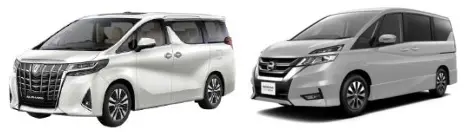
Product description87.02 87.03VANS
Ô TÔ VAN
For the purpose of heading 87.02 and 87.03, the term “vans” can be defined as a type of vehicle principally designed for the transport of persons, with the following characteristics:
- having a boxy-shape body,
- the engine is substantially mounted either underneath the driver’s seat, at the front passenger’s seat, or at the rear,
- hinged doors for the front and at least one sliding door to enter the rear and a door with window at the rear end of the vehicle,
- seat with high H-point,
- not having a permanent panel or barrier between passenger area and cargo area.
Example of van:
Tiếng Việt
Theo mục đích của nhóm 87.02 và 87.03, thuật ngữ “ô tô van” có thể được định nghĩa là một loại phương tiện được thiết kế chủ yếu để chở người, với các đặc điểm sau:
- có thân hình hộp,
- động cơ chủ yếu được gắn bên dưới ghế lái, ở ghế của hành khách phía trước hoặc ở phía sau,
- cửa bản lề cho phía trước và ít nhất một cửa trượt để vào phía sau và một cửa có cửa sổ ở đuôi xe,
- chỗ ngồi có điểm H cao,
- không có tấm ngăn hoặc thanh chắn cố định giữa khu vực hành khách và khu vực hàng hóa.
Ví dụ về ô tô van:
Supplementary Explanatory Notes (SEN, ASEAN 2022)
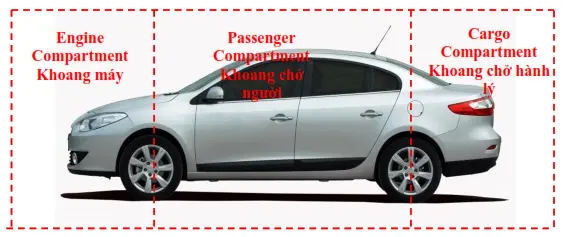
Note87.03SEDAN
A ‘sedan’, sometimes called a ‘saloon’ is an enclosed passenger car in a three-box configuration with permanent separate compartments for engine, passengers and cargo. Generally, sedan has two rows of seats.
Tiếng Việt
SEDAN
Xe sedan, đôi lúc còn được gọi là saloon là một loại xe chở người khoang kín, ba khoang được cấu tạo cách biệt với nhau gồm khoang máy, khoang chở người và khoang chở hành lý. Thông thường xe sedan có hai hàng ghế.
Supplementary Explanatory Notes (SEN, ASEAN 2022)
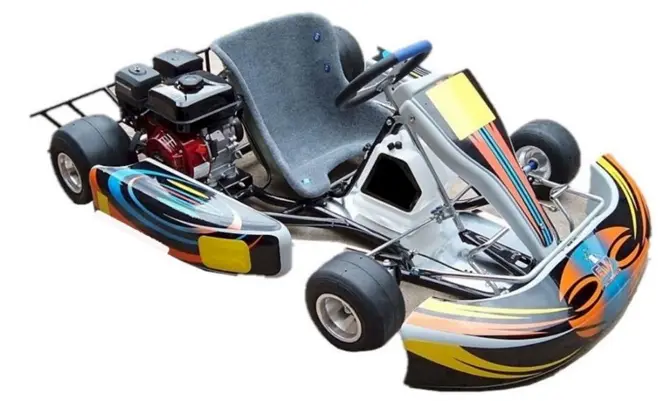
Product description87.03GO-KARTS
XE ĐUA CỠ NHỎ
A Go-kart is a light, low-framed vehicle used for recreational racing. The wheels and tyres are much smaller than those used on a normal car, with the rims made of magnesium alloy, aluminium, or composite materials, and can support cornering forces in excess of 2 g (20 m/s²), depending on chassis, engine, and motor setup. It can be powered by a fuel engine with a capacity of up to 1,500 cc, electric motors or combination thereof.
(Source: Singapore)
Tiếng Việt
Ô tô đua cỡ nhỏ là xe có khung gầm thấp, nhẹ sử dụng cho đua ô tô giải trí. Bánh và lốp xe nhỏ hơn nhiều so với loại sử dụng cho ô tô thông thường, với vành xe được làm bằng hợp kim magiê, nhôm hoặc vật liệu tổng hợp, có thể chịu được gia tốc khi vào cua trên 2 g (20 m/s²), tùy thuộc vào khung gầm, máy và thiết lập của động cơ. Xe có thể được lắp động cơ nhiên liệu với dung tích lên tới 1.500 cc, động cơ điện hoặc động cơ kết hợp.
(Nguồn: Singapore)
Notes for Section XVII — VEHICLES, AIRCRAFT, VESSELS AND ASSOCIATED TRANSPORT EQUIPMENT
Notes.
1. This Section does not cover articles of heading 95.03 or 95.08, or bobsleighs, toboggans or the like of heading 95.06.
2. The expressions “parts” and “parts and accessories” do not apply to the following articles, whether or not they are identifiable as for the goods of this Section:
(a) Joints, washers or the like of any material (classified according to their constituent material or in heading 84.84) or other articles of vulcanised rubber other than hard rubber (heading 40.16);
(b) Parts of general use, as defined in Note 2 to Section XV, of base metal (Section XV), or similar goods of plastics (Chapter 39);
(c) Articles of Chapter 82 (tools);
(d) Articles of heading 83.06;
(e) Machines or apparatus of headings 84.01 to 84.79, or parts thereof, other than the radiators for the articles of this Section; articles of heading 84.81 or 84.82 or, provided they constitute integral parts of engines or motors, articles of heading 84.83;
(f) Electrical machinery or equipment (Chapter 85);
(g) Articles of Chapter 90;
(h) Articles of Chapter 91;
(ij) Arms (Chapter 93);
(k) Luminaires and lighting fittings and parts thereof of heading 94.05; or
(l) Brushes of a kind used as parts of vehicles (heading 96.03).
3. References in Chapters 86 to 88 to “parts” or “accessories” do not apply to parts or accessories which are not suitable for use solely or principally with the articles of those Chapters. A part or accessory which answers to a description in two or more of the headings of those Chapters is to be classified under that heading which corresponds to the principal use of that part or accessory.
4. For the purposes of this Section:
(a) Vehicles specially constructed to travel on both road and rail are classified under the appropriate heading of Chapter 87;
(b) Amphibious motor vehicles are classified under the appropriate heading of Chapter 87;
(c) Aircraft specially constructed so that they can also be used as road vehicles are classified under the appropriate heading of Chapter 88.
5. Air-cushion vehicles are to be classified within this Section with the vehicles to which they are most akin as follows:
(a) In Chapter 86 if designed to travel on a guide-track (hovertrains);
(b) In Chapter 87 if designed to travel over land or over both land and water;
(c) In Chapter 89 if designed to travel over water, whether or not able to land on beaches or landing-stages or also able to travel over ice.
Parts and accessories of air-cushion vehicles are to be classified in the same way as those of vehicles of the heading in which the air-cushion vehicles are classified under the above provisions.
Hovertrain track fixtures and fittings are to be classified as railway track fixtures and fittings, and signalling, safety or traffic control equipment for hovertrain transport systems as signalling, safety or traffic control equipment for railways.
Notes for Chapter 87 — Vehicles other than railway or tramway rolling-stock, and parts and accessories thereof
Notes
1. This Chapter does not cover railway or tramway rolling-stock designed solely for running on rails.
2. For the purposes of this Chapter, “tractors” means vehicles constructed essentially for hauling or pushing another vehicle, appliance or load, whether or not they contain subsidiary provision for the transport, in connection with the main use of the tractor, of tools, seeds, fertilisers or other goods.
Machines and working tools designed for fitting to tractors of heading 87.01 as interchangeable equipment remain classified in their respective headings even if presented with the tractor, and whether or not mounted on it.
3. Motor chassis fitted with cabs fall in headings 87.02 to 87.04, and not in heading 87.06.
4. Heading 87.12 includes all children's bicycles. Other children's cycles fall in heading 95.03.
Subheading Note
1. Subheading 8708.22 covers:
(a) front windscreens (windshields), rear windows and other windows, framed; and
(b) front windscreens (windshields), rear windows and other windows, whether or not framed, incorporating heating devices or other electrical or electronic devices,
when suitable for use solely or principally with the motor vehicles of headings 87.01 to 87.05.
Vietnam trade in subheading 8703.40
Figures cover the whole 6-digit subheading 8703.40, not code 87034071 alone — UN Comtrade only publishes to 6 digits. Latest year available for Vietnam is 2023.
Imports
- 2021102 mn USD
- 2022114 mn USD
- 2023102 mn USD
Top partners 2023
- Thailand53 mn USD
- Indonesia39 mn USD
- Japan10 mn USD
- Italy1 mn USD
Exports
- 202115,006 USD
- 20238,000 USD
Top partners 2023
- Lao People's Dem. Rep.8,000 USD
2025: as reported by partner countries
Vietnam has not filed 2025 yet, so this is rebuilt from what its 16 largest trading partners reported about trade with Vietnam (85% of Vietnam's trade). Not the same measure as the figures above — compare it only with the 2023 row beside it.
| Flow | 2023 | 2025 | Change |
|---|---|---|---|
| Exports | 0 USD | 13 mn USD | — |
| Imports | 120 mn USD | 403 mn USD | +235% |
- Imports 2023: partners reported 120 mn USD where Vietnam reported 102 mn USD — 1.17× on this measure.
The gap is not a rounding difference: goods re-exported through Hong Kong or Singapore, a different heading chosen by the importing customs, and origin-based versus destination-based attribution all pull the two measures apart. Use the year-on-year change, not the level.
Source: UN Comtrade (preview API) — reported by Vietnam. Partner totals are as reported and may differ from partner-country statistics.
Corresponding US tariff lines
Six digits are identical worldwide under the HS Convention, so 8703.40 is the same subheading in both schedules. What differs is how each country splits it: below are the 13 US lines under 8703.40.
| US HTS code | Description | General duty |
|---|---|---|
| 8703.40.00.05 | Other vehicles, with both spark-ignition internal combustion piston engine and electric motor as motors for propulsion, other than those capable of being charged by plugging to external source of electric power › Of a cylinder capacity not exceeding 1,000 cc(No.) | 2.5% |
| 8703.40.00.10 | Other vehicles, with both spark-ignition internal combustion piston engine and electric motor as motors for propulsion, other than those capable of being charged by plugging to external source of electric power › Of a cylinder capacity exceeding 1,000 cc but not exceeding 1.500 cc(No.) | 2.5% |
| 8703.40.00.15 | Other vehicles, with both spark-ignition internal combustion piston engine and electric motor as motors for propulsion, other than those capable of being charged by plugging to external source of electric power › Of a cylinder capacity exceeding 1,500 cc but not exceeding 3,000 cc › Motor homes(No.) | 2.5% |
| 8703.40.00.20 | Other vehicles, with both spark-ignition internal combustion piston engine and electric motor as motors for propulsion, other than those capable of being charged by plugging to external source of electric power › Of a cylinder capacity exceeding 1,500 cc but not exceeding 3,000 cc › Other › New › Having engines with not more than 4 cylinders(No.) | 2.5% |
| 8703.40.00.30 | Other vehicles, with both spark-ignition internal combustion piston engine and electric motor as motors for propulsion, other than those capable of being charged by plugging to external source of electric power › Of a cylinder capacity exceeding 1,500 cc but not exceeding 3,000 cc › Other › New › Having engines with more than 4 cylinders but not more than 6 cylinders(No.) | 2.5% |
| 8703.40.00.40 | Other vehicles, with both spark-ignition internal combustion piston engine and electric motor as motors for propulsion, other than those capable of being charged by plugging to external source of electric power › Of a cylinder capacity exceeding 1,500 cc but not exceeding 3,000 cc › Other › New › Having engines with more than 6 cylinders(No.) | 2.5% |
| 8703.40.00.45 | Other vehicles, with both spark-ignition internal combustion piston engine and electric motor as motors for propulsion, other than those capable of being charged by plugging to external source of electric power › Of a cylinder capacity exceeding 1,500 cc but not exceeding 3,000 cc › Other › Used(No.) | 2.5% |
| 8703.40.00.50 | Other vehicles, with both spark-ignition internal combustion piston engine and electric motor as motors for propulsion, other than those capable of being charged by plugging to external source of electric power › Of a cylinder capacity exceeding 3,000 cc › Ambulances, hearses and prison vans(No.) | 2.5% |
Additional Chapter 99 duties apply to goods of Vietnam
- 9903.02.69 +20% — The duty provided in the applicable subheading + 20%
- 9903.05.84 +12.5% — The duty provided in the applicable subheading + 12.5%
These are added to the General duty above, not in place of it. Whether a given article falls inside their scope — and the exclusion lists — is set out in the U.S. notes to Chapter 99, which are prose and not machine-readable, so this site does not assign them per code. Check the official schedule before quoting a landed cost.
Already terminated: 9903.01.72 +46%
Selling to a US buyer? Screen the parties first — buyer, L/C bank and forwarder against the US restricted lists; a listed party can get the shipment held.
The General column is the rate for Vietnam: the Special column lists US preference programmes (GSP, USMCA, KORUS…) and Vietnam is in none of them. Source: USITC Harmonized Tariff Schedule of the United States — 2026 HTS Revision 18. For reference only — classification on import is decided by US Customs, and anti-dumping, countervailing and Section 232/301 measures are not covered here.
Corresponding Japanese tariff lines
8703.40 is the same subheading in both schedules (six digits are identical worldwide under the HS Convention). Vietnamese goods can enter Japan under four parallel preference routes — the columns below — and the exporter picks whichever C/O gives the better rate.
| Line | Description | MFN | VJEPA | AJCEP | CPTPP | RCEP |
|---|---|---|---|---|---|---|
| 8703.40-000 | Other vehicles, with both spark-ignition internal combustion piston engine and electric motor as motors for propulsion, other than those capable of being charged by plugging to external source of electric power(NO) | Free | Free | Free | Free | Free |
MFN is the lowest of the schedule's General/Temporary/WTO columns (hover to see all three). The preference columns require the matching certificate of origin; an em dash means that agreement gives no preference for the line. Source: Japan's Tariff Schedule, Japan Customs (as of August 8, 2026). For reference only — classification on import is decided by Japan Customs.
Codes at the same level under “Other motor cars (including station wagons and s”
Check neighbouring codes to make sure the classification fits best.
- 87034072Of a cylinder capacity exceeding 1,000 cc but not exceeding 1,500 cc
- 87034073Of a cylinder capacity exceeding 1,500 cc but not exceeding 1,800 cc
- 87034074Of a cylinder capacity exceeding 1,800 cc but not exceeding 2,000 cc
- 87034075Of a cylinder capacity exceeding 2,000 cc but not exceeding 2,500 cc
- 87034076Of a cylinder capacity exceeding 2,500 cc but not exceeding 3,000 cc
- 87034077Of a cylinder capacity exceeding 3,000 cc
Data updated: 11/08/2026 · Found wrong or missing data? Report a data error